

“When the weather decides for you”: How a young farmer feels the weight of a warming world
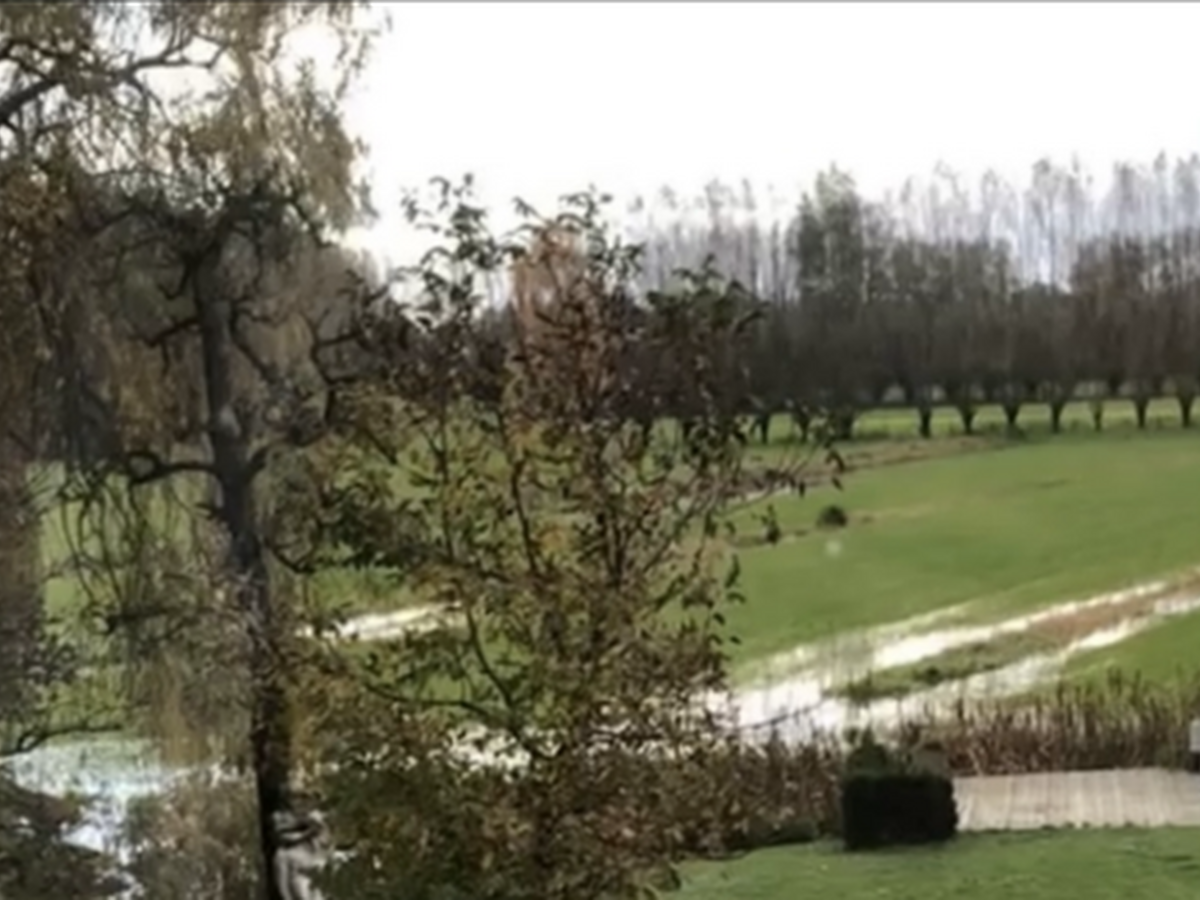
On a grey November morning in Lokeren, the fields behind the Dierickx family farm look more like shallow lakes than pastures. Water glistens where grass and corn should grow. “Last year we lost weeks of work because you simply couldn’t get a tractor in,” says 20-year-old farmer Sander Dierickx, pulling his boots from a patch of mud that swallows them almost to the ankle. “You wait, and you wait, but the rain doesn’t stop. And when it finally does, the soil is too soaked to carry any weight.”
Sander is part of the next generation of Flemish farmers, running Milli, the family’s small dairy business. They produce milk, cheese, and ice cream. This local food relies entirely on the health of their land and their cows. They also grow corn to feed the cows, but increasingly, the fields they count on for it are under water for weeks. Over the last years, this land has become unpredictable.
The global problem at his farm
According to climate researchers, 2023–2025 may become the warmest three-year period ever recorded. Extreme rainfall and sudden droughts have dominated global headlines. But for Sander, these aren’t abstract scientific patterns; they’re real, daily disruptions.
“In school they told us weather patterns were changing,” he says. “But now our family is feeling it. Too wet, then too dry. Nothing in between.”
Belgium saw record rainfall in 2023 and again in 2024. Fields remained waterlogged for weeks, delaying sowing and harvests across the country. Dairy farms like Milli depend on timely grass growth to feed their cows. When fields flood or when the corn fields they planned to plant are underwater, farmers must buy extra feed, something Sander never planned to rely on.
When rain becomes expensive
“In a normal year, we produce almost everything ourselves: grass, hay, even corn,” Sander explains. “But the past two seasons, parts of our land were simply unusable. So we had to buy hay, and because of this, our prices went up.”
The rising costs ripple through the entire chain: feed becomes more expensive, production becomes more expensive, and eventually, the price of cheese and ice cream in their small shop has to increase too. Only about 10 percent of their milk stays in the shop for direct sales; the other 90 percent is sold to larger distributors. That makes every disruption hit hard.
“I don’t like raising prices,” he says, shaking his head. “People know us as a local business. They come here because everything is fresh. But if our costs double, what choice do we have?”
It’s a tension felt by farmers all over Europe: the pressure to stay sustainable and local, while the climate makes traditional practices less predictable and more expensive.
Then comes the drought
Ironically, the same fields that drown in spring can turn yellow and dry by late summer.
“One moment everything is too wet, and the next, we’re standing in dust,” Sander says. “Grass that should grow back fast just stops growing. Corn doesn’t reach full size. You can’t harvest what isn’t there.”
During dry times, cows produce less milk. The farm’s production of cheese and ice cream follows that decline. “People think drought is something that happens in Spain or Italy,” Sander says. “But even here in Lokeren, you notice it immediately.”
A Local Story, a global problem
Scientists warn that this pattern of intense rain followed by extreme dryness is becoming Europe’s new normal. Farmers everywhere are being pushed to adapt. For small family-run businesses, the margin for problems is thin.
Farming in a constant state of uncertainty
Walking past the barns, Sander points to a patch of grass that finally recovered after a dry spell last year. “Some fields come back fast,” he says. “Others don’t. You try to rotate the cows, protect the soil, manage what you can. But there’s only so much planning possible when the weather changes so quickly.”
“People ask why farmers complain so much. I don’t think they understand that farming used to be way more predictable. Seasons had a rhythm. Now we live from weather prediction to weather prediction.”
His tone isn’t bitter; it’s just realistic. “We don’t expect perfect weather. But we need some stability.”
Community matters more than ever
Despite the difficulties, Sander says the local support for Milli has helped keep spirits high. “People still come to the shop, even if prices went up a little,” he says. “They understand why. That makes a difference.”
He pauses. “But understanding doesn’t solve the climate issue. Farmers can adapt, yes, but not endlessly.”
A glimpse of the future
When asked if he sees himself farming in thirty years, Sander hesitates for the first time. “I hope so. I really do. But if the weather keeps changing and everything is so unpredictable like this, the question is not whether farmers want to continue; it’s whether they can.”
“We do everything with family. We produce clean, local food. But climate change makes everything more fragile. You feel how dependent you are on nature.”
Local Fields, Global Warning
East Flanders is not a climate hotspot. It’s not a coastline collapsing into the sea or a region burning under heatwaves. But here, on a modest dairy farm surrounded by flat green pastures, the global climate emergency has already arrived.
Sander sums it up:
“You don’t need to travel far to see climate change. Just ask any farmer.”