

How has Uganda’s political system evolved under President Museveni?
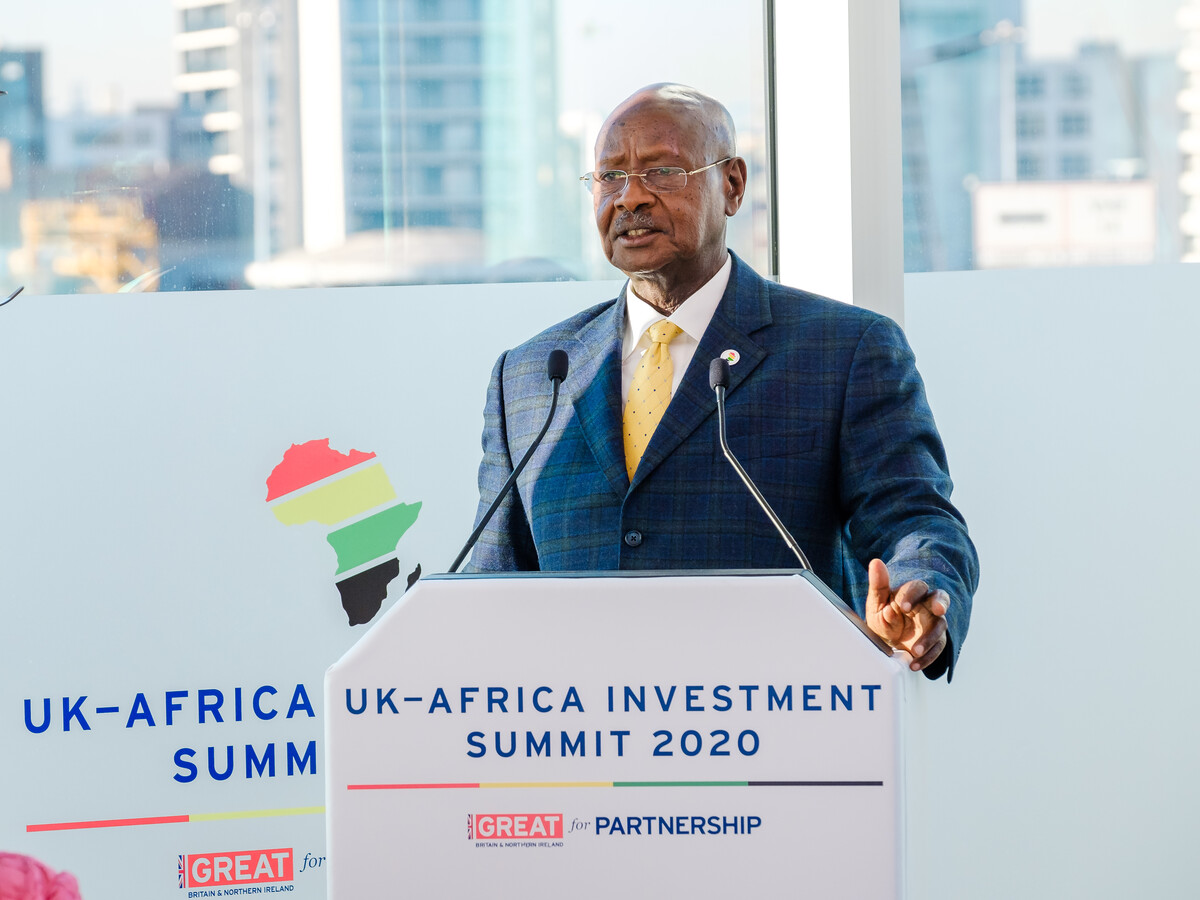
Uganda has had the same president for forthy years. His name is Yoweri Museveni, a politician and former revolutionary who took power in 1986 through a series of civil conflicts. Initially, the population thought he could bring stability to a country marked by ethnic tensions and an economic crisis. However, Museveni soon introduced a system called “No Party Democracy”, where political competition was formally allowed but striclty controlled, leading to a more centralized power. As mentioned in the 1999 Human Rights Watch report, activities such as sponsoring candidates, organizing rallies or opening branches were subject to restrictions. While the main goal was the prevention of ethnic disputes, this system mainly gave more power to Museveni and his party, the National Resistance Movement (NRM). Over time, this began to lead to internal and external pressure, culminating in the 2005 referendum where 92% of voters favored a return to a multi-party system. Another way for Museveni to maintain power was through constitutional changes, such as the removal of the term and age limit for the presidency, allowing him to remain president indefinitely. This leads to Uganda formally having a multiparty system, but at the same time a president with strong influence and control.
Why does Uganda’s opposition say it is under pressure?
Museveni's hold on power has led to increasing tension with the opposition, especially after the 2026 presidential elections A CNBC article published on January 2026 wrote that, according to the ugandan army chief, around 2000 opposition supporters were detained and at least 30 people were killed after the elections. A well-known case is that of Bobi Wine, a famous musician who later entered politics. Throughout his career he faced many challenges, especially around election time. As Museveni's chief rival, it is more difficult for him standing up against the government. Wine recently stated in an interview with the BBC that he fled abroad fearing for his own life: "Even if I'm out of Uganda, I am still not safe because I know that I'm being pursued by a regime... that is able to pursue its political enemies wherever they are."
Furthermore, the opposition is also experiencing internal difficulties, given the lack of cohesion and organization. Mathias Mpuuga, president of the Democratic Front, a party of the opposition, explained in an interview with the Nile Post that those divisions are allowing the ruling party to maintain its power and exploit the opposition’s weakenesses.
How does the Ugandan government respond to opposition criticism?
In response to criticism from the opposition, the government counters by explaining that certain measures are needed to bring security and stability to the nation. For instance, live broadcasts of demonstrations and riots have been outlawed to avoid escalating tensions and causing panic among citizens. At the same time, these measures limit the flow of information and restrain the voices of opposition parties. The government denies any allegations of oppression and control, while also justifying arrests and restrictions as law enforcement measures.
In January 2026, Sky News interviewed Museveni and one of the topics was the police violence against protesters. The president explained that the beating was a mistake, but given the crowding in the cities, he doesn't encourage demonstrations. When he was asked on his intention to remain president for life, Museveni responded by saying "that is for the people to decide". However, as the Freedom House 2024 report suggests, the Ugandan government influences media, institutions and the electoral process. This may indicate Museveni’s ability to retain his authority and diminish the political space available to its opponents.
Why are young Ugandans increasingly challenging the political system?
Young Ugandans have been raising concerns about the political situation, due to the lack of chances and absence of any prospects and opportunities. This can be explained by the fact that Uganda is a country with a predominance of youth. According to a UNICEF report, 78% of its citizens are below the age of 35. For this reason, the issue of unemployment among the young is quite acute: according to the World Bank unemploymemt is between 64% and 70%, while nearly 60% of the population lives on less than 3 US dollar a day. Protests are strong both online and in person. In 2024 according to an Aljazeera article, an online organized demonstration with the hashtag #StopCorruption was held. Chapter Four, a right group, affirms that in this protest 45 people were arrested. In response, a police representative explained that the authorities cannot allow a demonstration to threaten the peace and security of the country. However, this has never stopped the young people who, represented by an active personality like Bobi Wine, continues to fight.
What could Uganda’s political tensions mean for the country’s future?
All of the situations explained above may have serious implications for the future of the state. Reforms leading to the liberalization of the political system, a more transparent voting system, and freedom of expression are lacking. According to a study done by the Open Society Foundation in 2022, the end of the rule of Museveni could lead to the destabilization of political processes in Uganda if the country does not see further institutional development and political competition. All this risks causing internal conflicts and long-term problems in the political sphere.