

Violence Against Women and Intergenerational Trauma
"The topic of violence against women is linked to my family, more so to the women who came before me. There is kind of a curse when it comes to women and the men in their lives."
“My grandmother was 15 years old when she started a relationship with a man who was 26 or so. He was highly manipulative. She wanted to get away from him, but when she became pregnant, they had to get married. That's how things went at the time. He was an abusive alcoholic, and he went so far as to hold her at gunpoint to threaten her. It came to the point where she couldn't sleep anymore, because she didn't feel safe around him. As her children got older, they did not want to be around their father anymore. At that moment, she finally left.”
The UN defines violence against women as ‘any act of gender-based violence that results in, or is likely to result in, physical, sexual or psychological harm or suffering to women, including threats of such acts, coercion or arbitrary deprivation of liberty, whether occurring in public or in private life.' Transgenerational trauma begins with the traumatic experiences lived through by a single person. Yet these experiences often go unspoken, buried beneath societal silence and the stigma of guilt and shame.
“Some time later, my grandmother met a new man. She had another child. When that child was fourteen, it turned out that the father was touching her. His biological daughter, mind you. It came to light that this also happened to him with his mother, but he never talked about it. He ended up becoming a perpetrator himself.”
“My mom was also in a relationship with a very jealous man before I was born. Apparently, he had a track record of abusing women. He had broken her nose, almost thrown her off the balcony. She made sure that this is something she will never experience again, and my grandma simply doesn't want men in her life ever again... She kinda broke the curse.”
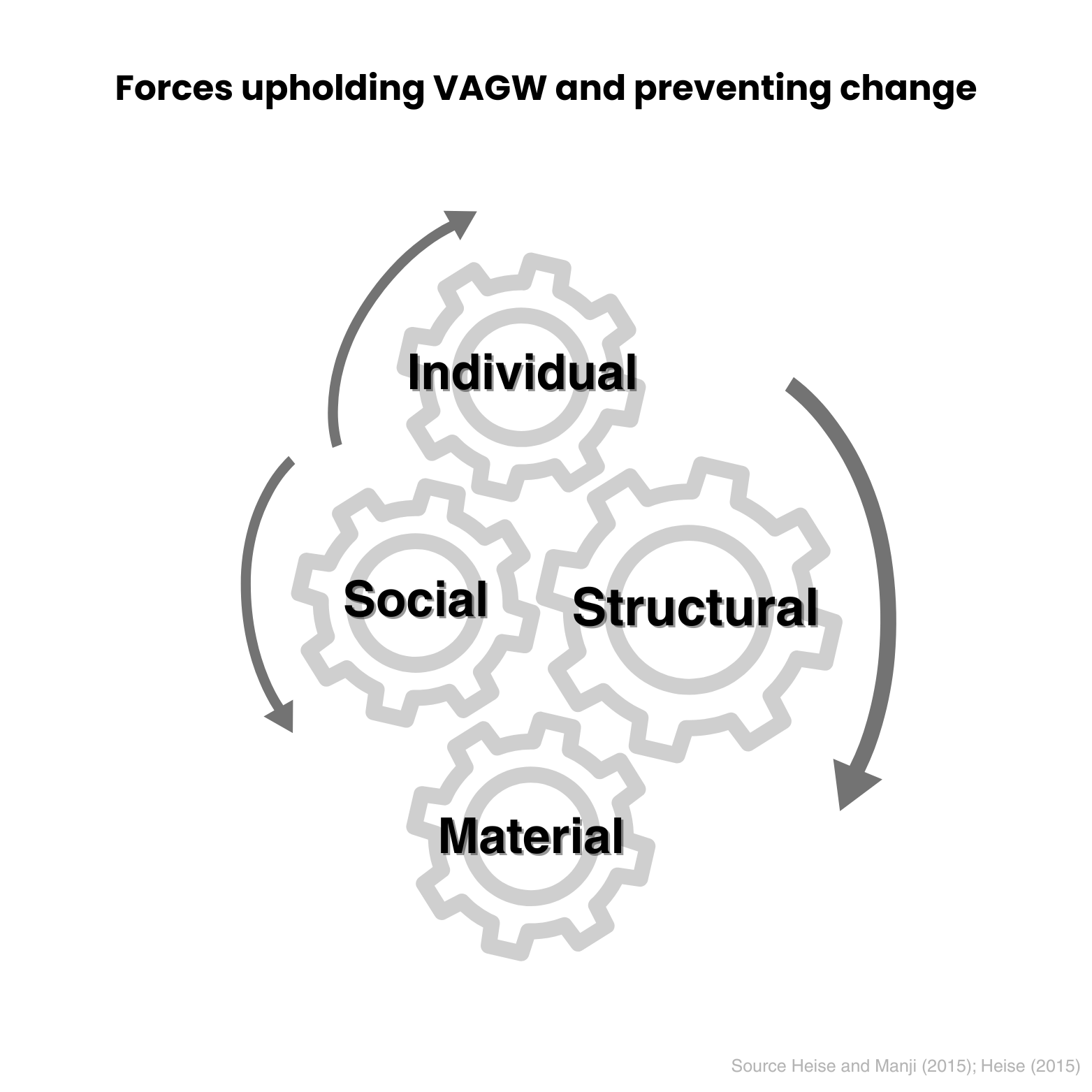
Violence against women and girls is upheld by a set of interconnected forces. These forces are at play at different levels. At the individual level, people’s attitudes, sense of agency, and beliefs shape how they understand and respond to violence. These personal factors are reinforced by social norms and networks that can either challenge or normalise harmful behaviour. Material conditions, such as access to resources and economic security, also play a crucial role, influencing whether someone can seek safety or support. Overarching all of this are structural forces, including laws and dominant ideologies. These can hinder efforts to prevent violence. Together, the different levels interact in ways that make violence possible, unless change is pursued across all of them.
“When I was five years old, I wasn't afraid of ghosts under my bed. I was afraid of pedophiles." Nina states explicitly. She recalls being harassed by men on the street at a young age. Often finding herself stiffened with fear: "That's a shame. That was too much to handle, too early. I had a lot of dreams about it.”
Art and Creative Expression
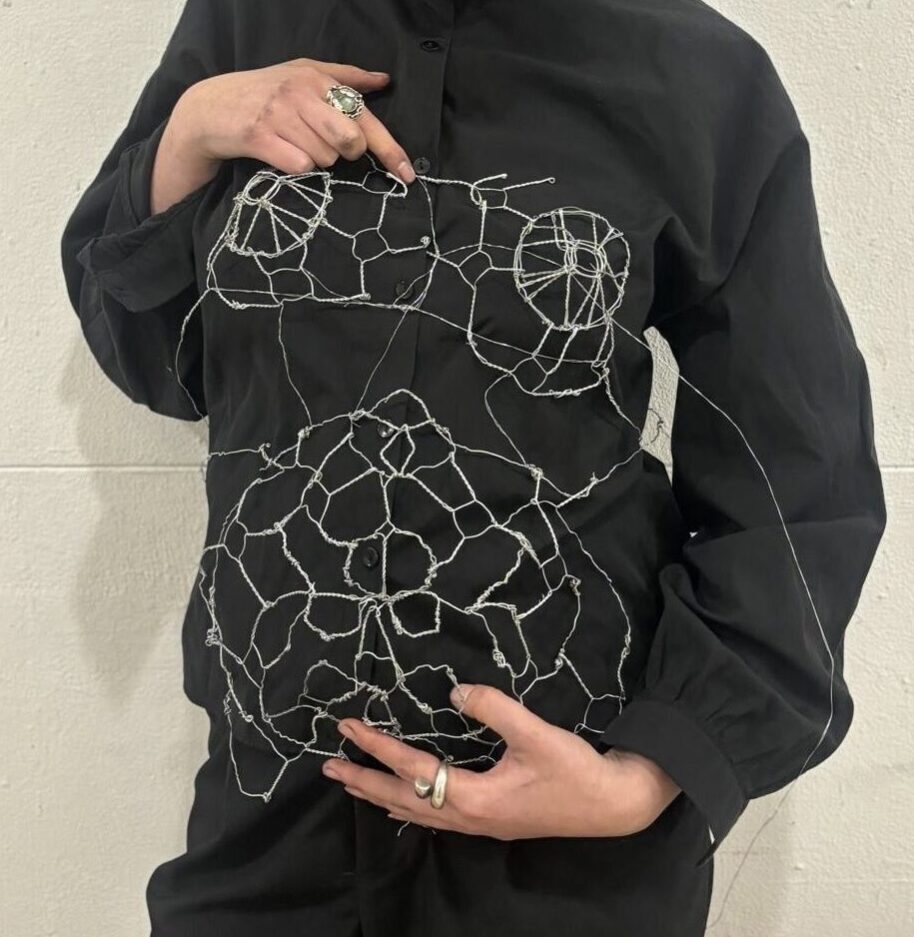
In her work, she explores the oppression of women and its ties to capitalism. “I like to create a punk atmosphere,” she says, “one that evokes a sense of female rage.” She goes on to explain the thinking behind her work, Shield: "Wearing a bra can bring a sense of safety, but it could also be a trap. I was told that if you don’t wear a bra, you are provoking men. At the same time, if you don’t wear a bra, I was told men would find your breasts less attractive. It’s a contradiction. I wanted to show how absurd it is."

"I was inspired by a statue and painted the piece on impulse. To me, it carries a powerful energy. People can interpret it how they want."
Art plays an important role in bringing awareness to the problem of violence against women. It can confront the root of the problem instead of merely treating the symptoms. Nina uses her art to challenge social norms and invites viewers to rethink themselves.
Awareness and Prevention
“Community and communication are so important. I think people should be aware of their responsibility. That applies to everything political. If you think you're neutral because you do the same thing as the masses, or because you don't intervene. Then you are doing the same: normalising doing nothing. Part of the problem is that a lot of men are not confronted with their behavior. It also has to do with upbringing. They’re told they'll get away with it."
There is a growing acceptance of the need for prevention and system-wide changes. According to the International Rescue Committee, there are various ways of prevention, including: providing women and girls with safe spaces, engaging male allies, and engaging with governments to uphold their responsibility to respond to violence. By speaking out, challenging harmful norms, and supporting survivors, individuals can help create safer communities for women and girls.