

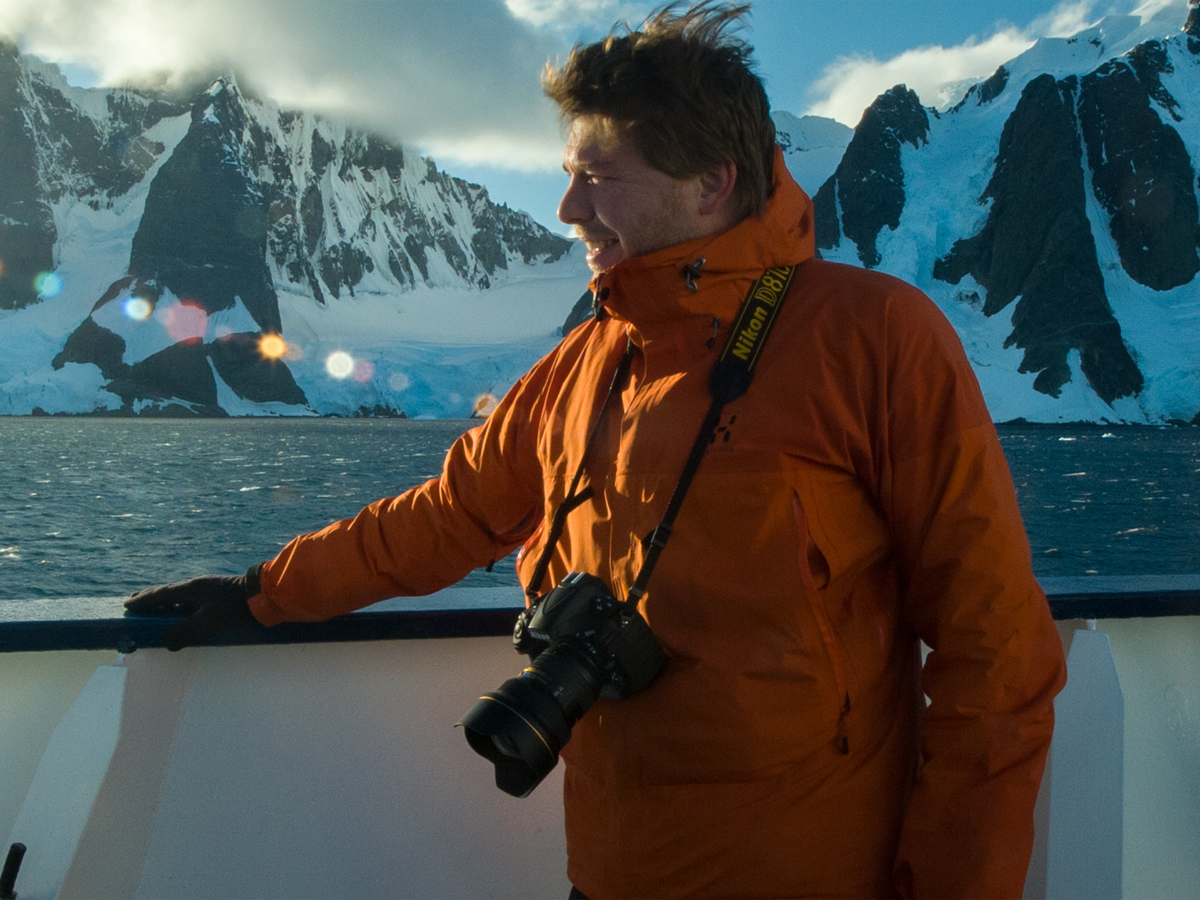
While completing his studies, he seized every opportunity to explore the world, travelling from the Caucasus, to the Middle East, Latin America, Southeast Asia, and the Arctic. On his global backpacking adventure in 2013, Christian Clauwers had no intention to go to Brazil. His plane from Buenos Aires to London caught fire mid-air, leading to an emergency landing in Brazil, an intense and first experience in the country.
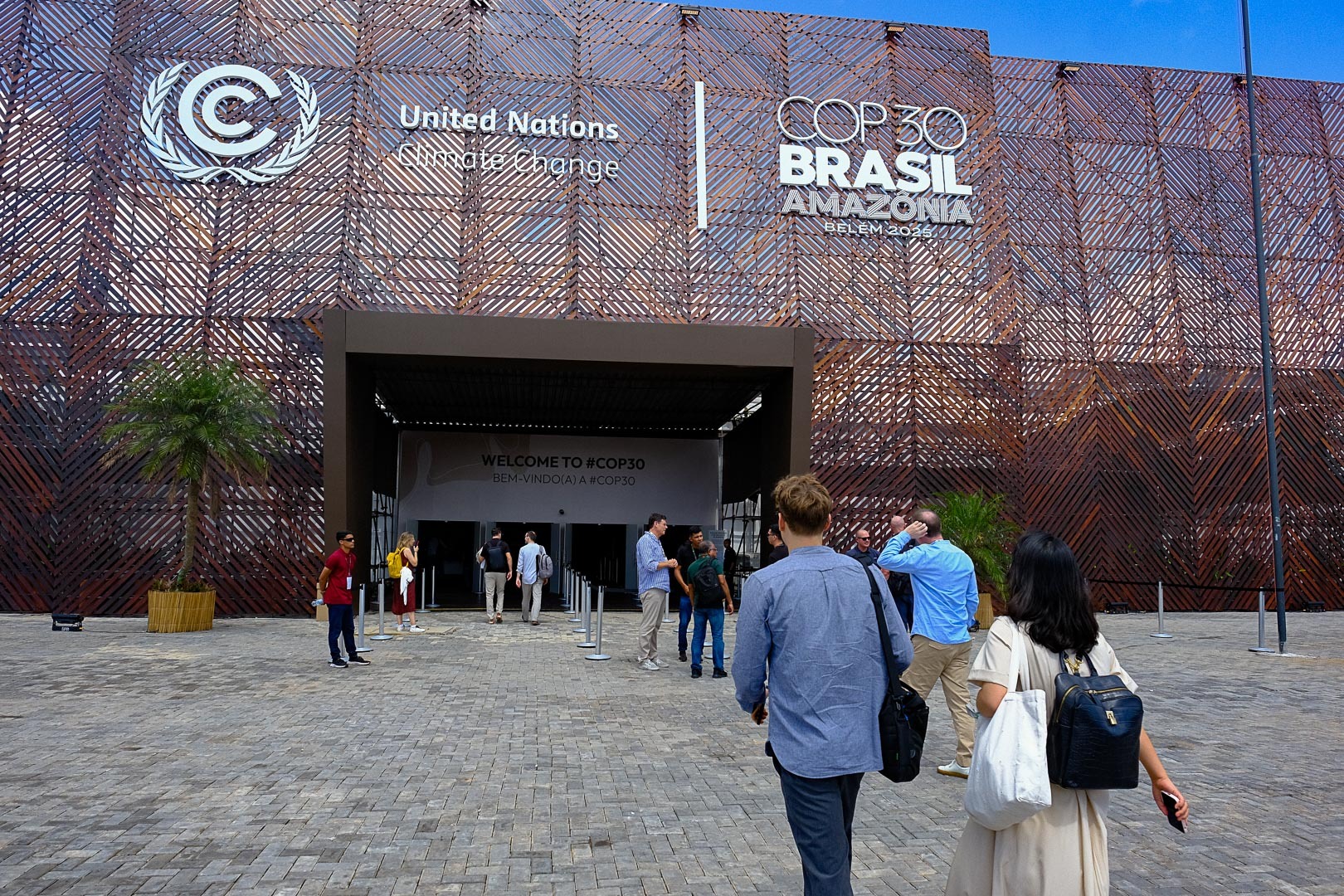
In November 2025, he embarked on his second journey to Brazil. This time, he travelled to Belém, the gateway to the Amazon rainforest, where this year’s climate conference, COP30, was held. COP30, the Conference of the Parties who have signed the United Nations Framework Convention on Climate Change, took place from November 10th to 21st, 2025, marking the 30th event. During the conference, world leaders, policymakers, scientists and advocates came together to turn past pledges into concrete actions, aiming to speed up climate initiatives. The goal of this COP was to transition away from fossil fuels and strengthen climate action to keep the 1.5 degrees Celsius target feasible. Hosting COP30 in Belém was symbolic for the protection of the rainforest, biodiversity and indigenous rights.
Another dimension of global conservation efforts is located within a mountain just 1,200 kilometres from the North Pole. Where the world’s seeds and grains are preserved, Clauwers stood 130 meters inside the Svalbard Global Seed Vault, facing a vast hall and three heavily frozen doors.
Being absolutely struck by the massive vault, Clauwers came to understand that many seed samples had already been lost, a consequence of climate change and the way humans are degrading the land. This was the first time Clauwers witnessed the conflict between human and nature. He realized that with his studies, interests and the concern about the future of the planet, he wants to take on documenting this conflict and raise awareness.
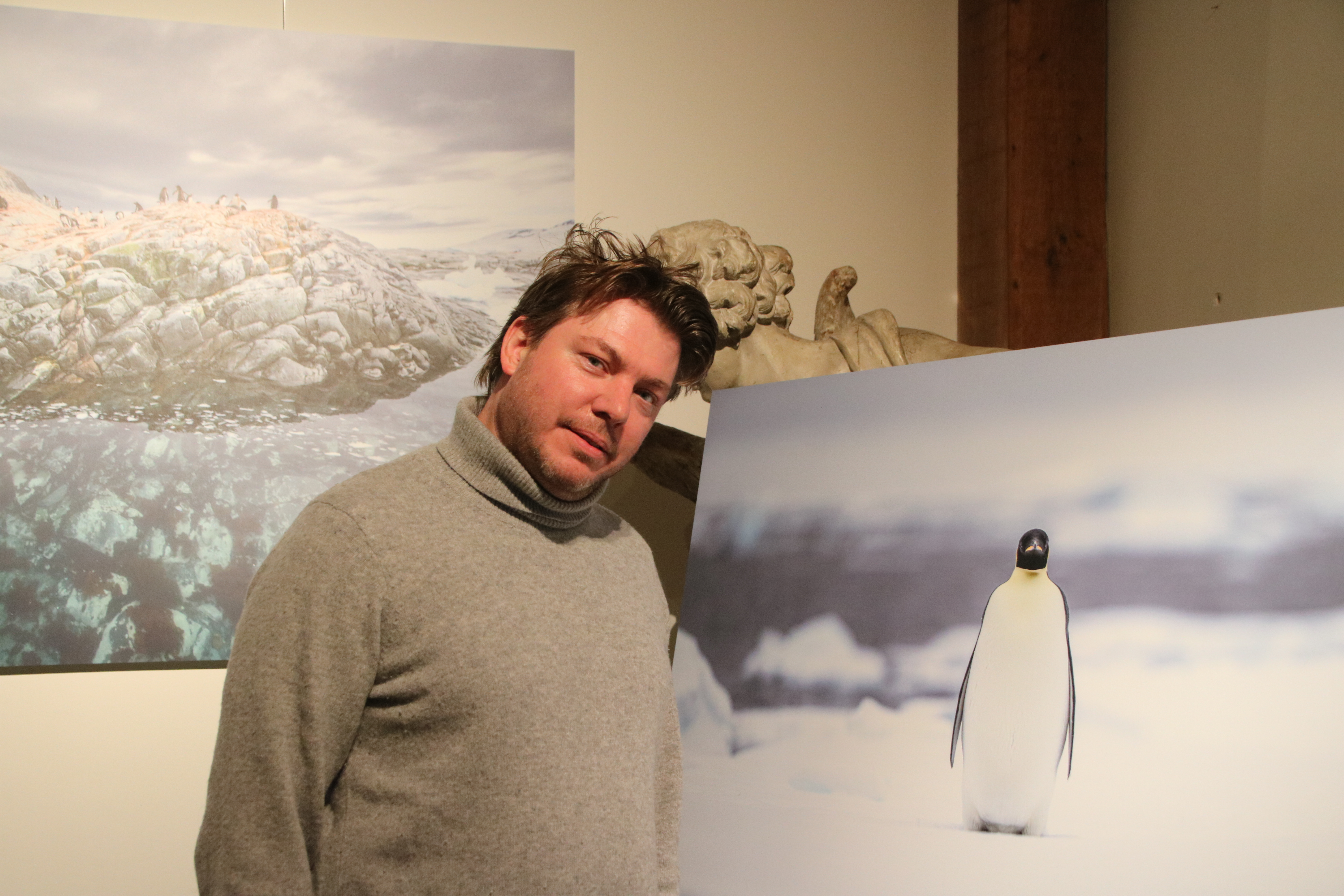
Clauwers began to work on what he calls “mission”, documenting climate change, biodiversity loss and the human footprint through his photographs. According to him, it is rare to find true nature anymore. To raise global awareness on biodiversity loss and climate change, he founded the non-profit organization “Society for Environmental Awareness” in April 2025.
This year Clauwers attended his sixth COP, describing this year’s event as badly organized. Ongoing building works on the first day, poor organization, a non-functioning AC in the humid, tropical Amazon climate and a fire in one of the pavilions, created an even stronger sense of dysfunction. The COP30 ended without a formal agreement to a roadmap, phasing out fossil fuels and deforestation. As the European Youth Forum stated “the result is disappointing, but not surprising.” According to Clauwers, there was a feeling from the very beginning that this year’s COP wasn’t going to succeed as “People felt disconnected.”
After the conference, he decided to explore more of Brazil. With a rental car and a drone, he began driving through the Amazon. While reviewing drone images, he saw that a place which he always thought of as vital and green had become a patchwork of farmland and plantations. Between those were only fragments of the jungle, very different from what he had expected. One of the reasons why COP30 is was so symbolic, left him concerned not only about the outcome of the conference but also about the future.
For Clauwers the conference serves as a platform, bringing nations and people together, allowing individuals from different backgrounds, realities, industries, policy fields, and scientific communities to meet. He sees himself at the center of a triangle of different realities: industry, science and politics. Through networking he is able to get the access to other conferences, different platforms and places, in order to raise awareness.
As part of his “mission”, Clauwers knows that he will keep joining the climate conference despite of this year’s outcome.