
What is slopaganda?
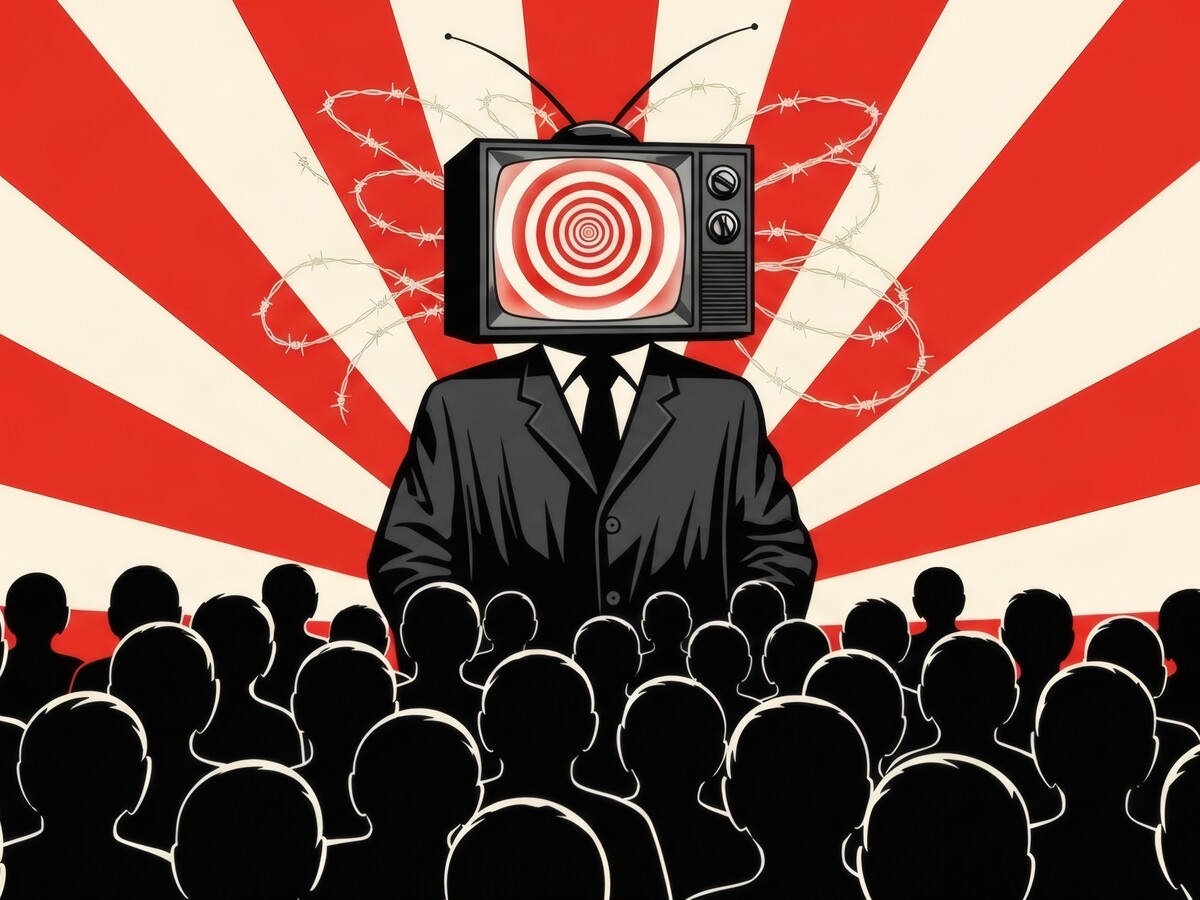
What the White House has been doing is referred to as “slopaganda” by, among others, the Irish Times. The term is a neologism consisting of two words: slop and propaganda. While slop refers to low-quality, often AI-generated online content, slopaganda insinuates that slop is being used to influence the political debate.
An example of the White House’s TikTok account is a supercut, consisting of drone footage from the United States' and Israel’s bombing of Iran, mixed with extracts from action movies. The social media video features snippets including Marvel's Tony Stark, The Gladiator's Russell Crowe and Top Gun's Tom Cruise. Euronews has recently called the video a “new low”, as the European news outlet criticizes the lack of empathy towards the victims of war.
This and other videos published by the White House have reached a large online audience through the gamification of the Iran war and the usage of online memes. Some of the videos have gained over millions of views. The main theme: the ongoing war against Iran.
Why is the White House doing this?
Political communications expert Laura Jacobs claims that Trump and his administration are instrumentalizing the ability to go viral, hoping to be discussed in traditional news outlets. According to her, emotions, strong rhetoric, negative words, and conflict are more likely to go viral. This, in turn, leads to more comments, shares, and other forms of online engagement.
She calls the White House’s tactic “intermedia agenda setting”: the administration aims to reach their electorate, as well as their opponents and traditional media. That way, the White House can retain their control over the narrative. This would mean that the United States' government has a very clear goal concerning the messages they spread, and that the administration aims to use all the tools at their disposal there to maximize its reach.
Similarly, the University of Macquarie in Australia says that so-called slopaganda enables the supply of an endless stream of online messages. These can, in turn, influence constitutions' minds, the University claims.
Jacobs also talks about the shock value of the White House’s slopaganda. Shocking videos tend to reach a larger audience, but they also desensitize this audience to what they are consuming. This might explain why the White House has been increasing its shock value. Leeds Beckett University agrees that advertisers—and in this case the government—choose material which is seen as being highly controversial. They also state that their choice of graphics and wording is strategically selected so that its immediate effect will cause uproar. According to the University, any controversy is an advantage: more outrage leads to more publicity.
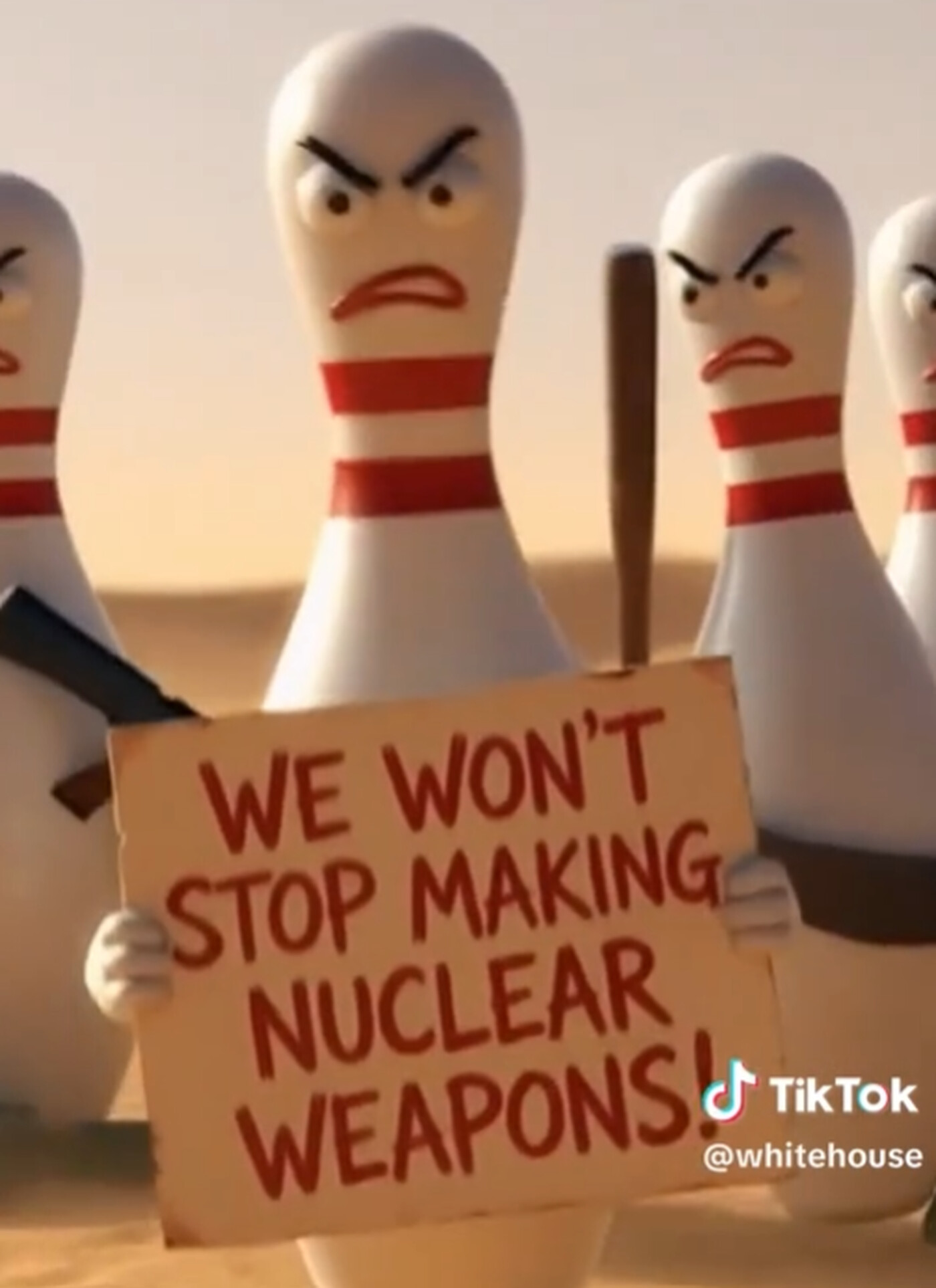
"We won't stop making nuclear weapons!"
(Credit: https://www.tiktok.com/@whitehouse/video/7616166285625347342?is_from_webapp=1&sender_device=pc&web_id=7572949207168009760)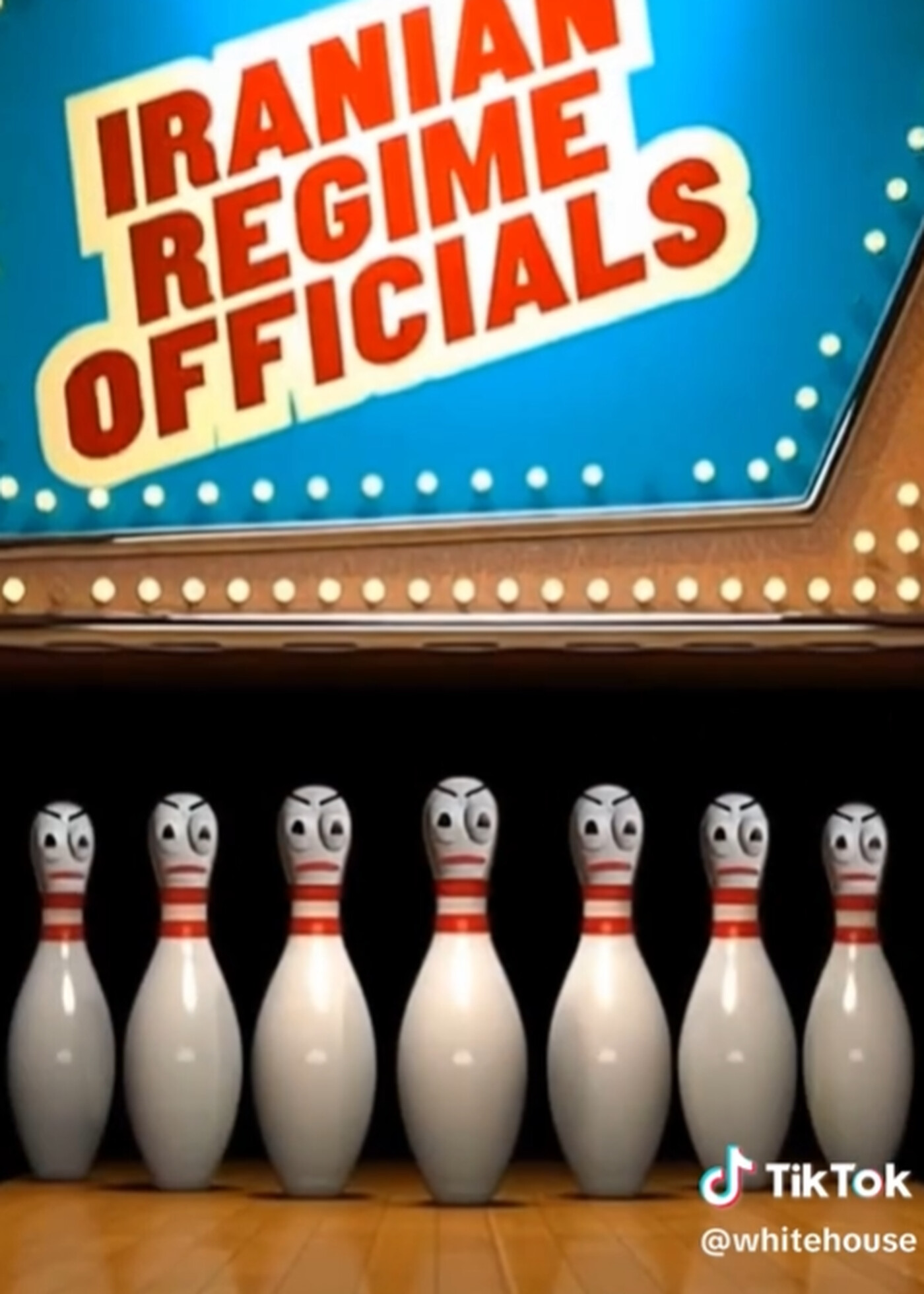
Iranian regime officials as bowling pins
(Credit: https://www.tiktok.com/@whitehouse/video/7616166285625347342?is_from_webapp=1&sender_device=pc&web_id=7572949207168009760)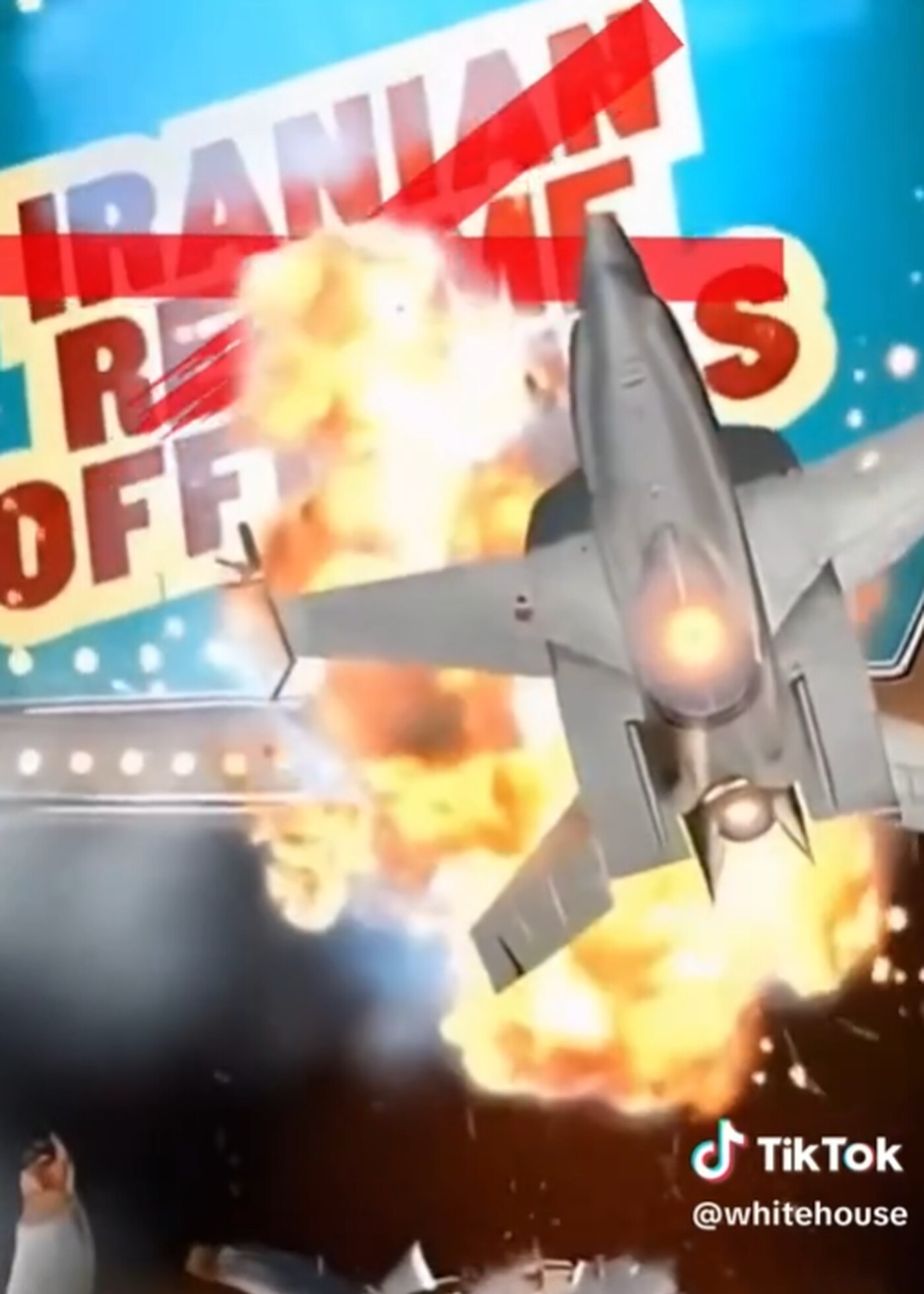
A jet exploding the bowling pins
(Credit: https://www.tiktok.com/@whitehouse/video/7616166285625347342?is_from_webapp=1&sender_device=pc&web_id=7572949207168009760)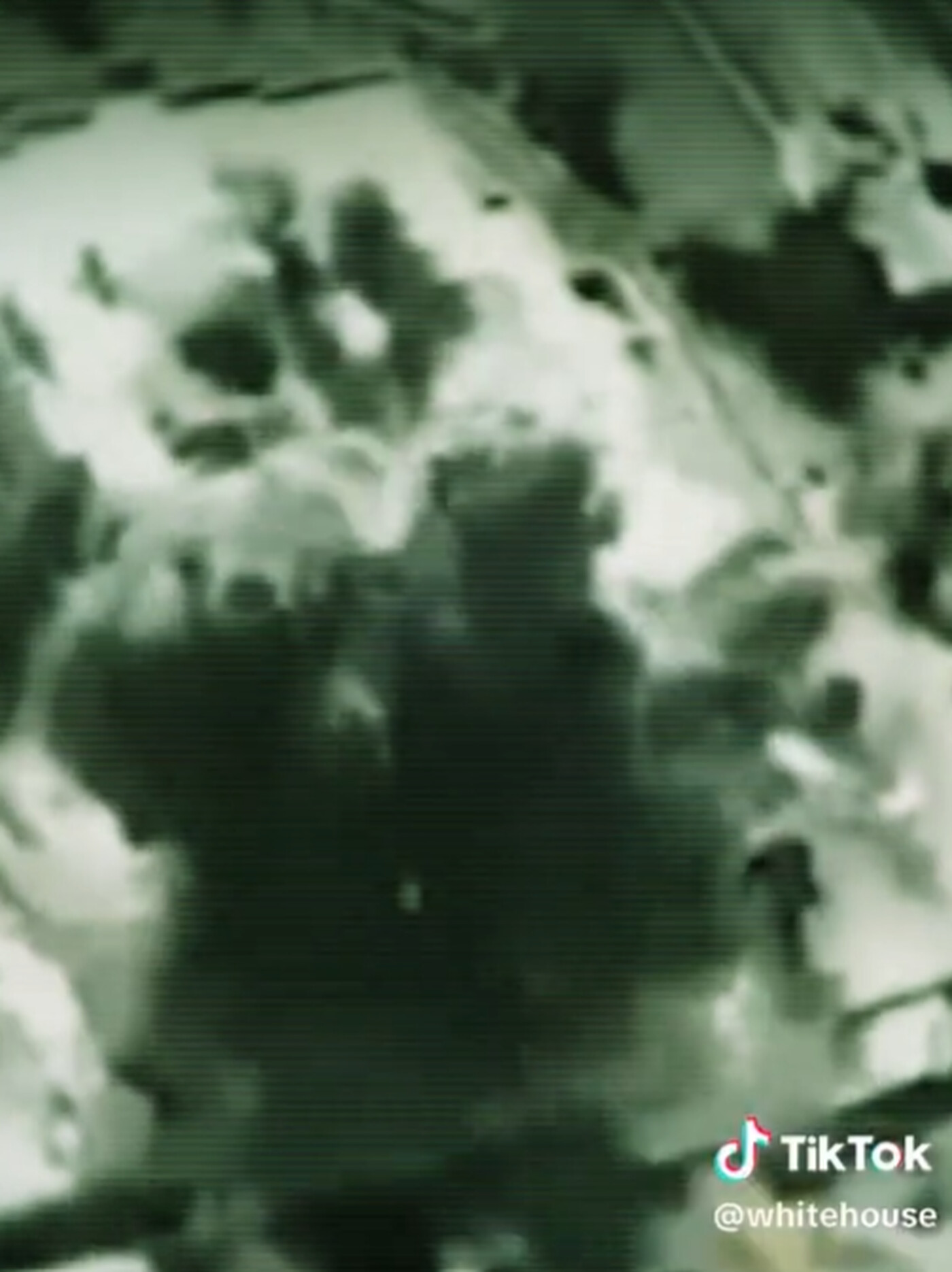
allegedly real drone footage of a bombing in Iran
(Credit: https://www.tiktok.com/@whitehouse/video/7616166285625347342?is_from_webapp=1&sender_device=pc&web_id=7572949207168009760)
Is their strategy working?
“Their tactic works, because even people who do not agree with the rhetoric see the videos and click on them”, Jacobs claims. If the White House’s goal is to maximize its reach and spread its message, the tactic is working. Their AI-generated propaganda has been discussed both online and in traditional news outlets such as The Guardian and The Irish Times.
Propaganda, and its more recent counterpart, are not necessarily meant to ensure that you agree with the White House's message. Instead, these messages are intended to make it seem as if their claims are normal and widely accepted. Sociologist Ruth Wodak argues that this kind of normalization is a tool to control the relevant agenda and information used by far-right politicians.
Traditional news outlets and their international audience are poking fun at the White House for its slop. The Irish Times even called a video a “self-sabotaging inversion of soft power that will drill a hole in your brain and flood it with a slurry of imperialistic yeehaw triumphalism that is not deserving of the term ‘propaganda'.” The US government has not been able to persuade the general public of its tactic, but it has definitely gained attention.
Isn’t it weird for a government to do this?
Laura Jacobs argues that while the scale of AI usage may seem strange, it is not unusual for governments to adapt to new digital tools. Throughout history, the US has used media to shape public perception of war, she mentions. And she is not the only one to do so.
In the book Manufacturing Consent, Edward Herman and Noam Chomsky argue mass media function as a propaganda system preserving dominant political interests through selective framing. Historian David Welch similarly explains that during World War II, the U.S. Office of War Information used radio, film, and journalism to promote patriotism, unity, and support.
And the link between media and warfare continued during the Gulf War. Douglas Kellner describes the 1991 Gulf War as a “megaspectacle” experienced globally through television and tightly controlled media coverage. However, the rise of social media weakened centralized control over wartime narratives, leading governments and political actors to increasingly use online influence tactics, including memes and viral content, to shape public opinion in the digital age, according to Joshua Troy Nieubuurt in Internet Memes: Leaflet propaganda of the digital age.