
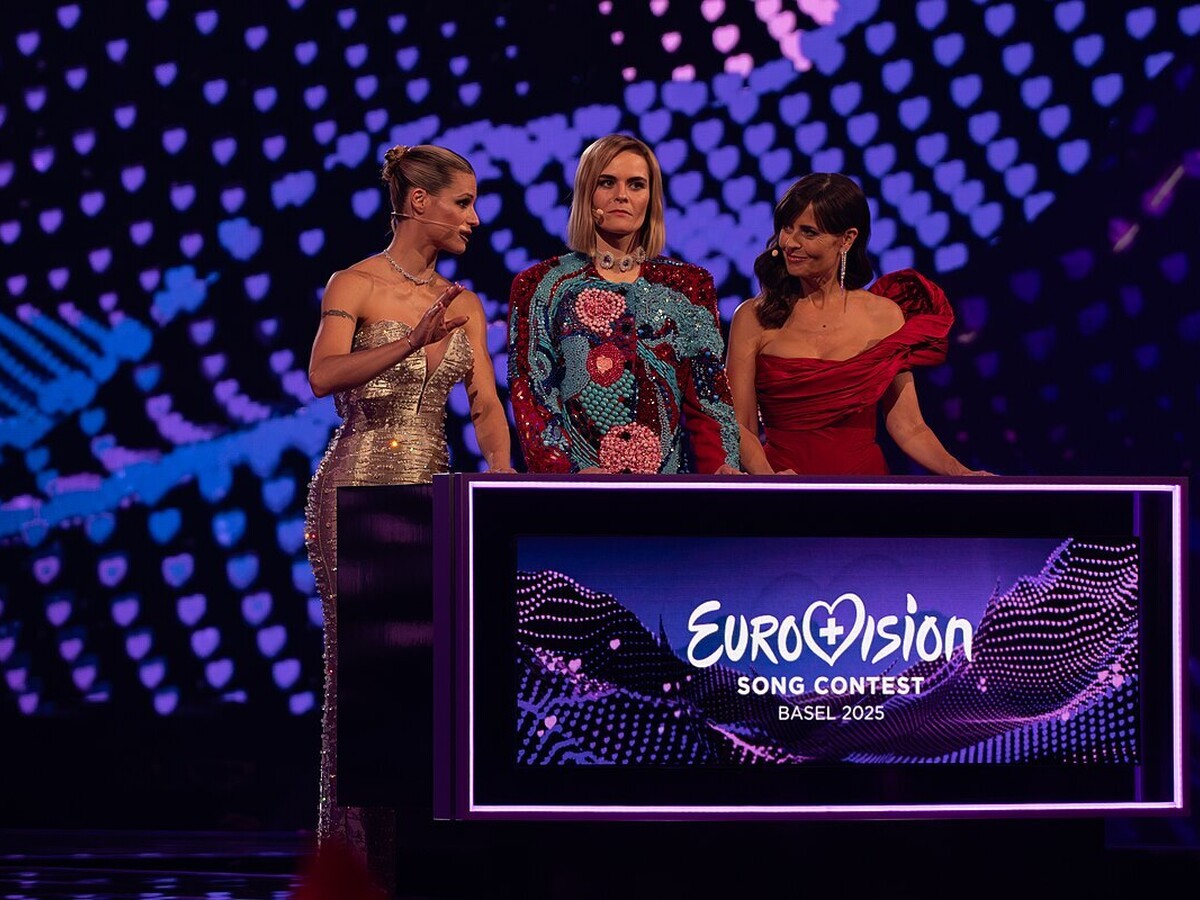
On a mild spring evening, the clock strikes 9, signifying the start of the 69th Eurovision Song Contest edition. Millions all over the world are glued to their screens in anticipation, watching the broadcast from Switzerland. Though, the decade-long fan from Belgium, Enis, purposefully keeps the TV off, as an act of boycott.
For them, it used to be a big party, where European culture and people would come together: “I love when there are Moldovan guys singing about the trains or Swedish guys singing about shoes”. However, the past few years have felt different to the point that Eurovision doesn’t feel like a safe community to them anymore. “It used to be a celebration, and now it’s suffering”.
Eurovision Song Contest has been receiving a lot of backlash over the and the accusations that the voting of this year’s contest has been manipulated in favor of Israel. Their participation during an ongoing mass genocide in Gaza Strip also raises controversy, considering the bans of Russia and Belarus from the contest. Pro-Palestinian protestors were trying to disrupt the competition in 2024 and 2025, urging the participating countries to withdraw and viewers to boycott.
“You should be able to boycott it even if it’s your special interest, even if it changes your life. It changed my life, but lives are more at stake at this point,” Enis claims.
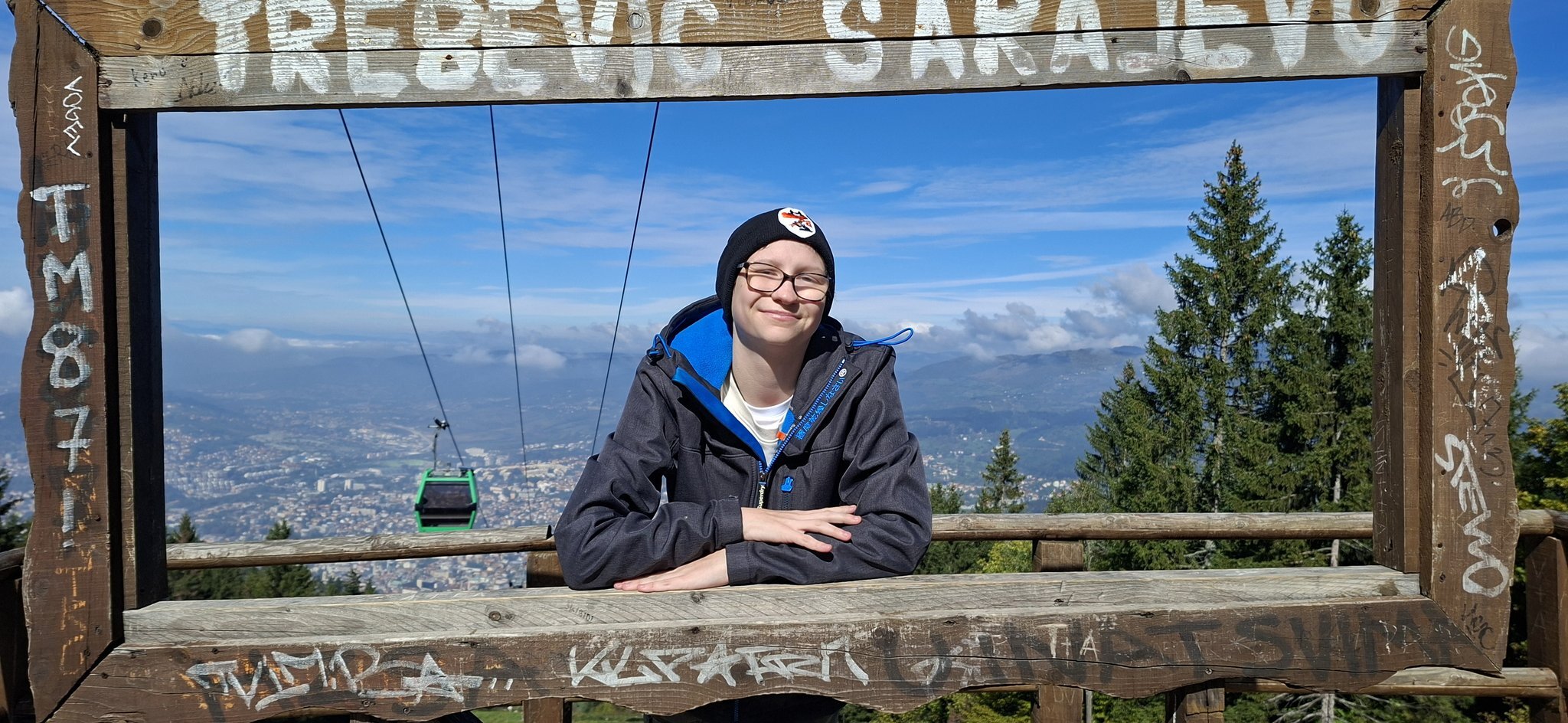
Eurovision is more than just a cultural annual event to them. The contest has always been a part of their life: “I was around 8 years old at the time. Me and my cousin used to go on trips on the weekends with my mom's side of the family. My cousin really liked Eurovision, and back in 2010, she really liked Tom Dice, but I was a bit too young for this”.
Their first memory of watching the contest closely dates back to 2014, Enis says. Conchita Wurst was the main star of that year’s competition, attracting attention of different kinds of people around the world, including Enis and their family. With unusual appearance, such as striking make-up, long hair and a beard, an Austrian drag queen got audiences wondering, where is she going to end up. While once again on vacation, Enis’ family had the same reason for gathering together in the evening and putting on the TV. And that particular contest, full of queer joy, sparked the burning love for Eurovision, making Enis watch every year, not avoiding the semi-finals and national finals of the countries-participants.
Eight years ago, already being deeply interested in Eurovision, Enis was going through the old performances that were put on YouTube. Scrolling down the videos, they stumbled upon the song that immediately spoke to them, there was something special about it. The number was from Yugoslavia. Without thinking twice, Enis went to search for the country and the Balkan region, instantly falling in love with it.
“I never felt at home in Belgium. And Eurovision really changed my life. Because of “Rock Me” and of “Hajde Da Ludujemo”, because of so many songs from Yugoslavia and Europe I am now who I am. I have been to Bosnia four times now, and I legally changed my name to a Bosnian one. I want to move there and if it was not for Eurovision, I don't think I would have discovered the Balkans and I don't think I would have found my way home”.
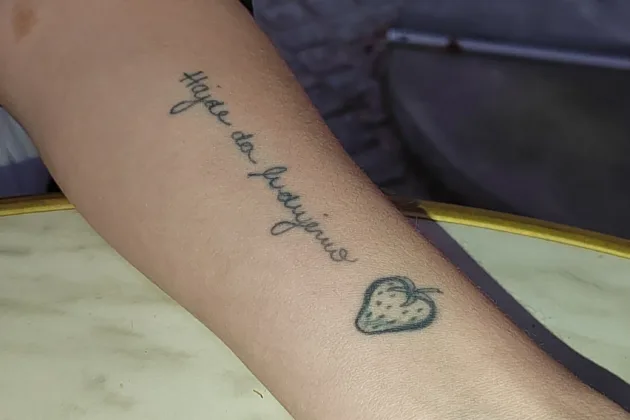
After rolling up a left sleeve of their sweater, a small tattoo becomes visible: it is a line from their favorite song from Eurovision, which says “Hajde da ludujemo”, meaning “let’s go crazy” from Croatian. Next to the words there is a small strawberry that used to be a Eurovision heart – one of the symbols of the contest.
“It has been one of my special interests for 10 years. I used to have like a Eurovision heart next to “Hajde da ludujemo”. And last year I got it covered up with a strawberry, because the first version of this song was called "Berači jagoda" and "jagoda" means strawberry. I will never change my tattoo again because Eurovision has lost its meaning for me.”
On the 4th of December, European Broadcasting Union (EBU), which organizes the contest, held a general assembly, where a few broadcasters raised concerns about Israel’s participation. According to the organization, “a large majority of members agreed that there was no need for a further vote on participation and that the Eurovision Song Contest 2026 should proceed as planned, with the additional safeguards in place.” The EBU made the vote on Israel’s participation dependent on the outcome of the secret ballot, asking 37 countries if they were happy with the new rules, proposed in November. The majority voted in favor of the changes, meaning the further vote would not be held.
In response to that decision, Spain, the Netherlands, Slovenia, Ireland, and Iceland released statements about withdrawing from the next year’s Eurovision.
That day, Enis was keeping their phone ready, awaiting the outcome of the voting. The first news that managed to get out of the assembly room weren’t good. “The first thing I saw actually was that the Netherlands said that they wouldn't compete. And my first reaction was like okay, I know what happened.”
EBU lists one of the reasons for keeping Israel in the contest, as a step towards Eurovision being “non-political” and “neutral”. Enis disagrees with this statement: “It has always been political. If you go back to history and the start of it all, Eurovision has always been political. Also, if you exclude Belarus, if you exclude Russia, Israel should also not be allowed to compete.”
“I'm completely done with this contest. It lost me. It lost a fan of 10 years. And I know they're losing fans left and right about the decision and I'm glad that people are stepping up against the EBU.”