


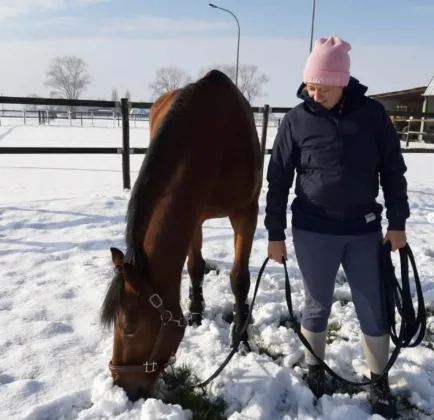
A tension hangs over the warm-up arena. Riders prepare their horses for the competition ring, adjusting tack and taking a few jumps. Magaly steps forward as an FEI steward, scanning the scene with a trained eye. Her task is to identify any infringement of the rules before it becomes a risk to the horse. Here, as an international steward from Belgium, she is a different kind of guardian than she is on the police force.
A steward is responsible for making sure that horses are treated according to FEI welfare and competition rules before, during, and after events. They monitor warm-up areas, stables, and equipment. Stewards intervene when a horse’s wellbeing may be at risk. Working under the Fédération Équestre Internationale (FEI), stewards translate global regulations into action on the ground.
Growing questions about animal welfare have placed equestrian sport in the spotlight, making the steward’s role central to its credibility and existence.
Magaly’s day begins early. She checks schooling areas, and coordinates with veterinarians, judges, and organizers. Throughout the day, she observes horses closely, looking for signs of discomfort, incorrect equipment, or fatigue. Common issues include overly tight nosebands, non-compliant bits, and lameness. These checks may seem small, but together they form a safety net for horses under competitive pressure.
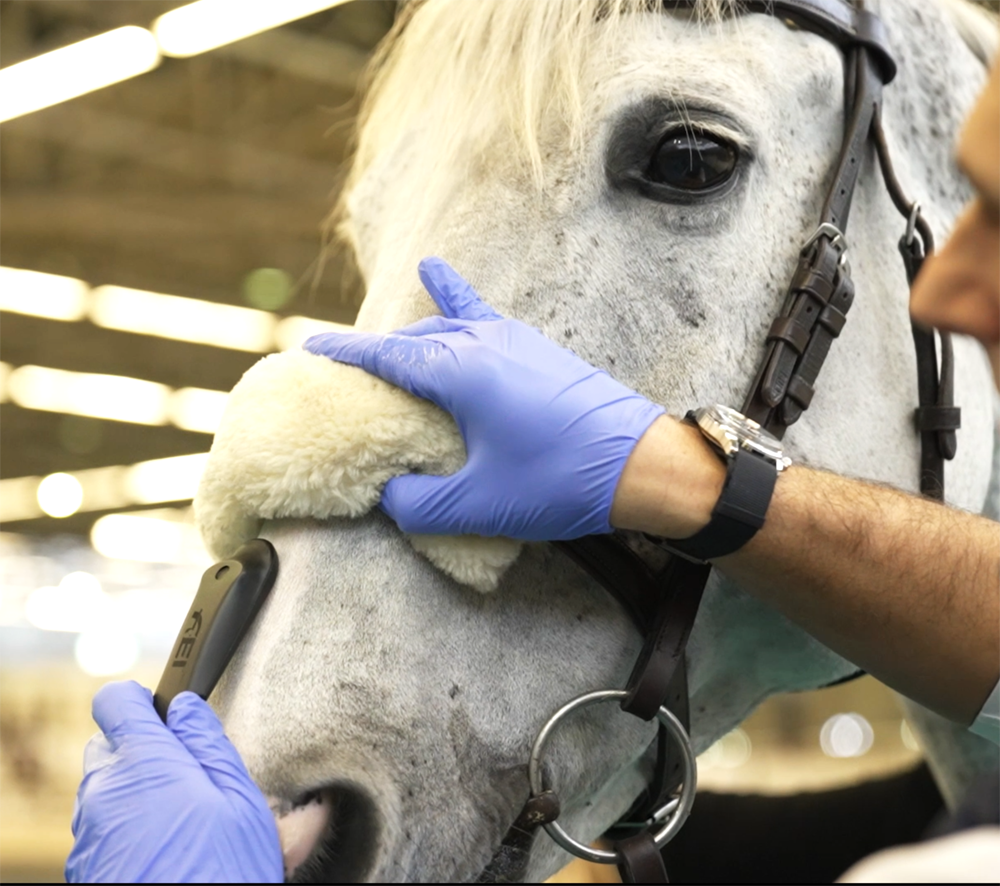
The FEI’s 2025–2026 welfare updates aim to remove uncertainty from the rules. Key changes include stricter noseband measurements, immediate elimination for lameness in jumping, and clearer blood rules. For stewards, these updates reduce the need for discussion with riders but also require consistent and confident enforcement.
Not every intervention is welcomed. When Magaly asks a rider to adjust equipment or to stop a horse, emotions can run high. Riders invest years in training and thousands of euros, and a steward’s decision can end a competition in seconds. Magaly remains calm and explains her reasoning. While frustration is often the first reaction, many riders later recognise that the decision protects their horse above all else.
Welfare enforcement is not always about sanctioning, it is most often about educating riders. However, enforcing welfare rules often means questioning practices that riders have followed for years in the name of competition. Stewards must balance empathy for riders with an uncompromising responsibility towards horses. Stricter horse-welfare rules are essential to keeping the sport alive.
Working both nationally and internationally, Magaly notices differences in how rules are received. At the local level, rules can be harder to enforce, with some riders thinking, “It’s only a local competition, so the rules aren’t that strict here.” In contrast, Belgian national and international competitions often adapt more quickly, supported by strong organizational and veterinary structures. For Magaly, consistency is essential: horses competing at any level should encounter the same welfare standards everywhere.
The FEI sets global regulations for every event, from low-level local competitions to five-star international shows. Local competitions are where most riders begin their journey, learning not just how to compete, but how to care for and respect their horses. By guiding riders at the start of their careers, stewards like Magaly help ensure that as these athletes progress to higher levels, they carry forward a strong understanding of horse welfare and the respect every horse deserves.
Every intervention Magaly makes, every rule she enforces, serves a clear purpose: the welfare of the horse. While local competitions may seem minor, they are where riders first learn to balance ambition with care, developing habits that will follow them as they rise through the ranks. By guiding riders early in their careers, stewards help ensure that respect for the horse is never optional, but foundational. Over time, this consistent attention to welfare shapes the culture of the sport, creating a generation of riders who understand that rules are not obstacles, but they are safeguards.
Stricter welfare rules are not designed to limit the sport, but to secure its future. As equestrian disciplines strive to maintain public trust and their place in the Olympic program, horse welfare has become fundamental. Ultimately, global change depends on daily decisions. Each check in the warm-up ring, each difficult conversation with a rider, reflects a shared commitment to acting as guardians of horse welfare. Through these quiet but critical moments, stewards like Magaly Mondy safeguard both the wellbeing of horses and the integrity of international showjumping.