

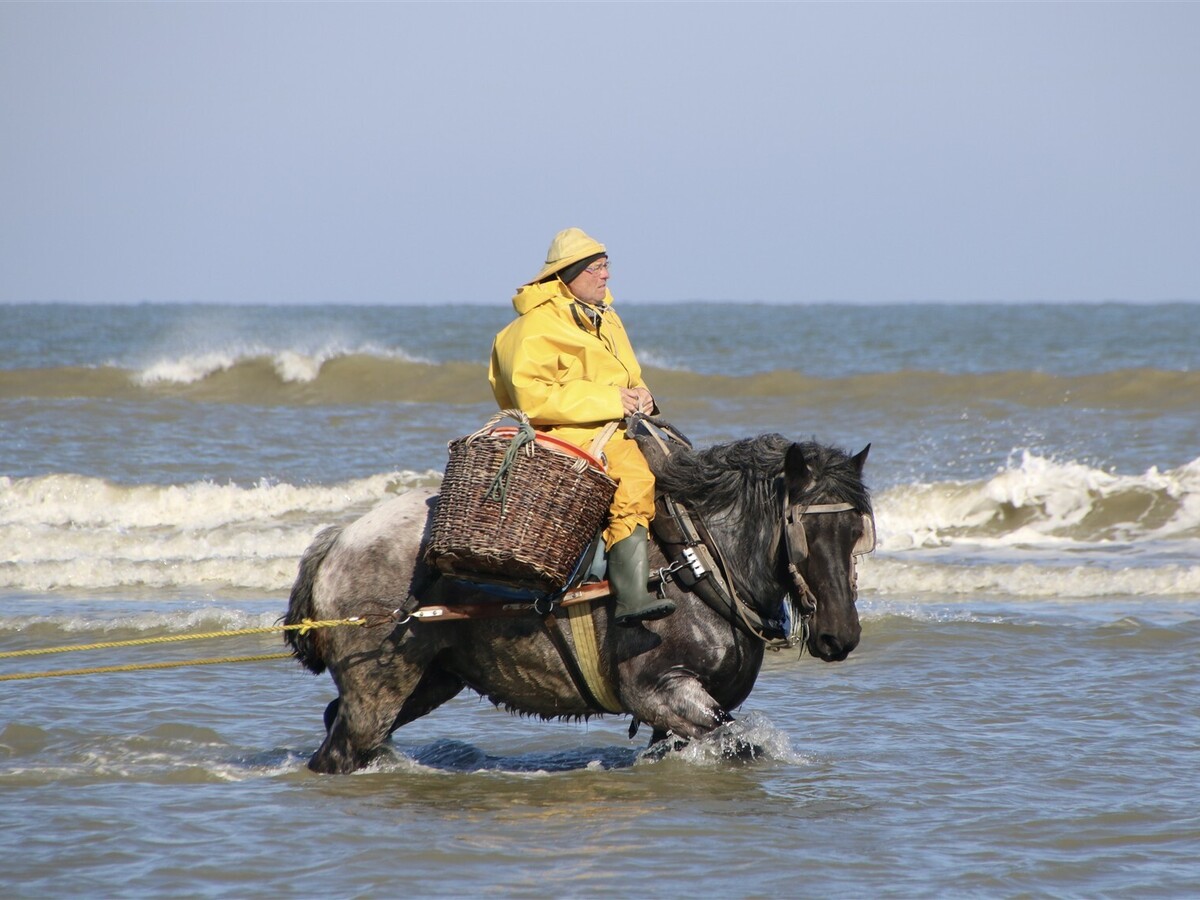
The funnel-shaped net glides through the cold water of the North Sea, pulled parallel to the Belgian coast in Oostduinkerke. Wooden planks attached through ropes, weighing it down, scrape along the seabed, stirring up the sand. Disturbed by the vibrations, shrimp jump upward and are swept into the nets.
The grey, Brabant draft horse with a long black mane uses her muscles to stride through the shallow water, pulling the massive net. On the horse’s sides hang two large wicker baskets used to carry the freshly caught shrimp. Stefaan Hancke is sitting between the baskets, dressed in a bright yellow raincoat, guiding the horse along the coast. Behind him, the shrimp are splashing up and down, getting caught and dragged along.
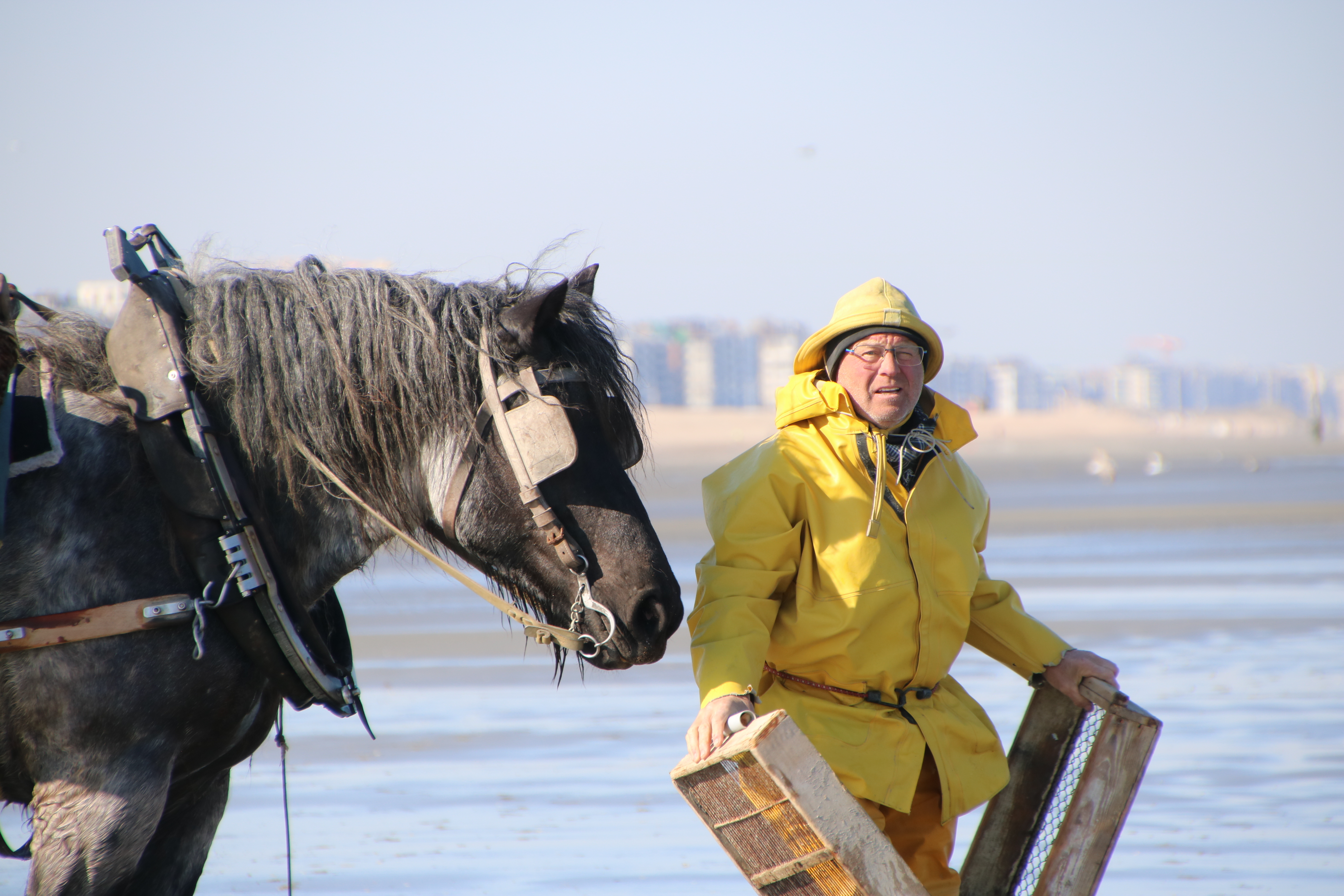
This goes on for 45 minutes, while the fisherman must empty the nets in between. With the wave, the horse walks out of the water, the fisherman, back ashore, must sort out his catch. Larger and mid-sized shrimp are kept, while fish and crabs, the bycatch, are thrown back into the sea.
With his baskets filled, he loads his gear onto the carriage and drives through the beach, dunes, and the polders back to his farm. In a big pot of boiling water, he adds only salt to cook the shrimp. After quickly drying the shrimp in the sun, Stefaan says that you can enjoy them straight away. Stefaan is one of the last shrimp fishers in Oostduinkerke, a slowly dying passion that brings horse and rider together, while using an environmentally friendly way to catch shrimps.
Along the shrimp fisher Stefaan is Xavier, who also grew up along the Belgian coast. He has lived his entire life surrounded by the craft of horseback shrimp fishing. The house he lives in, the pub in front of the house and the stables in the back have been passed down from his grandfather to his father and eventually to him.
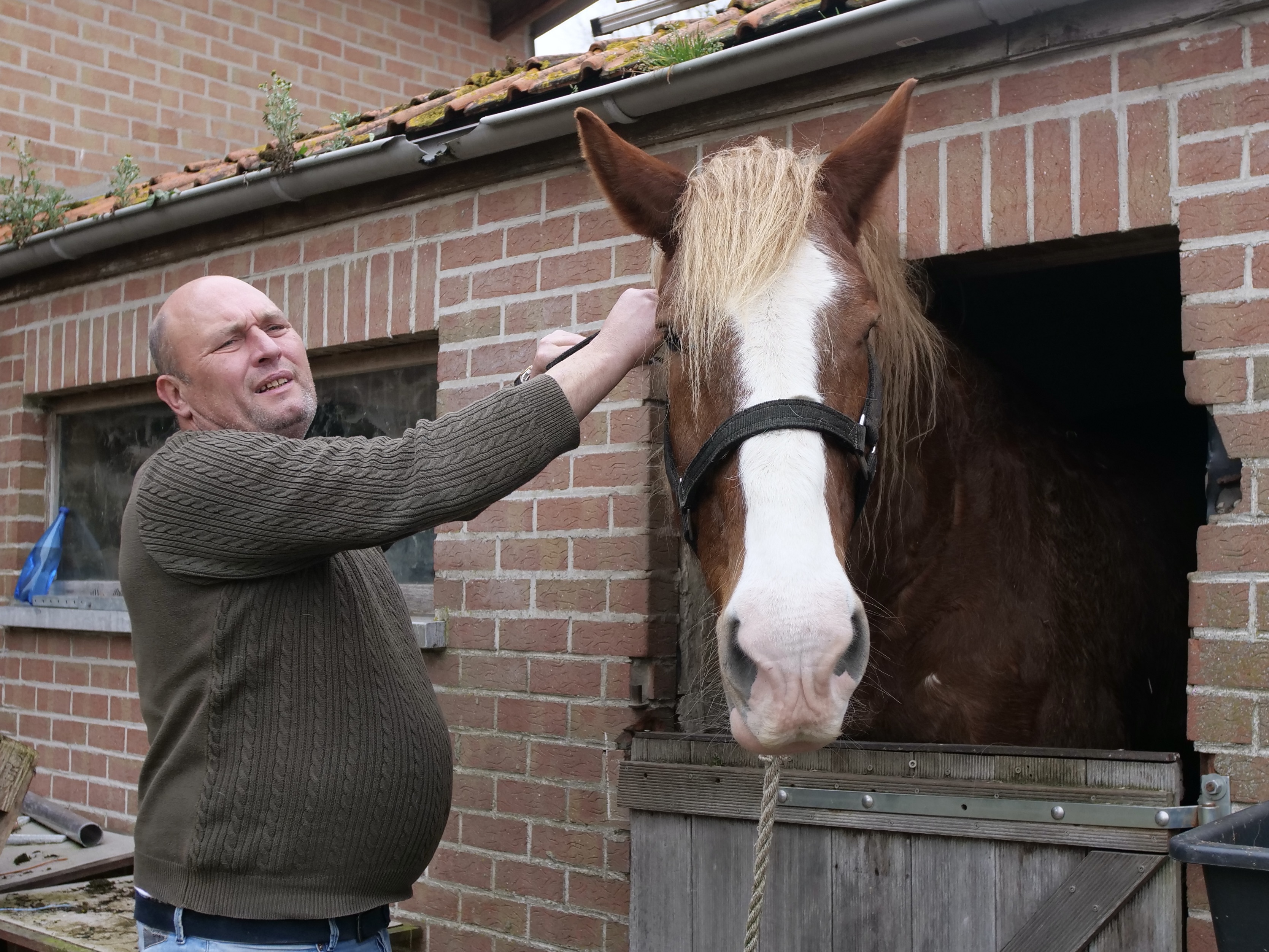
In his family home, Xavier learned to ride his grandfather’s horse when he was about 8 years old. He started horseback fishing with his granddad when he was 12 years old. Today, he combines running the pub with shrimp fishing, continuing a tradition deeply rooted in his family history and the heritage of Oostduinkerke.
Xavier shows us his horse, Urban, who was waiting for him in the stable behind the house. Urban gets excited and restless when he sees his owner coming closer. Xavier explains that a horse needs to be gentle and calm to be a good horse, things that Urban is not. He walks smirking, leading the horse across the green pasture and says, “He is different than the others, he has some power, yeah, some character.”
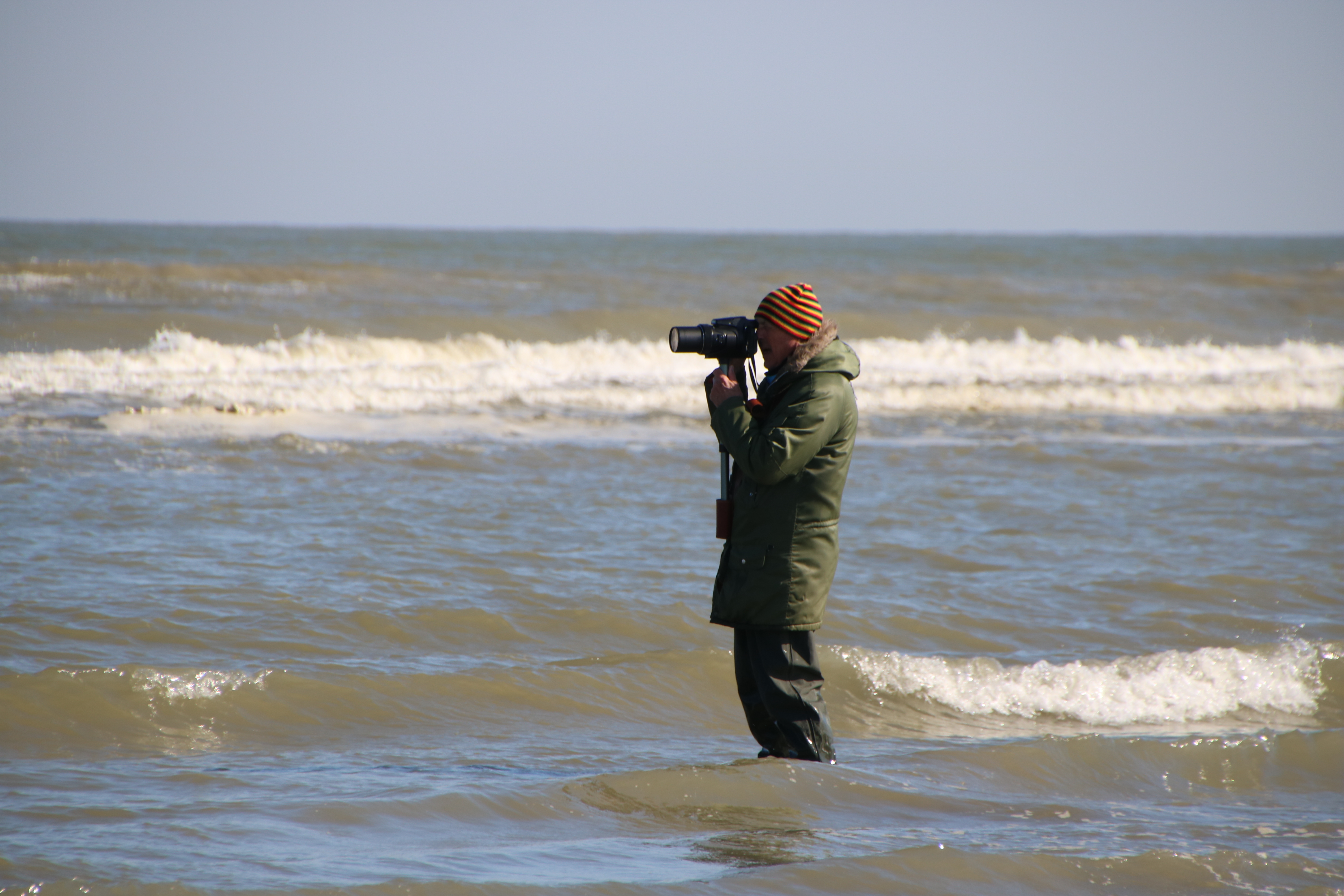
The equipment has changed very little over time. The nets, baskets, and wooden structures are still similar to those used by previous generations. Some parts are replaced over time, as the sea gradually wears them down. Photographer Henri Lemineur, capturing the shrimp fishers multiple times a week, shares: “This is the best way to catch shrimp now, without a machine, without a boat. For the sea, it's the best way to catch them.”
Xavier goes fishing twice a week during the peak season. He enjoys going when the weather is good: “When the shrimps set on shore and there's plenty, then I go fishing.” Stefaan rides out almost every day when the weather allows it, taking visitors to observe his craft and experiencing the fresh taste of shrimp afterwards.
While Stefaan enjoys taking groups, Xavier mainly values peace and quiet, fishing early in the morning by himself; “The quietness, when you're at sea in the morning. The rising of life. When the sun comes up, every minute you have another bird calling you. The water's boiling, no fuss about it, nobody around you. Just the seawater, the birds, and the quietness.”
Shrimp fishing on horseback has been recognised by the United Nations Educational, Scientific and Cultural Organisation (UNESCO) as an Intangible Cultural Heritage of Humanity. Eddy, one of the guides of the Navigo Visserijmuseum in Oostduinkerke, emphasises the uniqueness of this tradition, explaining that “It’s only still practised here. In the past, we had all those flat beaches in Germany and the Netherlands as well. But only here is it still done, and that’s heritage, UNESCO heritage.”
However, Xavier declares that he does not care about the heritage or that it is part of UNESCO; “I do it for myself, not for anybody else. If I like to go to sea, I go to sea. If I don't like to go to sea, I stay at home. It's a hobby of mine; I don't have to live off it.”
The fishers have different reasons and backgrounds pursuing this craft. Xavier does it for the serenity and stillness of nature, while Stefaan explains how he started out of love for the animal; “Actually, there are two types of horse fishermen: people who need a horse to fish, and I became a fisherman out of love for the draft horse. It’s always nice when you can do something with an animal you love.”
Over the years, both fishermen have observed changes in the number of shrimps. “15 years ago, every time we’d go, year-round, we’d catch six to eight kilos in one session. These days it's less”, explains Xavier. Weather conditions such as water temperature and wind play a significant role in whether shrimps show up in big numbers. Xavier adds, “When it's too sunny, when it's too warm, you don't catch any shrimps. When it's too cold, you don't catch any either. We used to start in half of March, fish to June, and half of September start again. But these days it's more the end of October because it's still too warm.” Climate conditions have not only affected the quantity of the catch but also the timing. As a result, the role of shrimp fishing has gradually shifted, as Stefaan explains, “In the past, it was about the shrimp, and tourism was just extra. Now tourism is the main thing, and the shrimp are secondary. There isn’t enough shrimp anymore to cover the cost of maintaining a horse. And a draft horse costs quite a lot of money.”
Despite its recognition as cultural heritage, the survival of shrimp fishing on horseback ultimately depends on the few individuals who continue to practice it. For Stefaan, this reality is becoming increasingly tangible. “I’m already 66. Most horse fishermen stop around 60. And when should you stop? The moment you can’t get on your horse anymore. The hardest part is getting on and off.”
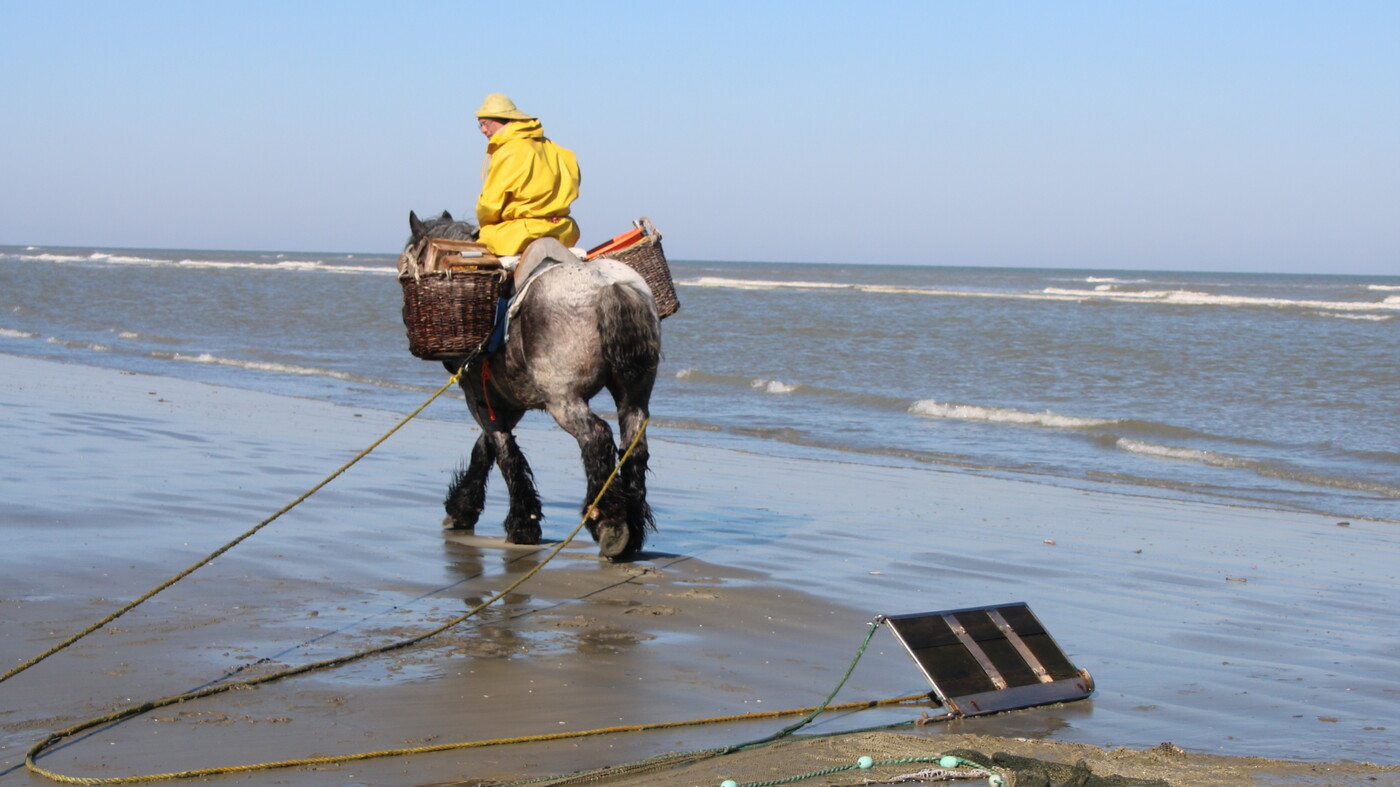
Stefaan rides his horse into the North Sea, towing a wide trawl net behind him as the fishing day begins.
(Credit: Valerie Vernier)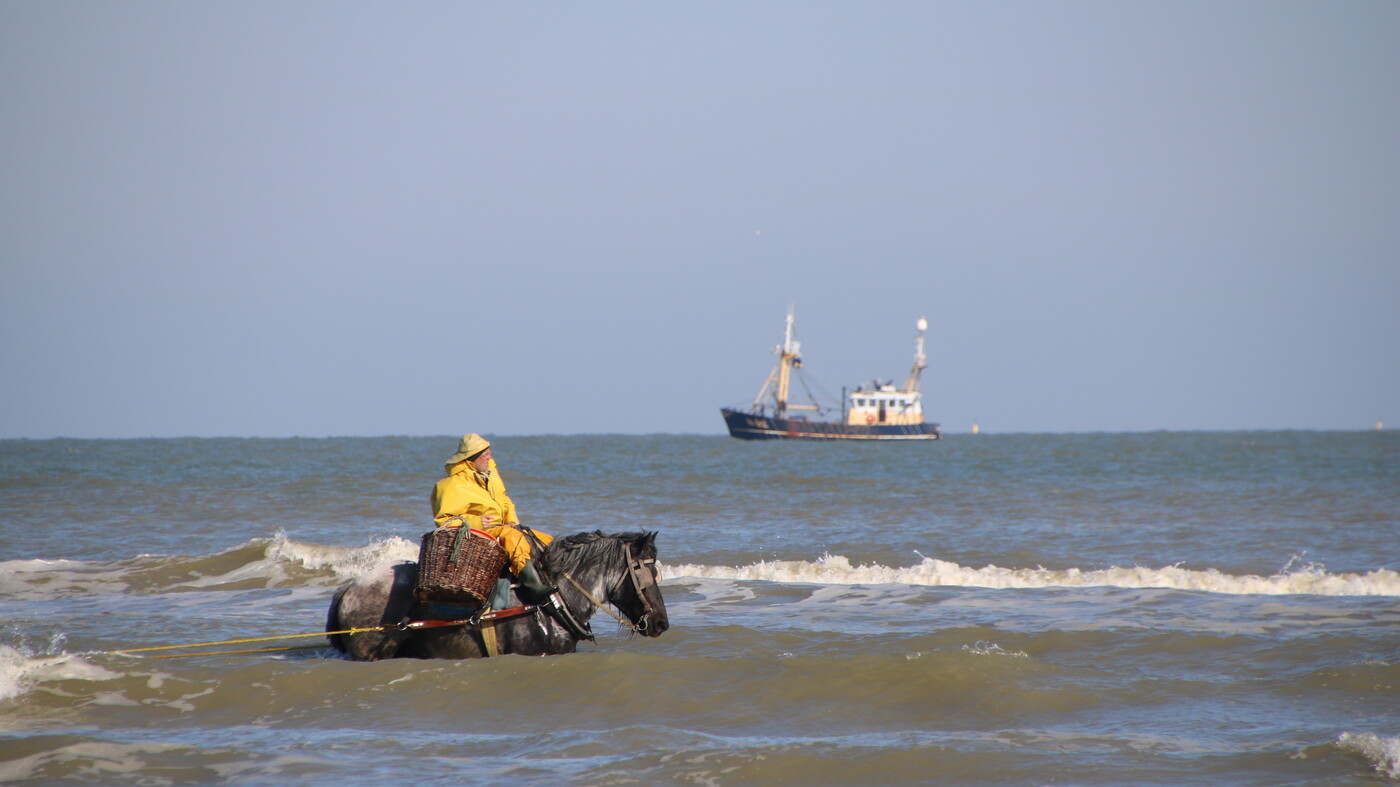
Moving steadily through the surf, chains drag along the seabed, startling shrimp upward into the trailing nets.
(Credit: Valerie Vernier)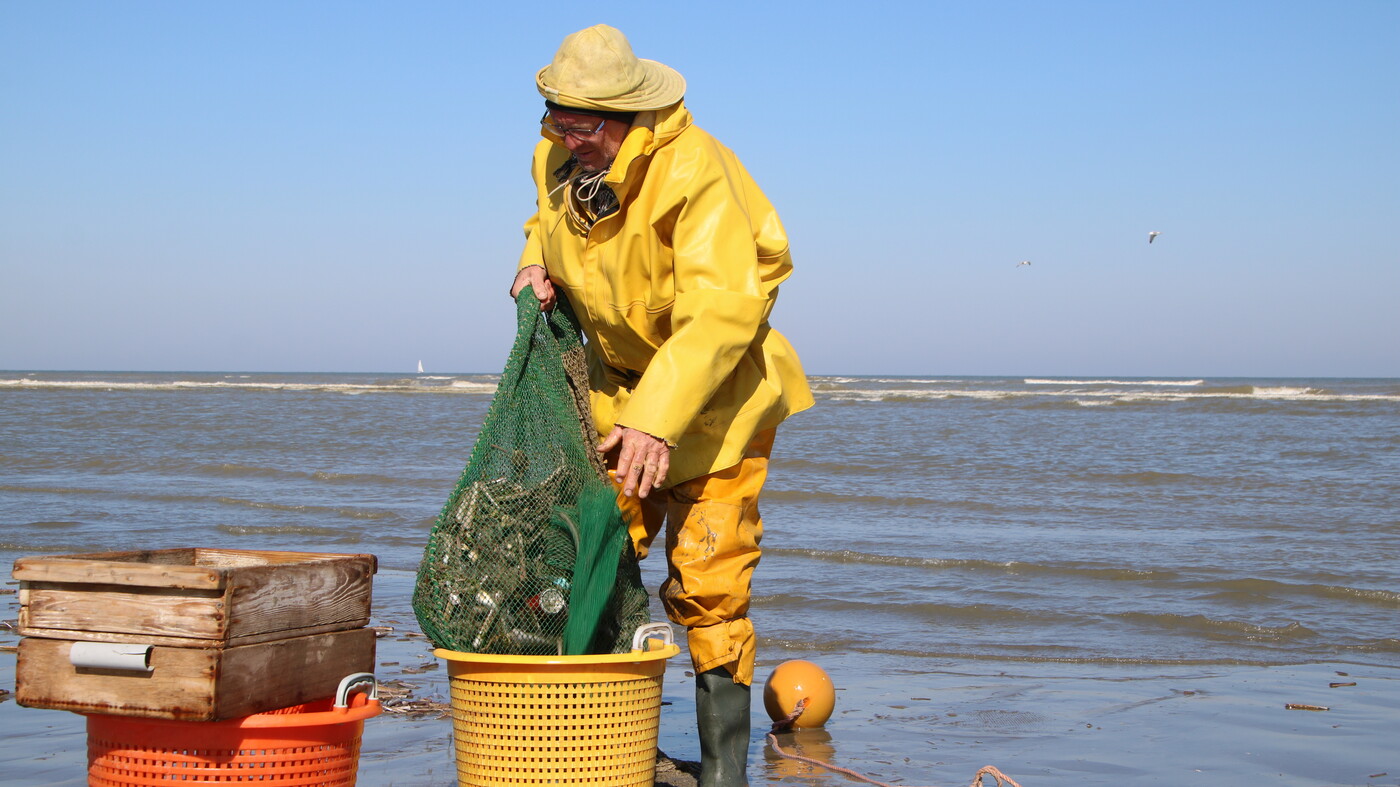
Between passes, Stefaan pauses to haul in and empty the net before returning to the water.
(Credit: Valerie Vernier)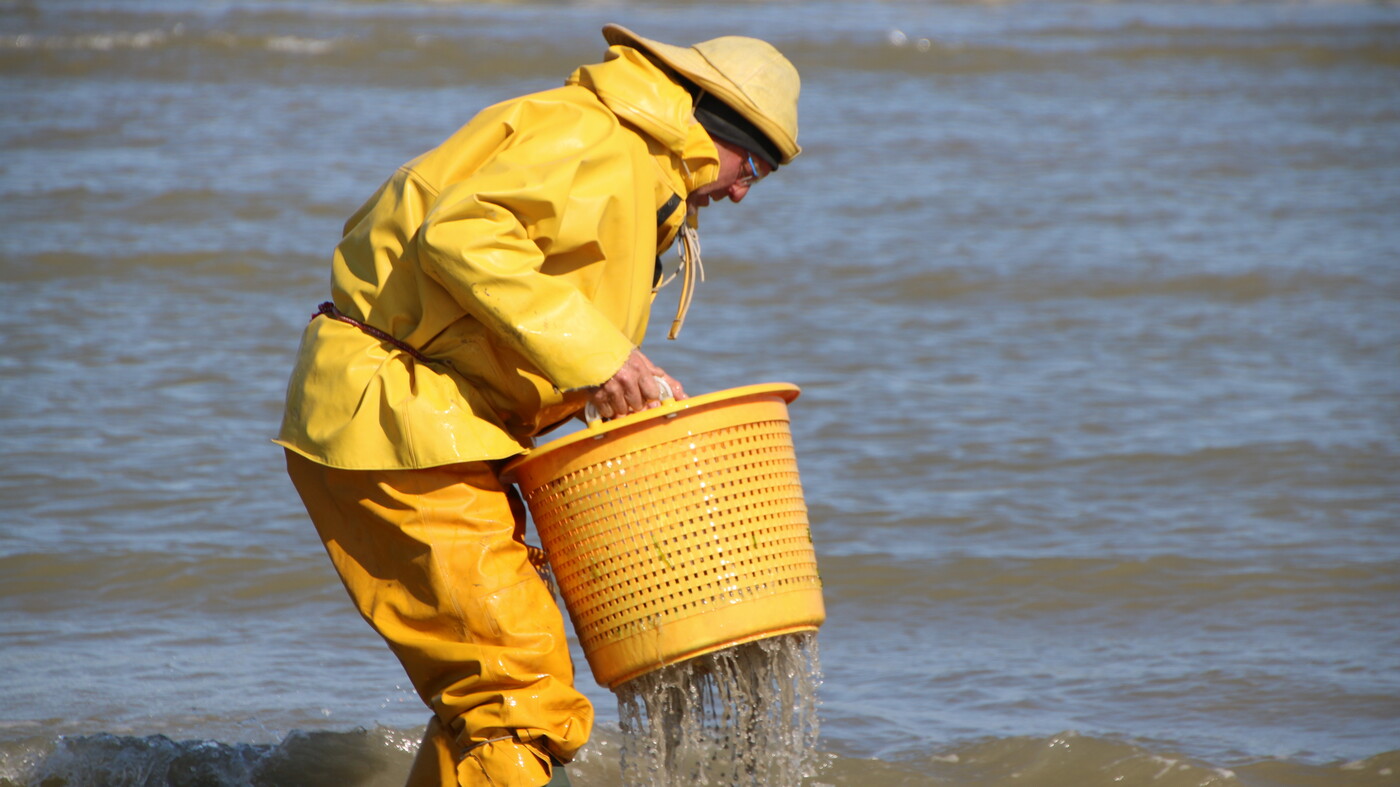
Back in the shallows, he rinses the catch, washing away sand and debris with the movement of the waves.
(Credit: Valerie Vernier)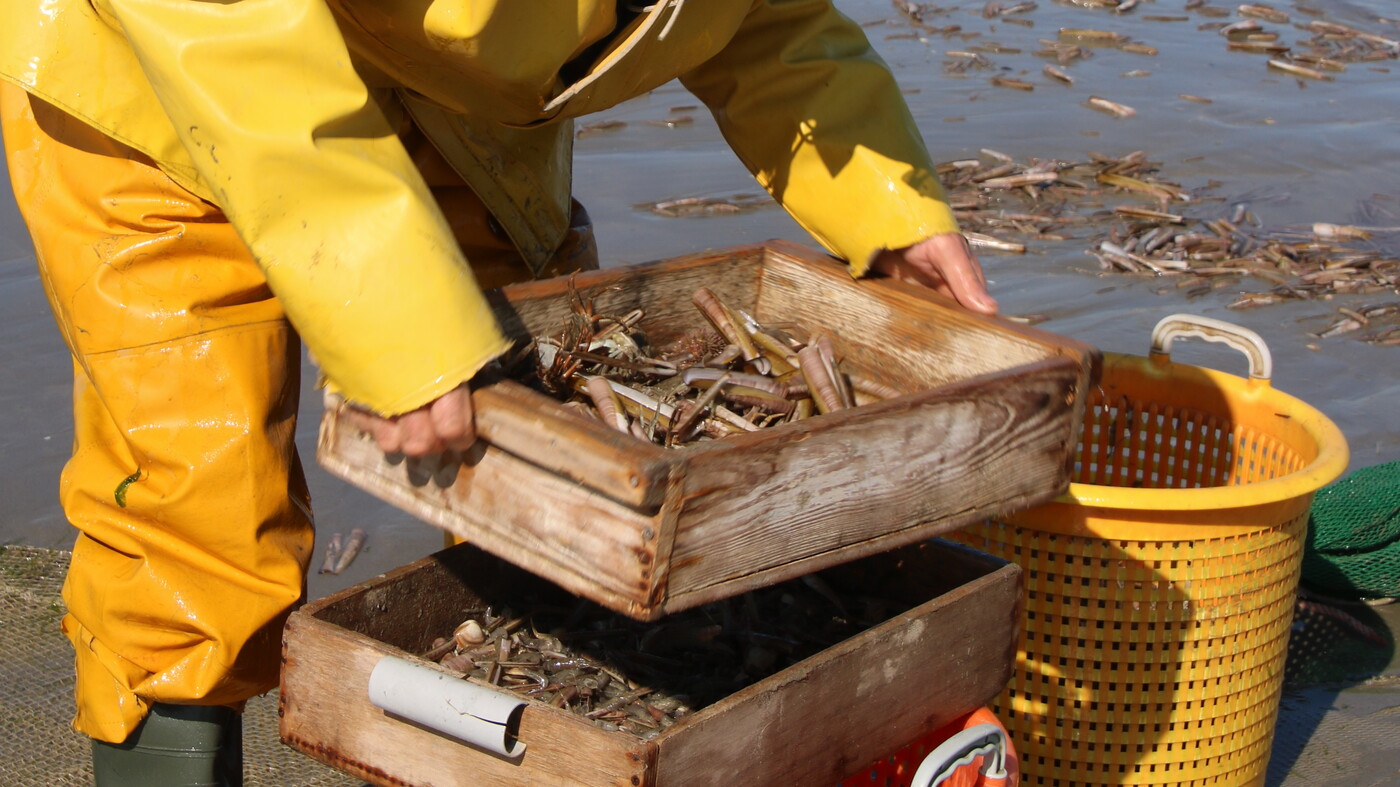
Onshore, wooden sieves are used to sort the haul, separating shrimp from shells and unwanted catch.
(Credit: Valerie Vernier)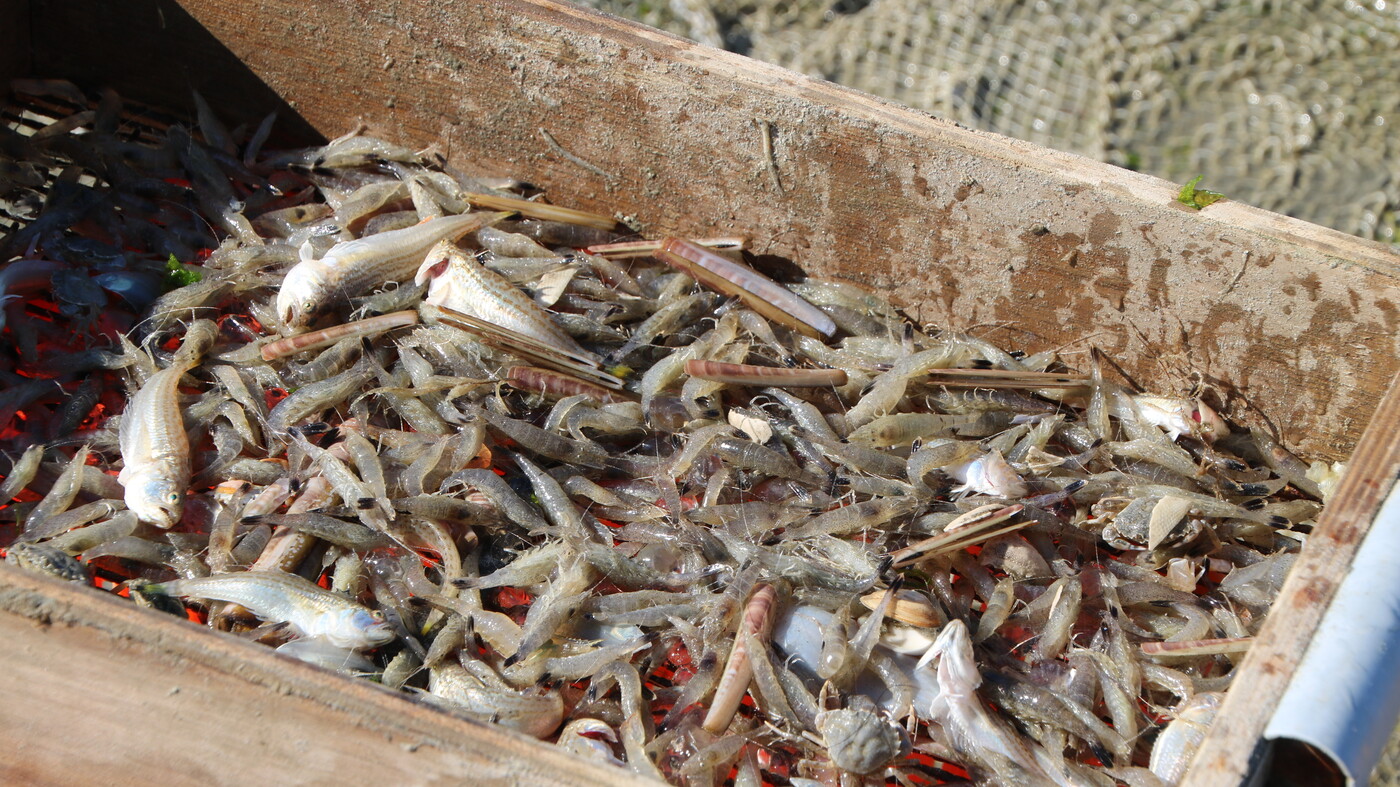
Shrimp are carefully picked out from crabs and small fish, preserving only the desired catch.
(Credit: Valerie Vernier)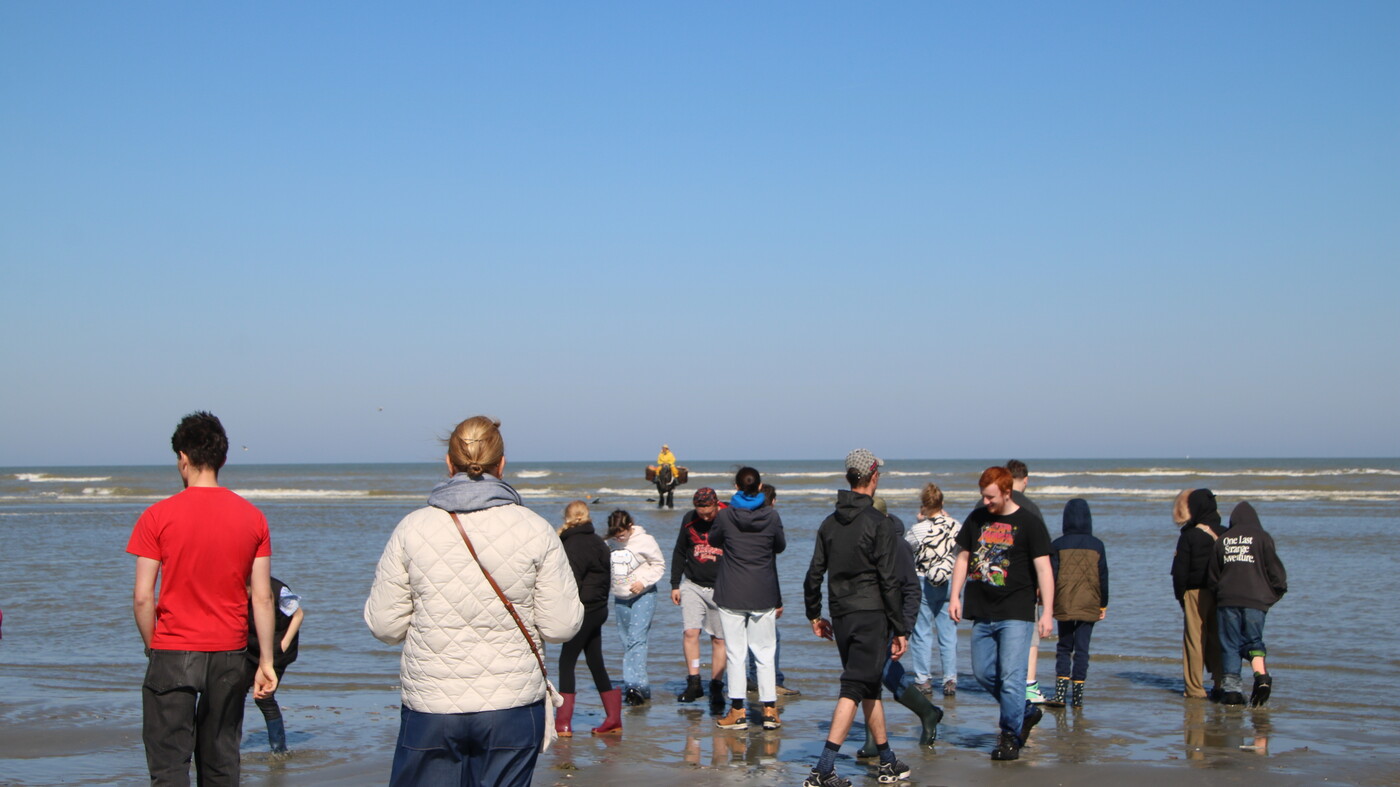
Curious onlookers, including visiting school groups, gather to watch the centuries-old practice of horseback shrimp fishing.
(Credit: Valerie Vernier)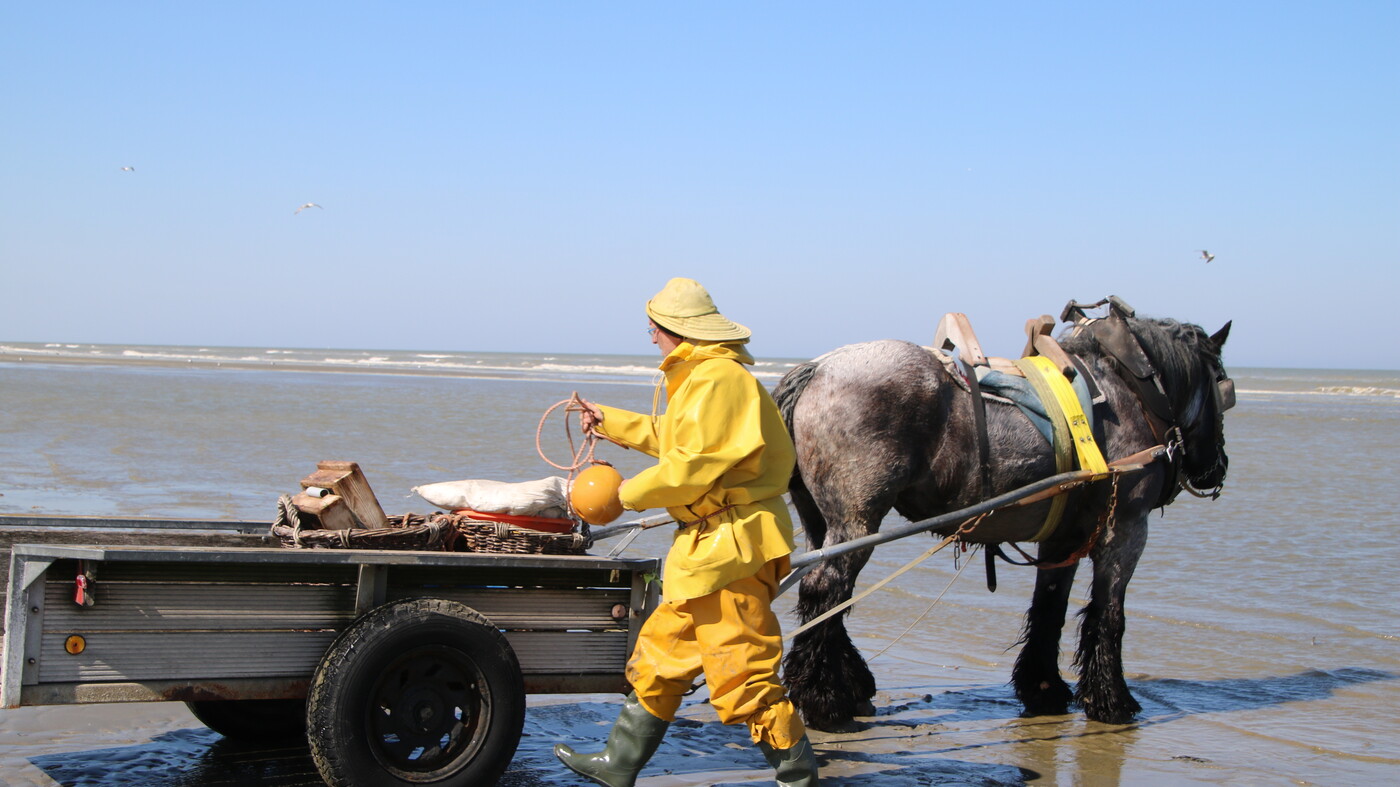
After several fishing runs, Stefaan harnesses his horse to a carriage for the journey home.
(Credit: Valerie Vernier)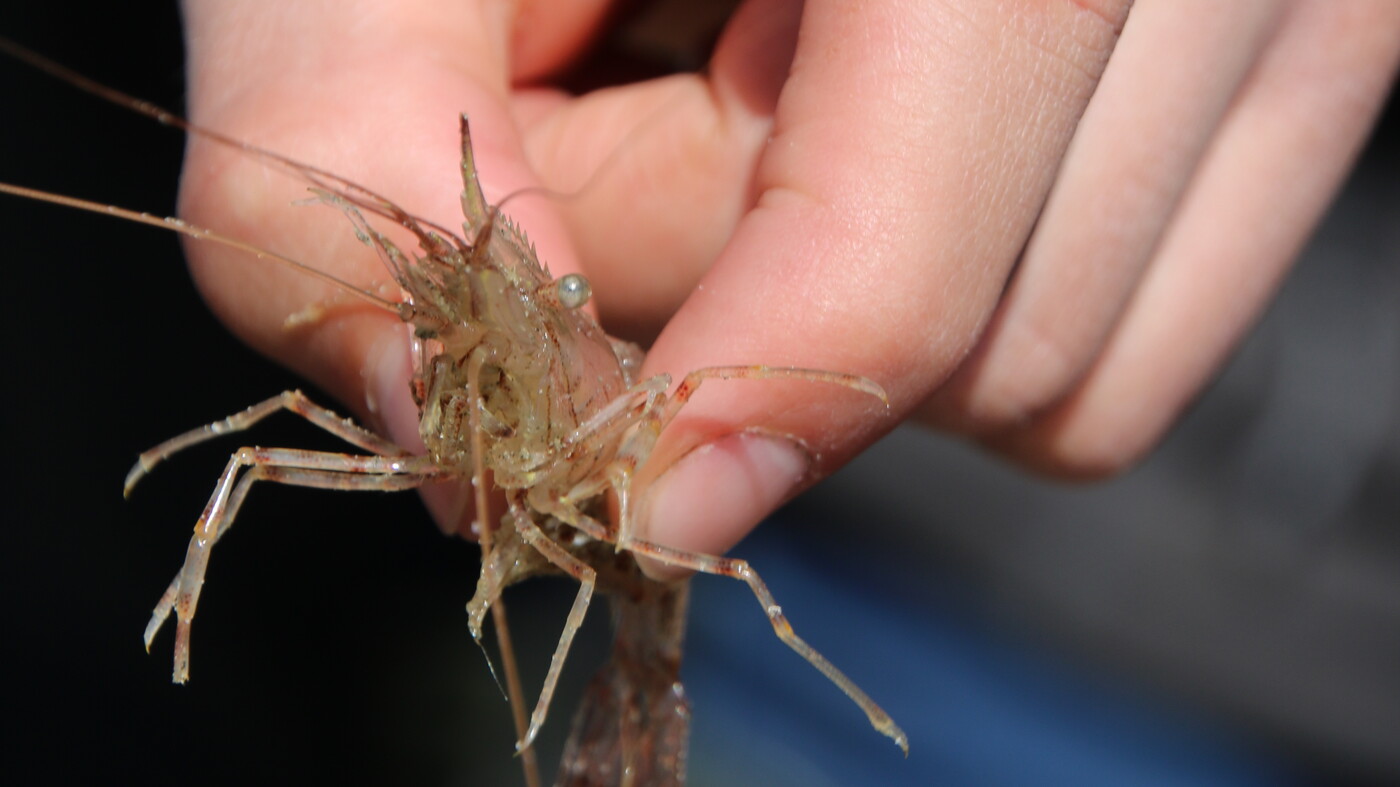
At his home, the shrimp get hand sorted again.
(Credit: Valerie Vernier)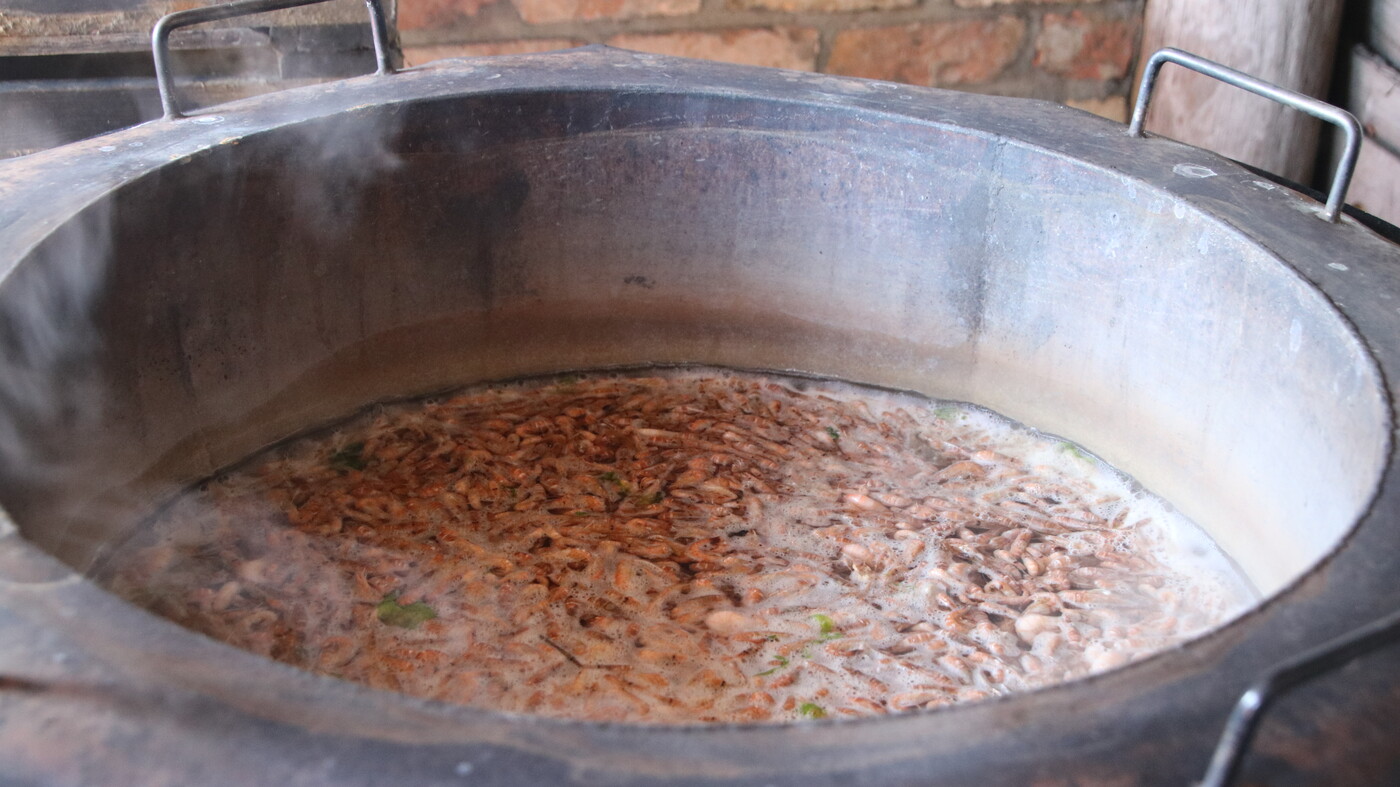
In a traditional wood-fired oven, the shrimp are cooked briefly in salted hot water, carefully kept below boiling.
(Credit: Valerie Vernier)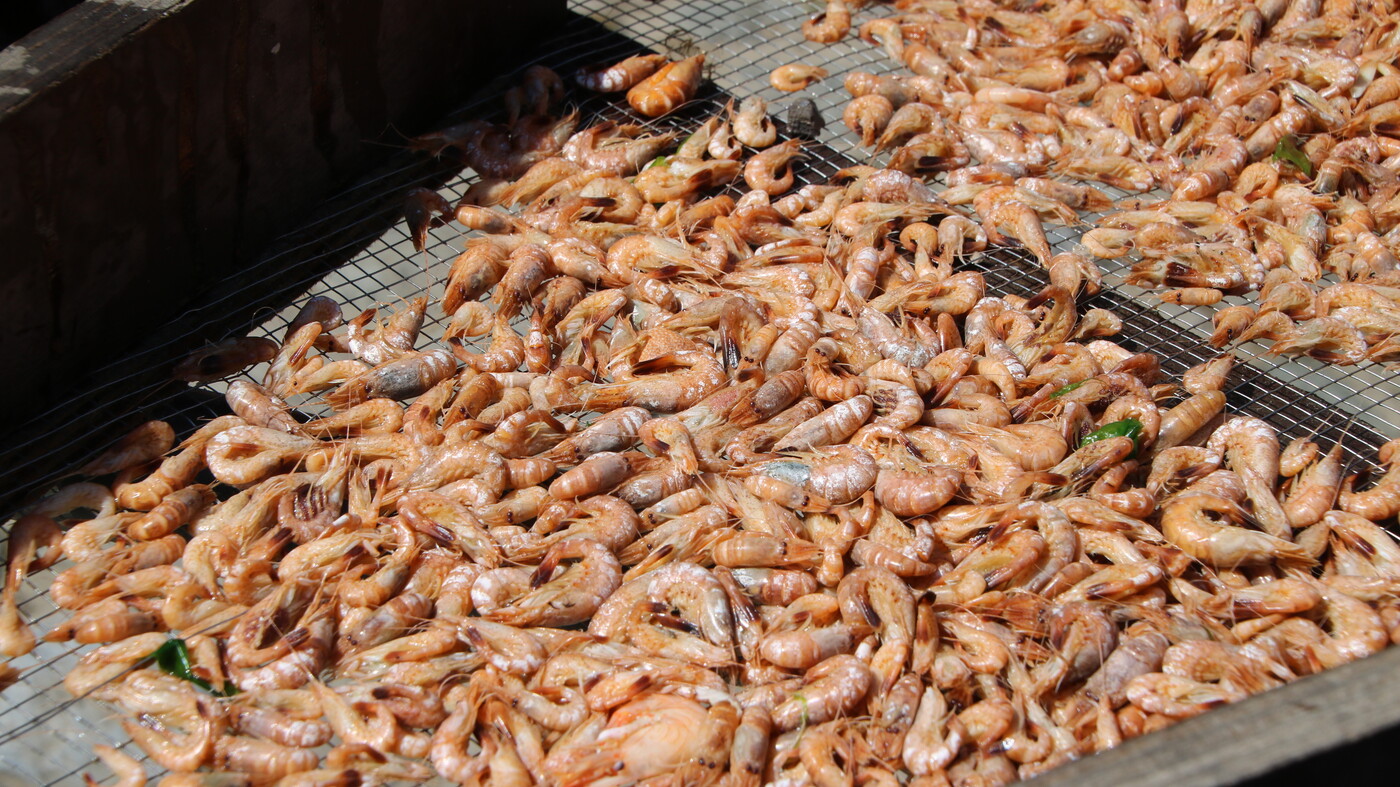
Finally, everyone enjoys the freshly caught shrimp, peeled by hand and shared together.
(Credit: Valerie Vernier)