

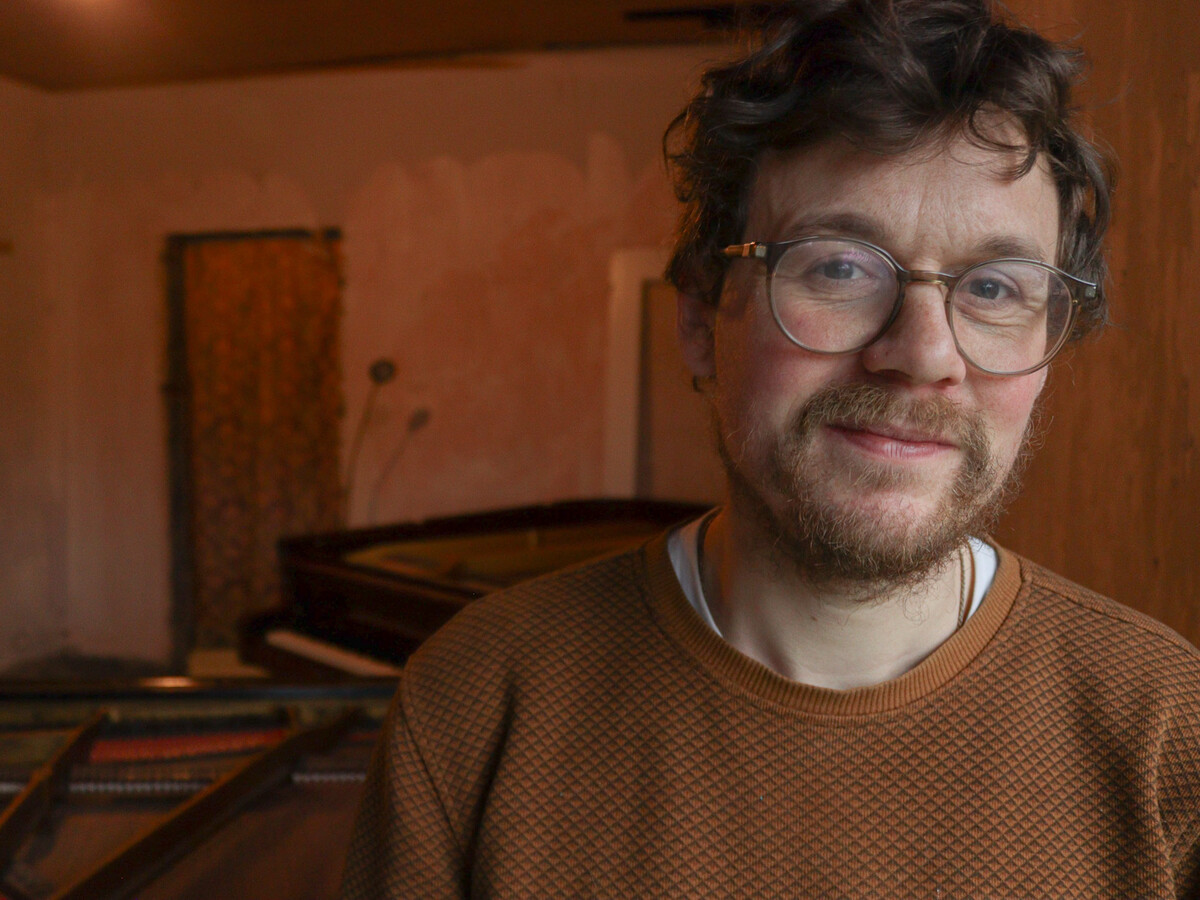
“My father plays the piano, so there was always a piano at home. As a kid, I started exploring and making sounds from very early on. I had my first lesson of classical piano at the age of seven. Pretty soon, I started with jazz courses and I did my first concert when I was around twelve years old. From there on, many followed. But I had been playing all the time until it felt like music chose me instead of me making a decision.”
“There is this unspoken idea about playing music, that it is a sort of hobby or something fun. For me, it has never been something I did to have fun or feel a certain way. You can enjoy playing music but it’s never the end goal. It’s not about the consumption of certain emotions, such as sadness or pleasure, but about experiencing and discovering their unknown parts. It’s more like a religious act for me. If it works, it comes alive. I cannot call this fun, but it can be fulfilling. It was never my hobby to play music.”
“I did not really have a role model growing up. Some artists inspired me, and some people that crossed my path really influenced me, like my piano teacher Erik Vermeulen at the conservatory. In the first lesson, when I was nineteen, he suggested to play a duo together and record it. From then on, we recorded almost weekly. It was intense, because we would listen back to our recordings about twenty times and make notes about each other. He became a good friend really fast. This was a very special time for me. If you compare music to board games, you could say it’s a kind of chess game without winning or losing. Music has its own playground and its own world. Besides that I do not have any other hobbies, even though I was variously creative as a child when drawing or playing theatre."
“About fifteen years ago, I wanted to explore the sounds of the piano even more. The sound a piano makes is never as flexible or authentic as a human voice. So I started playing with two pianos, playing them at the same time, tuned a quartertone apart. I changed my playing techniques so I could play them as one instrument. It was and still is an adventure to relearn the playing techniques. With my concept “Playing with standards” I work with harmonies and melodies that are part of our collective memory, but I don’t treat them as fixed objects. I play in a way that forgetting is more important than remembering. It allows the music and the audience to be present in the moment and leaves space for imagination that responds to the present context. This flexibility is also reflected in the jazz traditions. The instruments are in some way, living.”
“Belgium is a small country. Being in a small artist scene makes it possible to meet other musicians who understand music or arts in a similar way. Our scene is very diverse, with a mixture of several genres and ways of playing. As there are only four or five big cultural cities in Belgium, this makes it more difficult to make a living. Going outside of Belgium is our way to make a living, but this is also challenging, because every country protects their own artists or culture. I did enjoy my concerts abroad a lot.”
“I believe it is always important to find a balance between new artistic challenges and family life and to find a healthy middle way. Becoming a parent at the really young age of twenty helped me bring structure into my life, while also teaching myself to be flexible. I sometimes see colleagues and wonder whether they may be avoiding their role as parents by always making time for performing anywhere and everytime.”
“I have never thought about stopping or had the urge to not perform. There were times when I had physical issues, too much tensions on my tendons, which made it more difficult to practice, but then I focused more on writing new pieces or on new interpretations of songs. I had to find a way to relax my body and my nerves during the stressful times of an artist. But the body gets used to playing. Now I can practice for however long I want.”