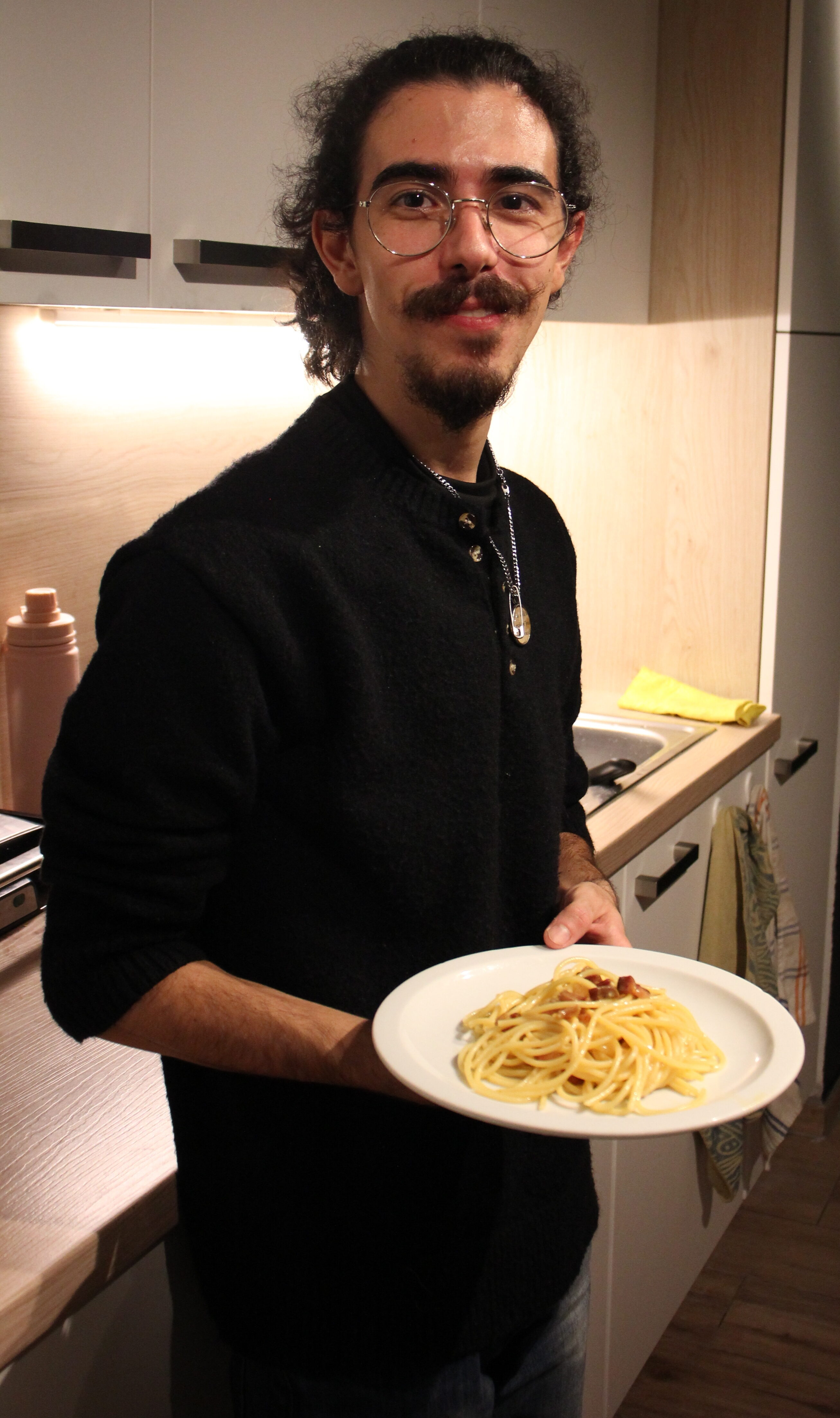

The kitchen is untidy, and the ingredients are spread on the table. The girls are hungry and talking about their day. They are tired, it’s been a tough week with more work yet to come, but at this moment, they relax. The smell of the so dreamt carbonara makes them excited; they’ve been talking about it the whole week, and it’s finally the moment to taste it.
Meanwhile, Giuseppe, Italian born and raised in Sardinia that lived in Belgium for his studies says, “I’ve tried pre-made sauces when I was in university. It’s not the same recipe, of course. The ingredients are not fresh, but it’s good, you can eat it.”. He’s sharing how he’s tired of Italians that go to other countries and expect to be served the exact same recipes that they would have at their homeland. “The only reason why he was mad is because he’s from the far right and they are so extremist about Italian culture”.
In the end of November, Italy’s Minister of Agriculture, Francesco Lollobrigida (Fratelli d’Italia), expressed his outrage on social media over Belgian store, Delhaize’s, carbonara sauce being sold on the European Parliament market.
The supermarket version contains cream and pancetta, while the original recipe is made with eggs, Pecorino Toscano (cheese) and guanciale (pork jowl).
“Leaving aside the pancetta in the carbonara... all these products represent the worst of Italian-sounding products.”, Lollobridiga mentioned in his social media post.
This Italian-sounding phenomenon refers to products that are marketed as Italian, but do not originate from Italy. An ISMEA’S (Institute of Services for the Agricultural and Food Market) 2023 study found that this practice accounts for about $97 billion worldwide. While original Italian food exports total around $64 billion. By pretending to be Italian, these businesses can profit from the Italian food-reputation without investing the money necessary to import the original products.
Even though Giuseppe tried the counterfeited pre-made sauces, on his first night living alone as an immigrant, he said he wanted to treat himself right, so he decided to cook carbonara for the first time. “My grandmother always says ‘Cook a carbonara!’”, “but I messed up!”, “The guanciale was burnt and the sauce became scrambled eggs”.
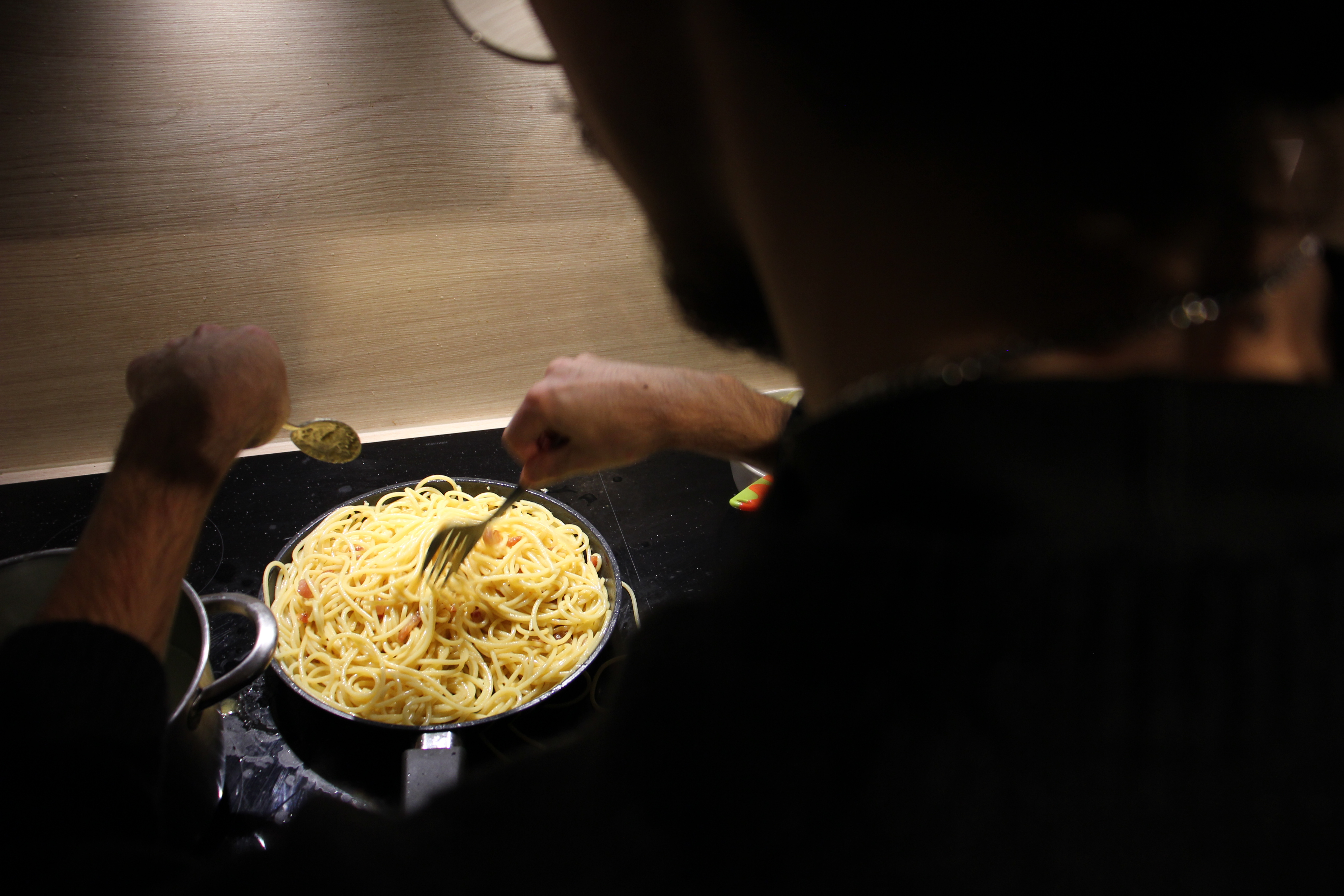
This unsuccessful recipe gave him the opportunity to develop a closer relationship with his grandmother. “I told her that I made carbonara, but I didn’t send a picture, I was too ashamed. After that, we started calling every weekend to cook together”, “This was special to me because before that we didn’t have a relationship at all, but cooking united us. In Italy, cooking unites all the family”.
Alberto Grandi, food historian and professor of Economic History at the University of Parma that researches Italian food origin, recognizes that food plays a role on connection on the country, “Preserving traditional Italian cuisine is deeply tied to identity and a sense of belonging”, he says.
However, Grandi complements that with a theory that caused outrage in Italy, where preserving tradition is important. He claims that carbonara was invented in Italy just after World War II using US Army provisions like bacon and powdered egg yolks, countering the idea that the original recipe includes guanciale and pecorino, despite Lollobrigida passionate defense of the dish authenticity.
“The attachment many Italians feel to ingredients like pecorino and guanciale often reflects a defense of traditions that are largely invented”, “Even when recipes have evolved over time, the “authentic” versions people defend so passionately are more symbolic than historical.”, he says.
Giuseppe also recognizes the possibility of changing the original recipe. He shared that in his family, they cook what they call an “speckanara”, which is a carbonara made with speck, curated meat from the pork’s hind leg, instead of guanciale. “If you want to cook a carbonara and call it a carbonara, use pecorino and guanciale, but if you want to cook a “speckanara” or whatever, you can use the ingredients you want.”.
“I once made speckanara for you too”, said Giuseppe, “cooking for other people, is a part of Italian culture”, “when you like people, you have to make sure that they are eating good, that’s the most important thing”.
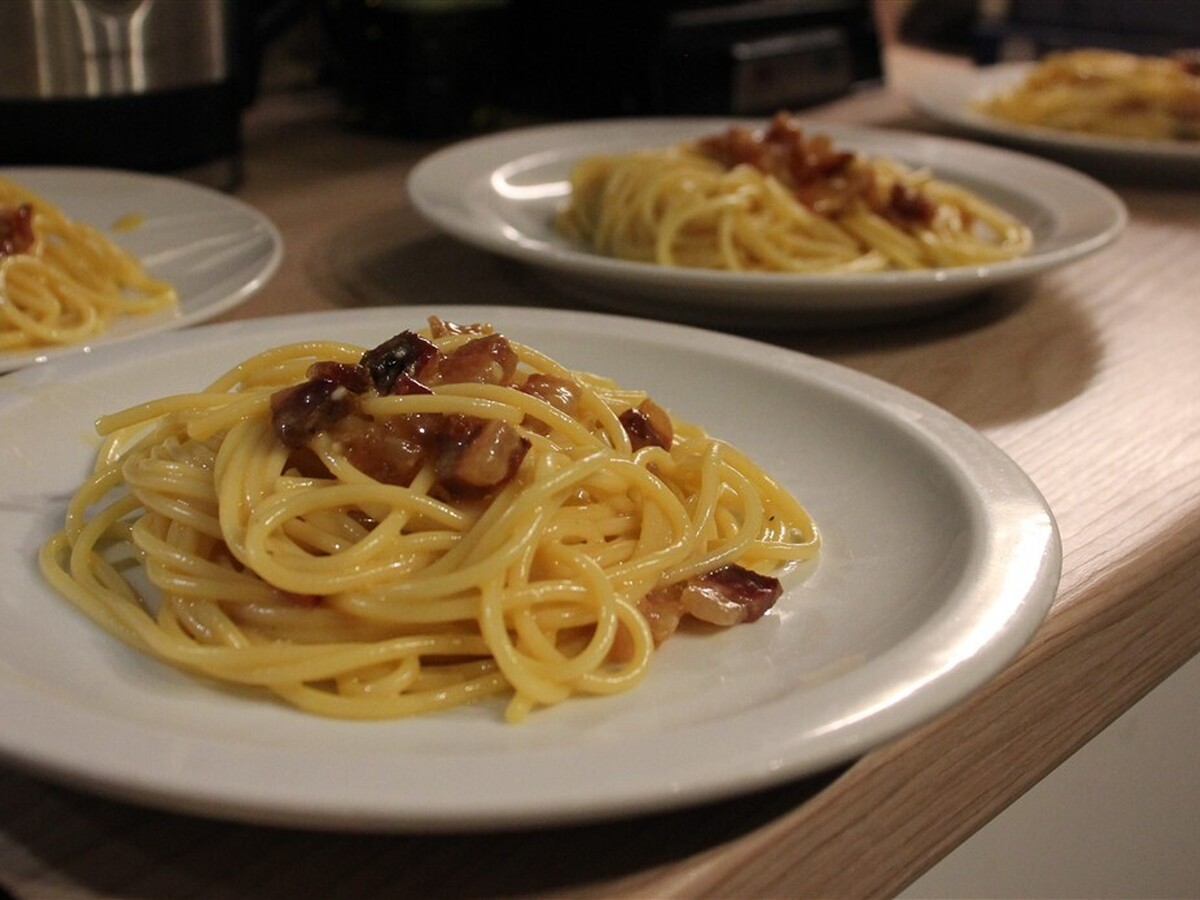
After cleaning the table, Giuseppe serves the carbonara. The yellowish sauce shines like gold, and the fatty guanciale seems like it’s melting at it.
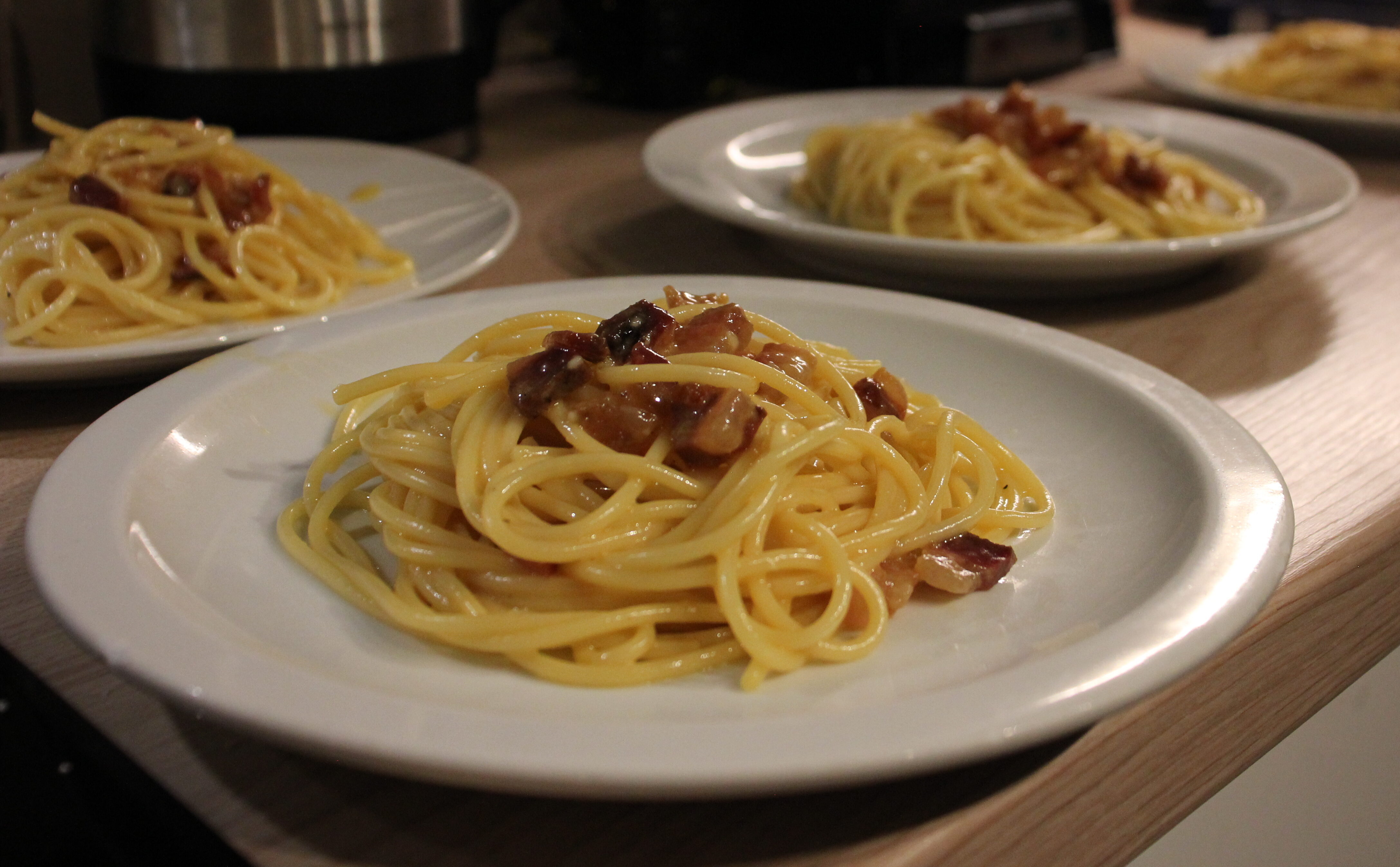
Everyone is so thrilled that they don’t even have time to roll the spaghetti on the fork, so there are dangling strands when they taste it. They roll their eyes and groan, satisfied. The top of the guanciale is crunchy, but the rest is soft and greasy, combining perfectly with the rich, silky sauce. “I could eat 5kg of this”, says Anna, making them all laugh in unison. The night ends like this, with fellowship laughter and mealtime conversations.
Giuseppe said that sharing a meal is when you're together and present at the moment and, for him, this moment is more important than the recipe.