

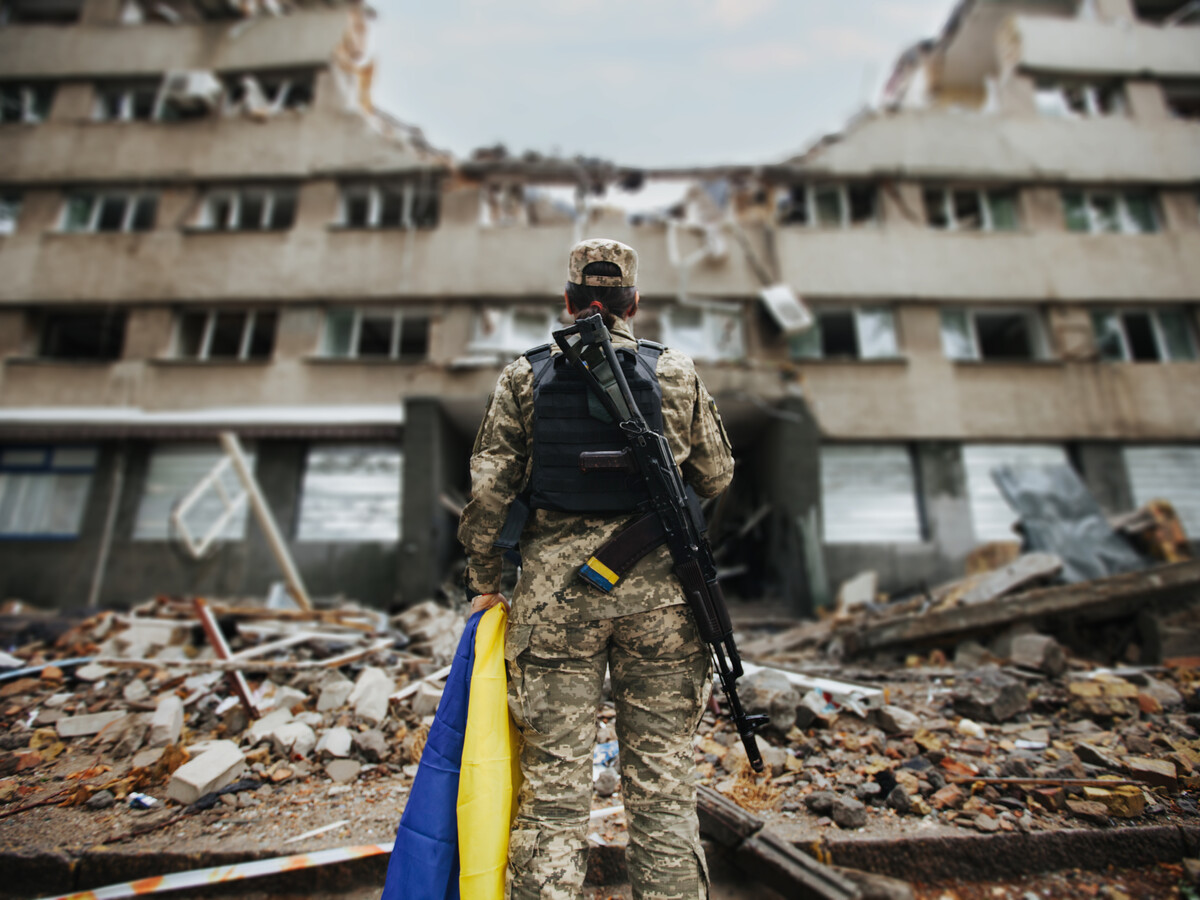
At the very beginning of Russia’s invasion of Ukraine, staying in Kyiv seemed like the only possible option.
“Now and then I was speaking with my friends who left for Belgium during the first days ... it was just terrible because all the railway stations were full with people and all the trains were full with people. It was a nightmare. I was reading about it and I thought, it's so great that I'm staying in Kyiv!”
The city was being shelled, but Natalya and her family had stayed safe. “Since the 24th of February, for about a month we never slept at home,” Natalya explains. Instead, her family was forced to sleep in bomb shelters.
The danger seemed distant, relative in a way.
Like many aspects of the invasion, though, things change. And they change fast. Russia’s assault on the Ukrainian capital hadn’t ceased, and the dangers were unnervingly close to home.
At some point, an intercepted missile had caused a shock wave so severe that in one of her daughter’s schools, “All the doors, all the windows were just smashed.”
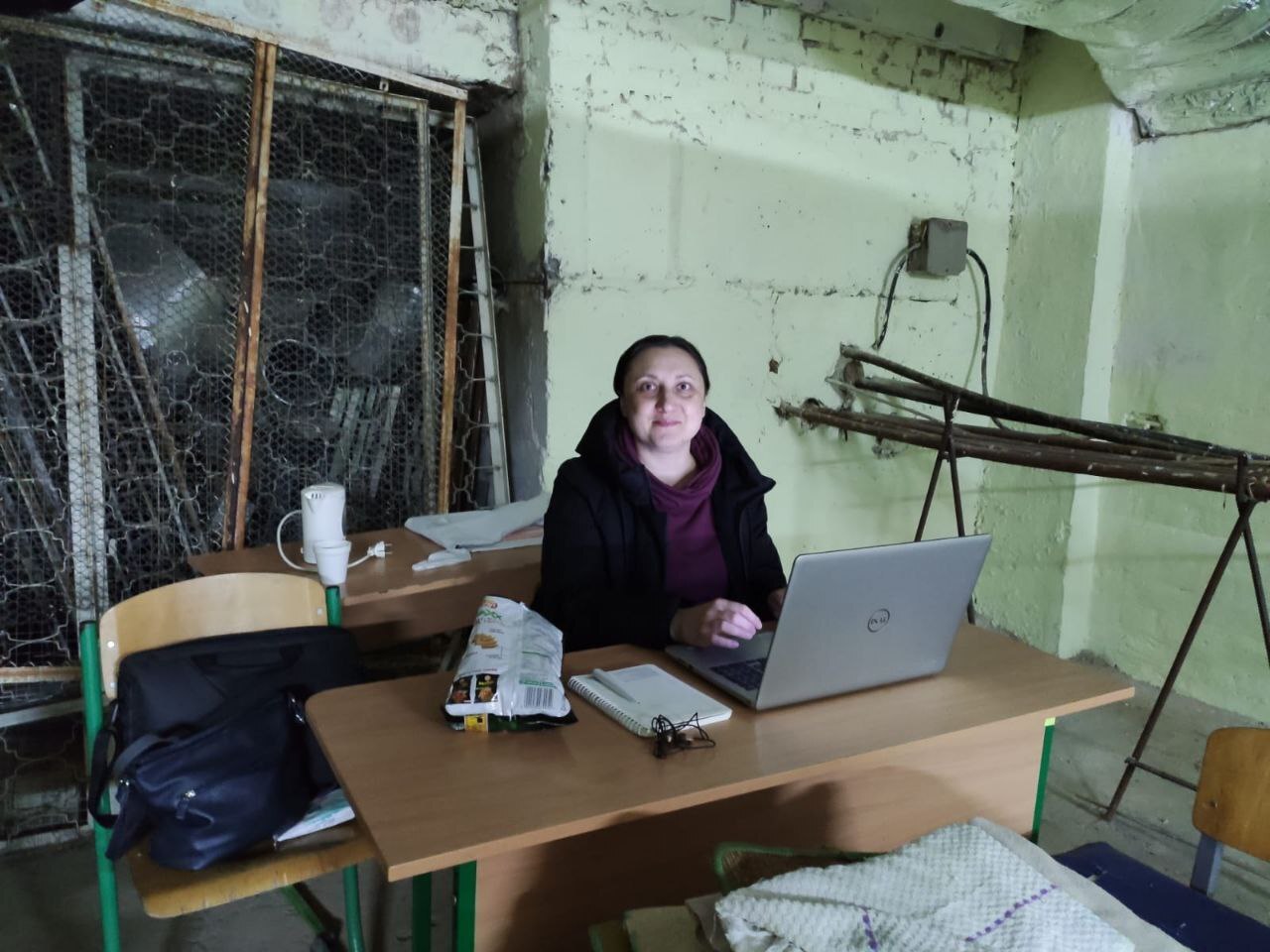
It was only a matter of months after Russia began shelling Kyiv before Natalya made the decision to take herself and her two daughters to Belgium in April of 2022. A temporary measure.
“At first it was like staying in some cozy country place with some lovely Belgian grandmother who invited us to live at her place,” she reminisces. As time went on, though, the warm welcome of the host family was not enough to quell the need to be active. Having lost her consulting project due to the invasion, Natalya had to forge a new path, one that put her in “survival mode” as she tried to fight the inaction that plagued her.
After fast-tracking herself through a Dutch course, she was faced with a search for the next step in her career that seemed to lead to nothing and no one. “People were telling me, ‘maybe in September.’ I thought, are you nuts? I’ll be in Ukraine in September.”
More than three years later, war rages on, yet the Zhygalkina-Slinko family – and Ukraine – keep going. Now based in the modest city of Oudenaarde, much of Natalya’s journey in the meantime has been a quest to add value everywhere she can. Along the way, she found herself creating a new life as a social worker, first facilitating English-Ukranian translations for some of the over 90,000 Ukrainian refugees in Belgium, and now as a consultant at the crisis village for Ukranians in Ghent.
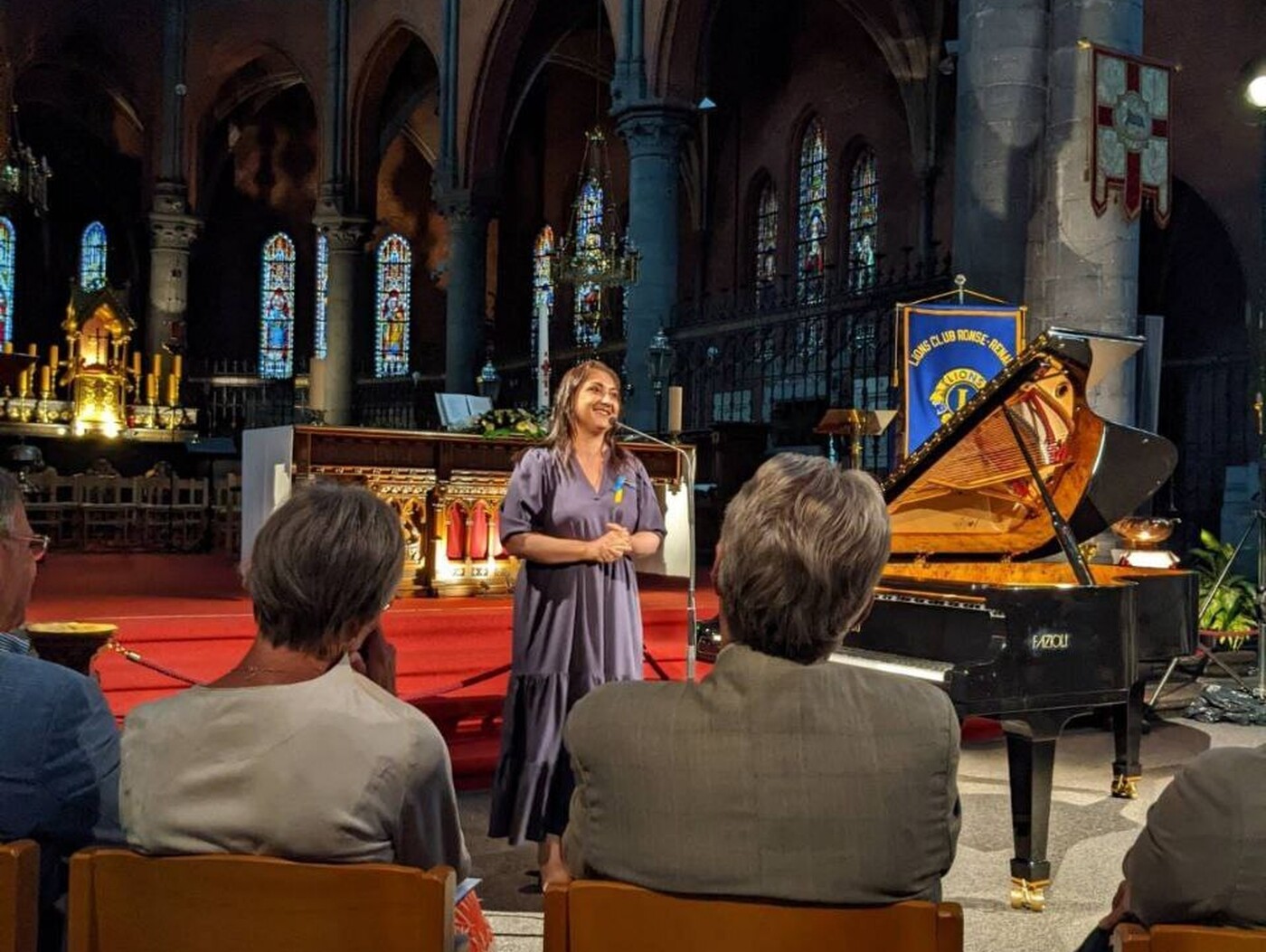
Natalya has had the opportunity to speak in support of Ukraine at several events in Belgium for charities, including Lions of Ronse
(Credit: Personal archive of Natalya Zhygalkina-Slinko)
“If I am able to do something, it keeps me resourceful. Otherwise I just sink into depression, so the social work [aimed at helping Ukrainians] is a perfect option." She had never imagined that she would end up working for the government, but the “accidental decision” allowed her to take control over her career. “If you don't have your own agenda, you will have to accept the agenda that you won't like 100%; so you should create your own agenda.”
Natalya’s pragmaticism cannot be mistaken for emotional detachment, however; there’s an undeniable pride with which she describes Ukraine’s industrious strength, both here and on the frontlines.
“For us, it’s an existential choice to fight in every sphere that we can.” And the story on the ground certainly seems to show that same fight.
While the country’s economic growth has been slowing in the past year, the people seem undeterred. Culture, restaurants, and industry solider on. The people keep strong as the frontlines edge along. For Westerners, this determination seems almost alien as Natalya has observed, both on the interpersonal and diplomatic levels.
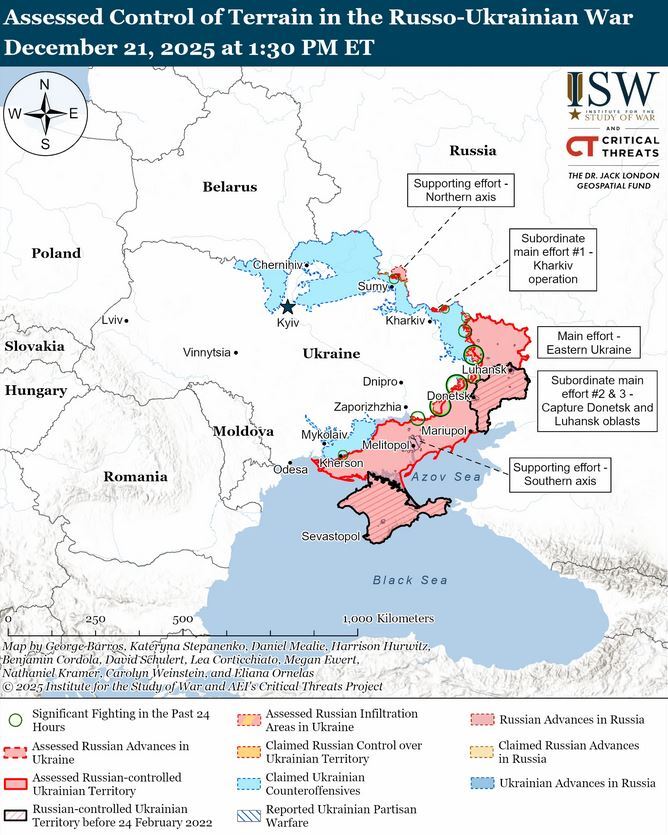
Deal after deal comes forward proposing that Ukraine cedes varying levels of occupied land to Russia in an effort to bring some semblance of peace. There seems to be, however, a fundamental disconnect between the parties as each deal dissolves in front of the world’s eyes. Whereas Western powers choose to approach peace through “diplomatic theater,” as Natalya describes it, Ukrainian powers seem to understand that the Kremlin is not likely to be charmed by handshakes and press conferences. As Zhygalkina-Slinko put it: “If a savage comes with a stone and hits the smart person in the head, there is no more smart person. You can’t negotiate out of it.”
That’s not to say that no progress has been made. European powers have renewed a push for using frozen Russian assets as financial aid for Ukraine’s military operation. To Natalya, this is the way forward. “The only option to stop the savage is to hit them with a greater stone.” And if Ukraine’s military operations are any indicator, that is exactly how they plan to carry on the war, with or without the West’s blessing.
So what then lies in the cards for the future? Will a resolution be brought by the deal to end all deals, or by David finally throwing the stone at Goliath? Who’s to say. But for now, Natalya looks at her future practically as ever. “I would like to be useful to Ukraine,” she asserts. As of now, that means staying abroad and supporting projects aimed at aiding Ukraine and championing her culture in the midst of anti-Ukrainian pessimism. In the meantime, then, as the war churns along, Natalya Zhygalkina-Slinko stays positive that Russian aggression will not be enabled, but defeated by the consolidated effort of the allies. As she reaffirmed: we have no other Europe to live in.