
AI is bound to have a major impact on the industry, especially for young creators who are just starting out. The pressure this brings, and how students are dealing with it, is exactly what I will be discussing with Lionel Gybels, a drama and directing student at LUCA School of Arts.
Lionel believes that there will indeed be an impact on the industry, whether negative or positive. He thinks it is inevitable and will definitely shape the future of the creative industry. “Even in our school, they already tell us to use it and learn how to work with it, because they realise all too well that it will be our future.” Even the apps he needs to use, such as editing software, already include AI as a helping tool. In lessons, there are also teachers who stimulate and even urge his class to use AI.
The Writers Guild of America already went on strike in 2023, not only because of issues with minimum pay and streaming residuals, but also against the use of AI in the industry. They believed it would pose an existential threat to their jobs as screenwriters. Only after 148 days were they successful in creating a contract with strong guardrails on how and when AI should be used in the industry, but it might not be long before it could get out of hand again.
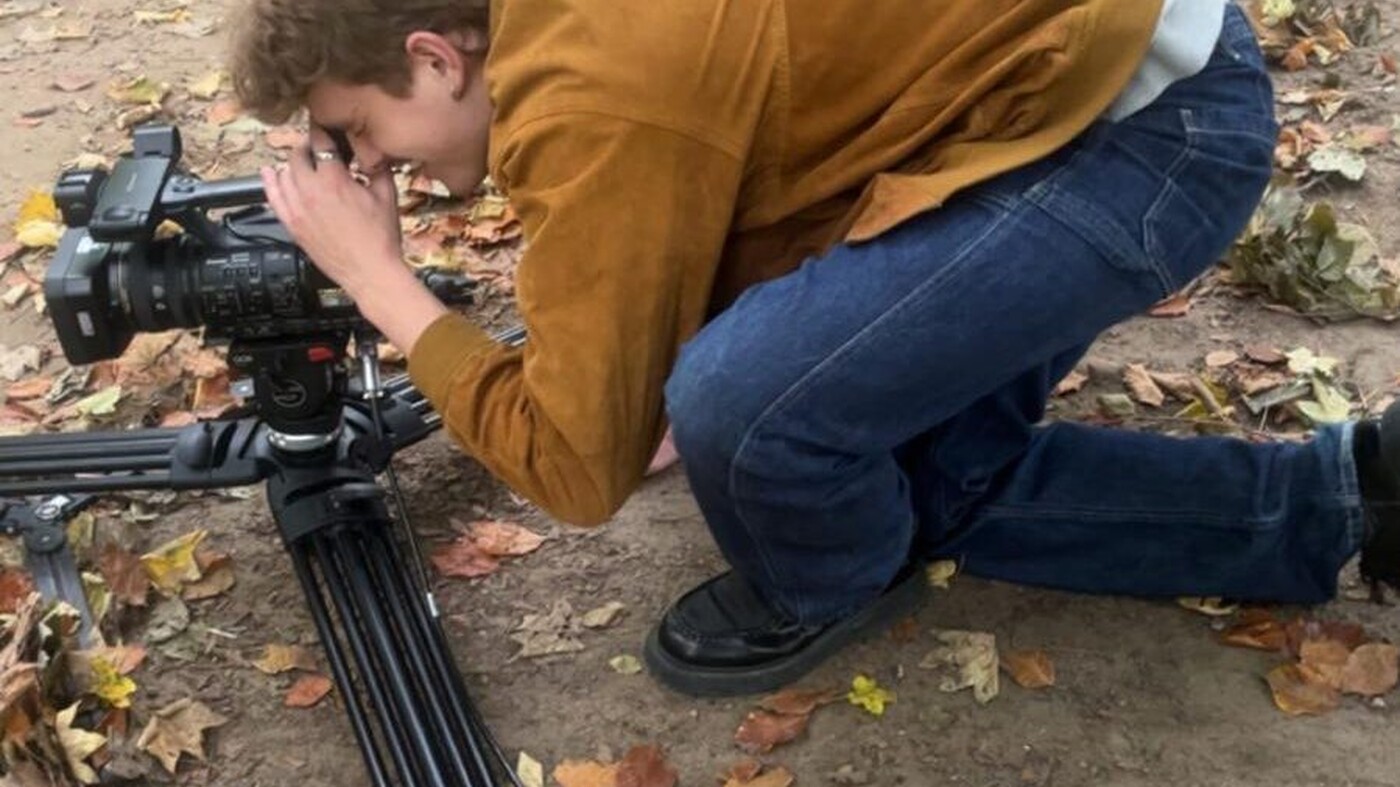
Lionel in his role as director positioning the camera
(Credit: Alannah De Loor)
Lionel is very convinced that jobs will indeed be lost, and that this is inevitable. Especially in the writing and editing process, there will be cuts, but that does not mean all jobs will disappear. “There still need to be people who control AI and its usage, which is still a job. So even if jobs are cut, it will create new ones, but not ones that are as closely connected to the industry anymore.” Even though AI may take over some jobs, he doubts that the direction he wants to go in, being a director, will be taken over by AI anytime soon.
Not only screenwriters are in danger, but actors may also need to fear for their jobs. In the UK, the production company Particle6, led by founder Eline Van der Velde, created an AI actress called Tilly Norwood. She is an entirely fictional actress with the goal of introducing her to the film industry as a human alternative.
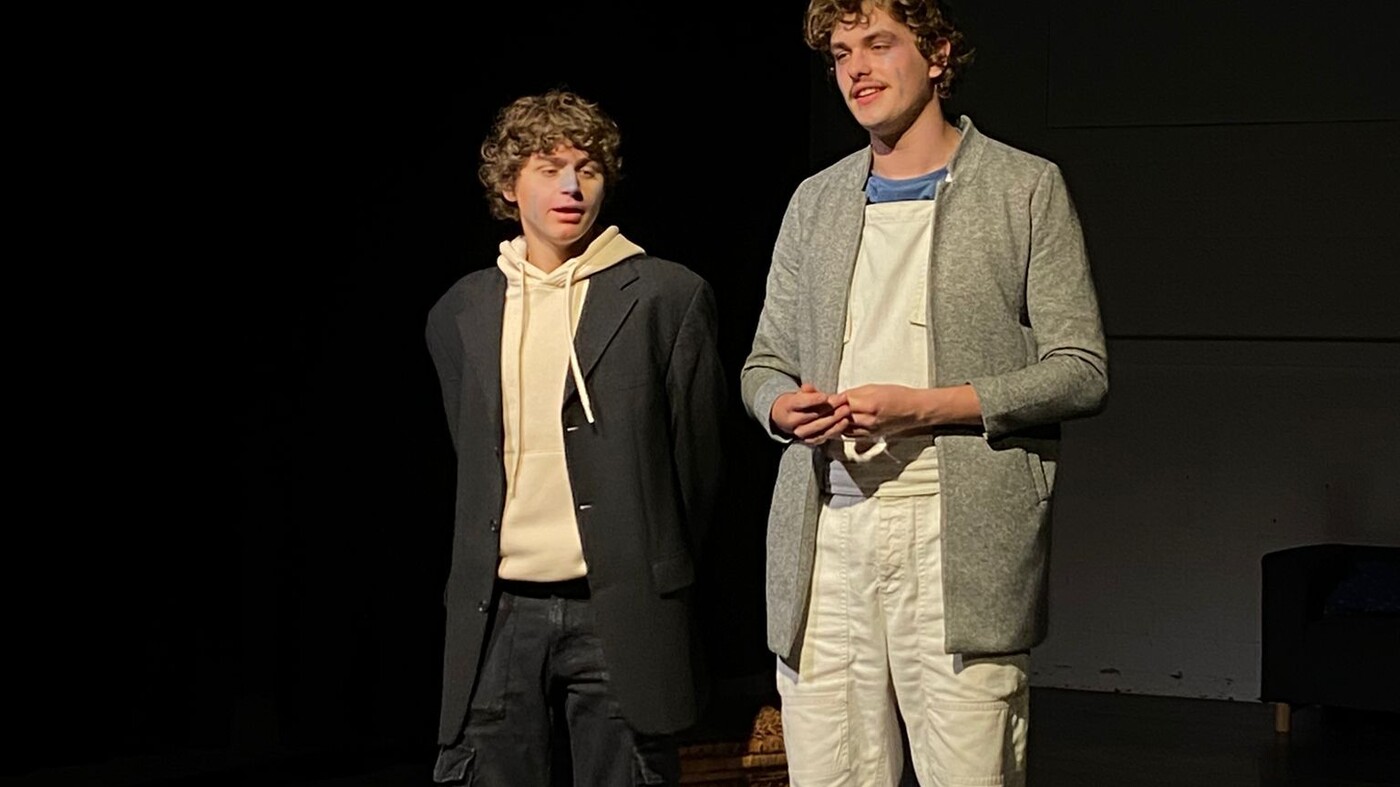
Lionel (right) acting on stage with a fellow student
(Credit: Alannah De Loor)
When it comes to AI replacing actors, there is fear in Lionel’s voice. He believes that in the long term, figuration and extras will be replaced, not only because of convenience but also to save costs. However, when it comes to lead roles, he does not think this will be the case. “I think people will still prefer the passion between real actors and appreciate the work they do. They can have an emotional connection with those people and even meet them, which you can’t do with AI.”
This is not the first transformation the film industry has seen. Since the beginning of cinema, technology has changed over time. Think about the introduction of sound in 1927 by Warner Bros or the introduction of colour in 1902. It has evolved into the films we know today, and AI might be the next big change within the industry.
He believes we have to accept this change, because it has happened before. “When sound was introduced in film, people were against it because it ruined the film experience for them. But look at how we use it now and how it only made it better. We cannot predict the future, but AI might improve the industry in the same way sound did in the 20th century.”
According to an AI expert at McKinsey & Company, a tech and AI consultancy, this transformation could help the industry. AI can save time and allow more stories to be told in a shorter amount of time. There would also be more efficiency in post-production, fixing errors in a faster and simpler way than manual processes, which are very time-intensive.
Lionel also believes there is a positive side to the increasing use of AI. As a beginning creator, there is often not much of a budget to work with, and using AI here and there can be a useful tool when dealing with financial limitations. It can make things easier on an editing level or help with personal projects in the early stages, instead of needing an entire crew that is not affordable.
However, he still has one major fear when it comes to AI in the film industry. “I fear that over time, creativity will become extinct because of AI. People will become lazy and use it for ideas, scripts, stories, and so on, and creativity will get lost.” Even though it has not come that far yet, he admits that he feels uncertain about his future in the film industry.