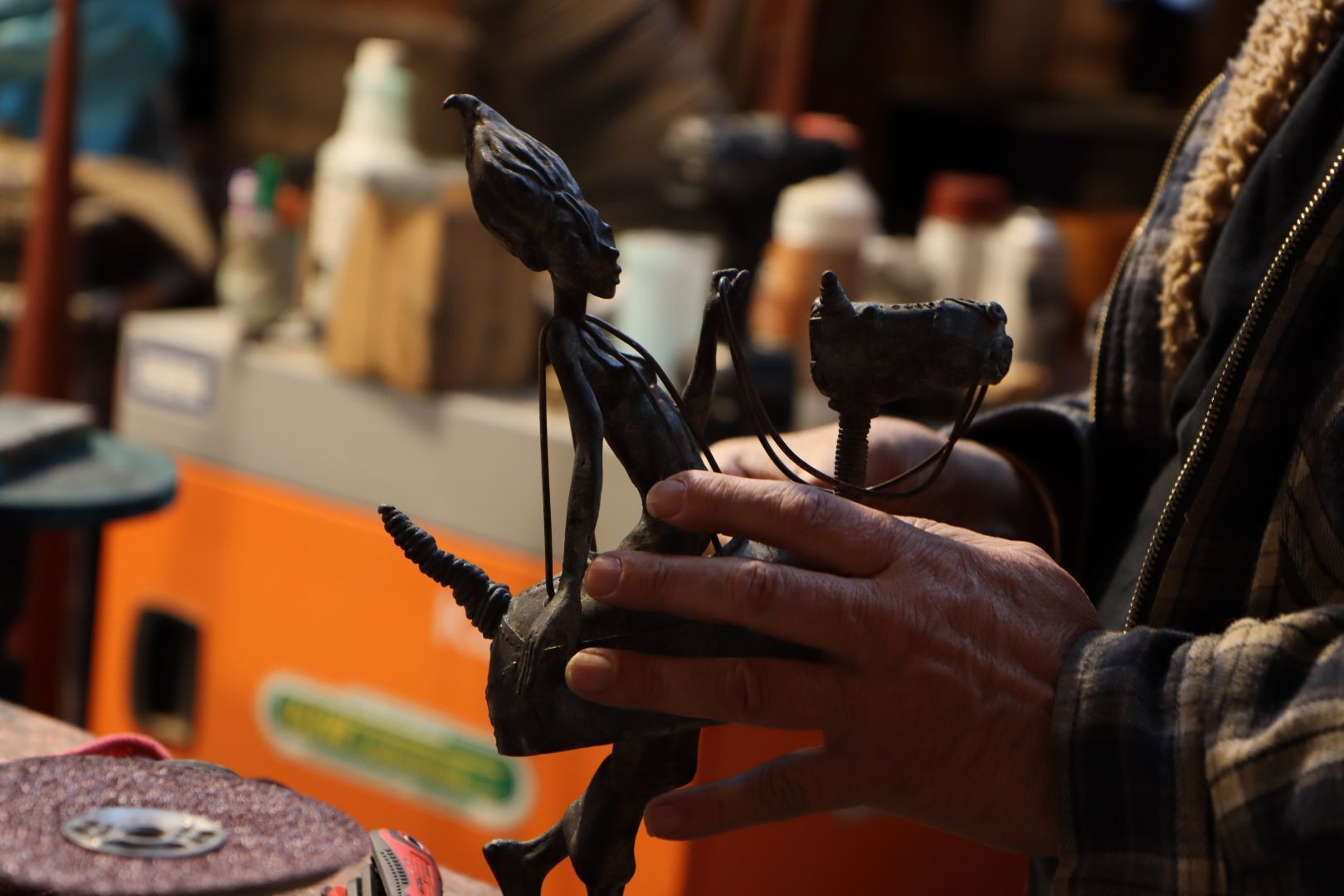

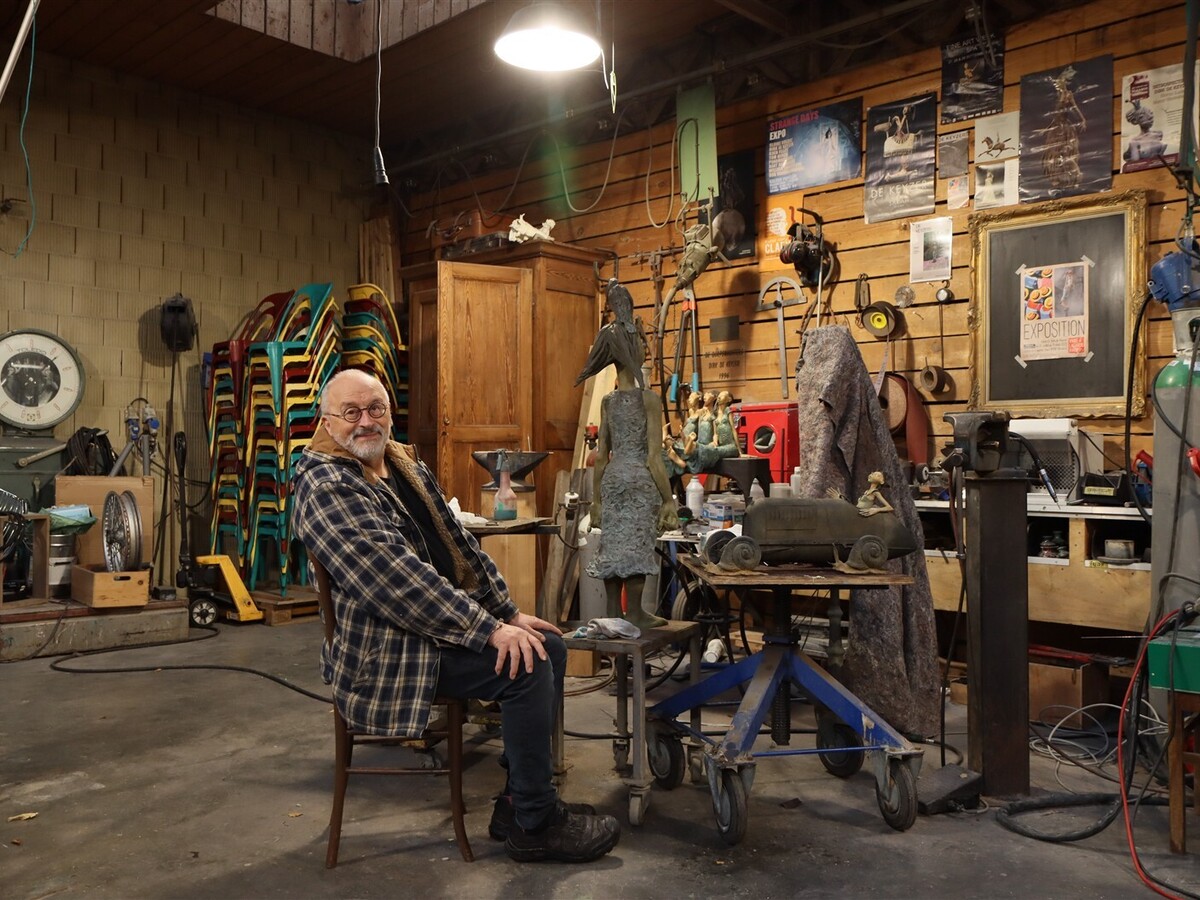
“I always start my days with coffee. That’s essential to get started. The actual work begins a bit later than nine o’clock. I am a very chaotic person, so my daughter answers emails and does all the important things. We make a schedule, and I work on a new sculpture or finish an existing one. The rest of the day is spent visiting galleries and foundries.”
“I’ve always had the luck that the galleries came to me, and not the other way around. So, they must like my work. I also like my work, I’m proud of it. But I don’t think I have made my best one yet. I am an ambitious person, but not too much. Of course, it’s fun when everybody celebrates your work, but you also have to live from your art. If they all said it was good, but nobody bought a piece from your exhibition, how successful was it really?”
“For me, success is a balance between artistic appreciation and profit. I remember an exhibition that I did in Beirut. Everyone there had the same “wow” reaction. It was surprising to me because they have such a different culture there. My work is inspired by life and how it influences shapes. It mostly comes from the ‘disease’ of creativity. I can take inspiration from everything, especially movement. It’s difficult to explain how that works in my head, and it certainly isn’t a business plan.”
“It’s impossible to predict what will work commercially. The audience still has to make a personal connection to it. Back in Beirut, it worked out well. But I also remember different times. In a certain period, I owed the government a couple hundred thousand euros in taxes. Those were certainly difficult times, but I sold a lot of sculptures and I was able to pay off my debt.”
“At one point, I had 6 employees here in the workshop. I’m proud of that, but it was very chaotic. The place was dirty because of all the plaster, and there was so much noise. I wasn’t a good boss either. That situation is totally different compared to now. Currently, it’s just me and my daughter. She mostly does the business stuff, but sometimes also the coloring. It's more peaceful now.”
“I love my family. There were times when I was too busy with work. Everybody wanted to have a piece of me, and I travelled to many countries. And I thought, “What am I doing here?” So, I created distance from that because it was too much. Now my daughter works for me, and that is a lot of fun. She also makes jewelry; I have a creative family. My son is a computer man, but you also need creativity in that job. You need creativity in every aspect of life. I would say the world needs more creativity, especially when I see certain houses in the street. How can you be proud of these boring things?”
“Being creative is something I encourage. My children can do whatever they want. Times used to be different. At a young age I was already creating and being creative, and I knew I wanted to do something like that. But my parents discouraged me from doing it because at the time it was very unusual. I was born to work in a factory, just like everybody else. So I went to technical school, on track to work in a factory.”
“I knew I wanted to do something artistic, but I didn’t know what exactly. Until my artistic friends dragged me to an art school. There I saw all the possibilities, and I was captivated by the sculptures. After that moment I thought: 'This is what I want to do. And that’s what I did. During the day I would do some jobs, a bit of everything. I worked in a factory and in a theatre. In the evenings and weekends, I would go to the art school for my degree. That took seven years. I liked it, but it was so slow.”
“I turn 67 next week. But I’m not thinking about stopping. I will continue to work until I die. There’s always something to do. Right now, I’m busy with an outdoor exhibition next summer in Namur. That’s my advice for the younger generations. Don’t complain, work hard, and chase your dreams.”