

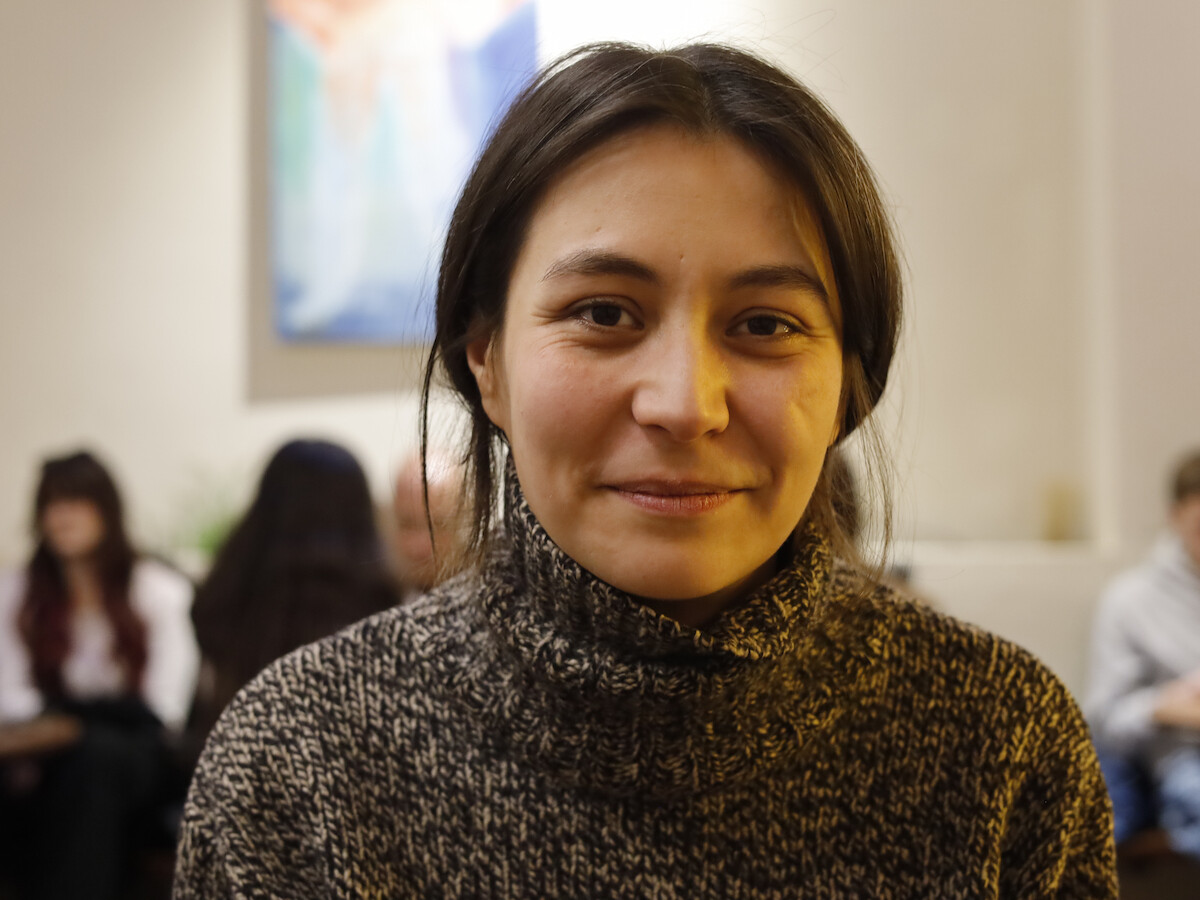
The Soviet system reshaped everyday life and labor, gradually distancing people from their historical traditions. That experience shaped her family and, generations later, still shapes how Veronika understands herself. At the same time, she says, a younger generation in Kazakhstan is slowly reclaiming what she calls “Kazakhness”: fighting for language, identity, and the right to define their own cultural space. The process is slow. Still, she believes this will take time, not decades, but a century. Against this backdrop, an event echoes her own reflections.
I’ll be honest: the main reason I wanted to speak with Veronika was the opening of the Kazakh Cultural Center in Brussels. I was curious what she thought about it, what hopes she placed in it, and whether she believed it could genuinely change something, or whether it might remain just a symbolic project.
At the end of November, the Kazakh Cultural Center opened in Brussels: a space meant to act as a beacon of Kazakhstan’s cultural diplomacy, showcasing traditions, contemporary art, and a different national narrative in Europe. Such centers are classic tools of soft power: they shape image, challenge stereotypes, and build cultural bridges. As Kazakhstan’s ambassador to Belgium said, it aims to “...help preserve our language, traditions, and cultural identity, especially among younger generations.” But their real meaning becomes clearer through personal stories.
We meet in a loud café close to the center of Brussels. People have nice talks over coffee, dates, and work meetings; sometimes we even have to repeat ourselves. And yet, in all that noise, her words about identity sound surprisingly honest.
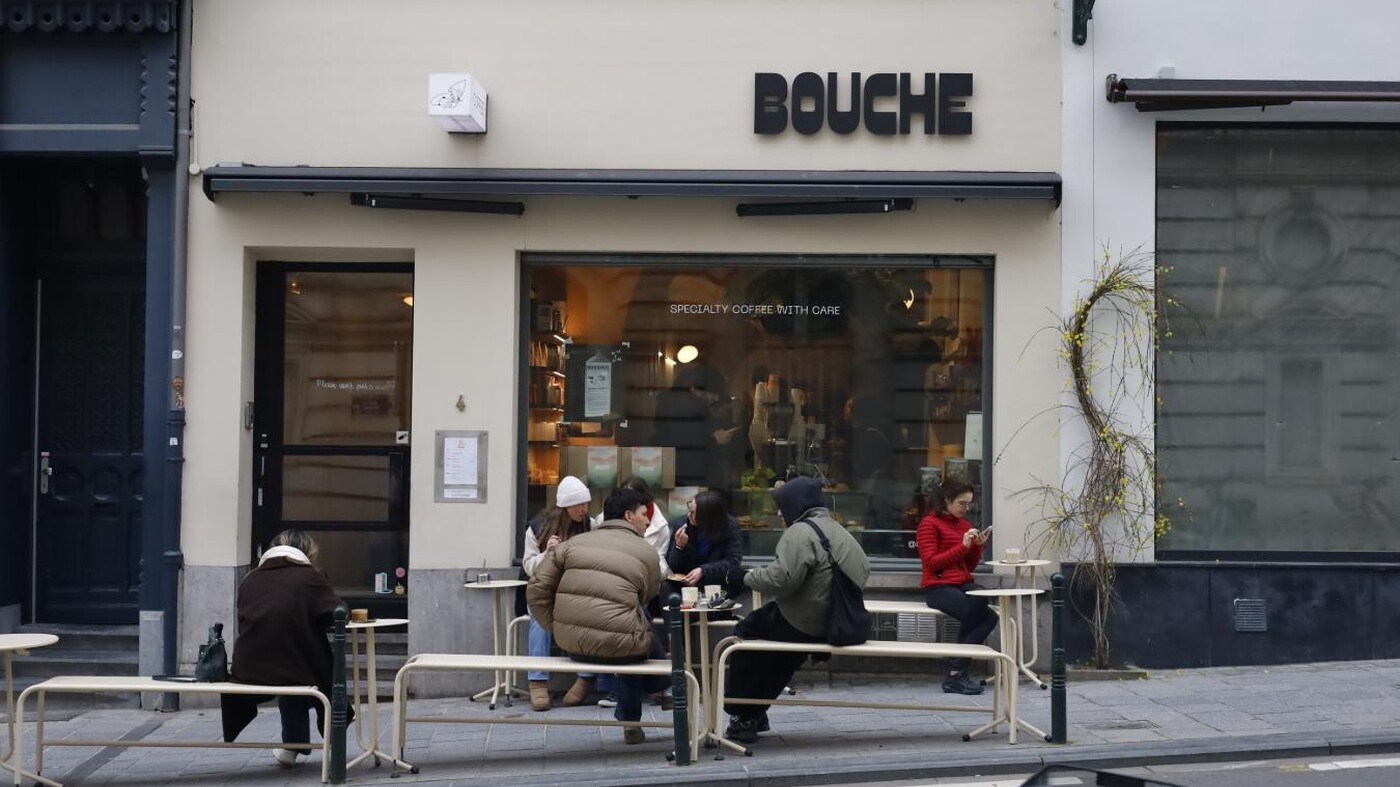
Outside the Brussels café BOUCHE, people gather over coffee on the street benches, while the warm, bustling interior glows behind the front window.
(Credit: Matvii Zelenyi)
“I think this connection to Kazakh culture is more subconscious,” she says. “The works I made until now were not literally about my roots, but probably the choices you make as an artist are still shaped by where you come from.”
Talking about the cultural center, she admits its importance:
“I think it’s very important to have such a cultural center in the heart of Europe. It can give immigrants a chance to reconnect with their roots and culture.”
But she’s also cautious:
“I feel like, for now, they don’t do enough to really engage the community. You don’t really hear about it much; it’s a bit too quiet. I would love to see more activity, more initiatives, more life there.”
Her view is both hopeful and critical, and that has everything to do with her own path in Belgium.
Veronika studied art in Ghent before moving to Antwerp. With a small smile, she admits: “It was a kind of post-graduation crisis, you don’t really want to stay in the same city where you studied.” She worked in a non-commercial gallery for a while before returning to Ghent to obtain a teaching qualification. In many ways, Ghent became the place where her professional identity was formed.
For the past year, as she jokingly puts it, “still immigrating” to Brussels. And Brussels feels very different. The artistic scene here is harder to enter. Paradoxically, though, it was only after she left Ghent that the city started noticing her more: invitations to exhibitions and projects suddenly increased. Reflecting on her recent return to Kazakhstan as an adult, she says:
“I think it was really important for me to go back to Kazakhstan as an adult to see museums, to witness what is happening there. It was probably the first time I saw so many traditional objects and cultural things. Before that, it just wasn’t present in my life. Yes, we had carpets at home when I was a kid, but I didn’t even know where they were from… no one was really talking about it.”
Even today, she admits, it isn’t easy to access knowledge about traditional Kazakh art; understanding your own cultural heritage often feels like piecing together fragments.
She is deeply proud of the younger generation in Kazakhstan, who are now looking at their history with more courage and clarity. And although the process is slow, she believes they will define what Kazakh culture becomes in the future, finally free from imperial myths.
Then, with a hint of sadness, she adds that because she emigrated as a child, she essentially missed the great internal conversation Kazakhstan was having about identity:
“When you migrate as a kid, you’re constantly trying to adapt, to fit in, not to stand out… And I feel like only now I’m really starting to understand all of this: who I am, where I come from, and what this culture means in my life.”
And perhaps that is why every cultural bridge between Kazakhstan and Europe carries such personal meaning for her.
Whether the Kazakh Cultural Center will truly change anything remains to be seen. Like Veronika herself, it is at the beginning of its path. But as long as people are willing to ask questions about identity and listen to the answers, even when they arrive slowly, this story undoubtedly has a future. And, it seems, it is only just beginning.
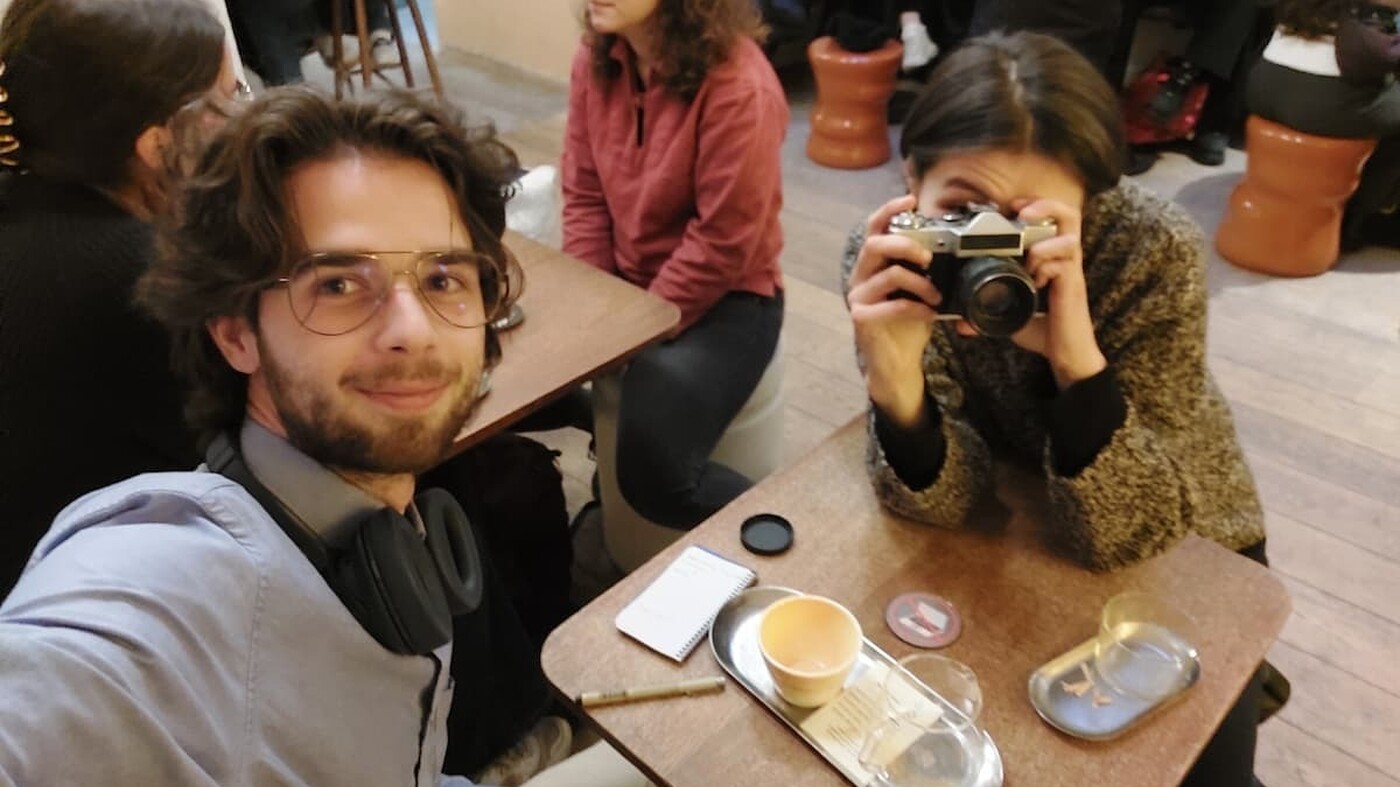
In a crowded Brussels café, Veronika playfully lifts an old camera while an author captures the moment, surrounded by conversations and coffee cups.
(Credit: Matvii Zelenyi)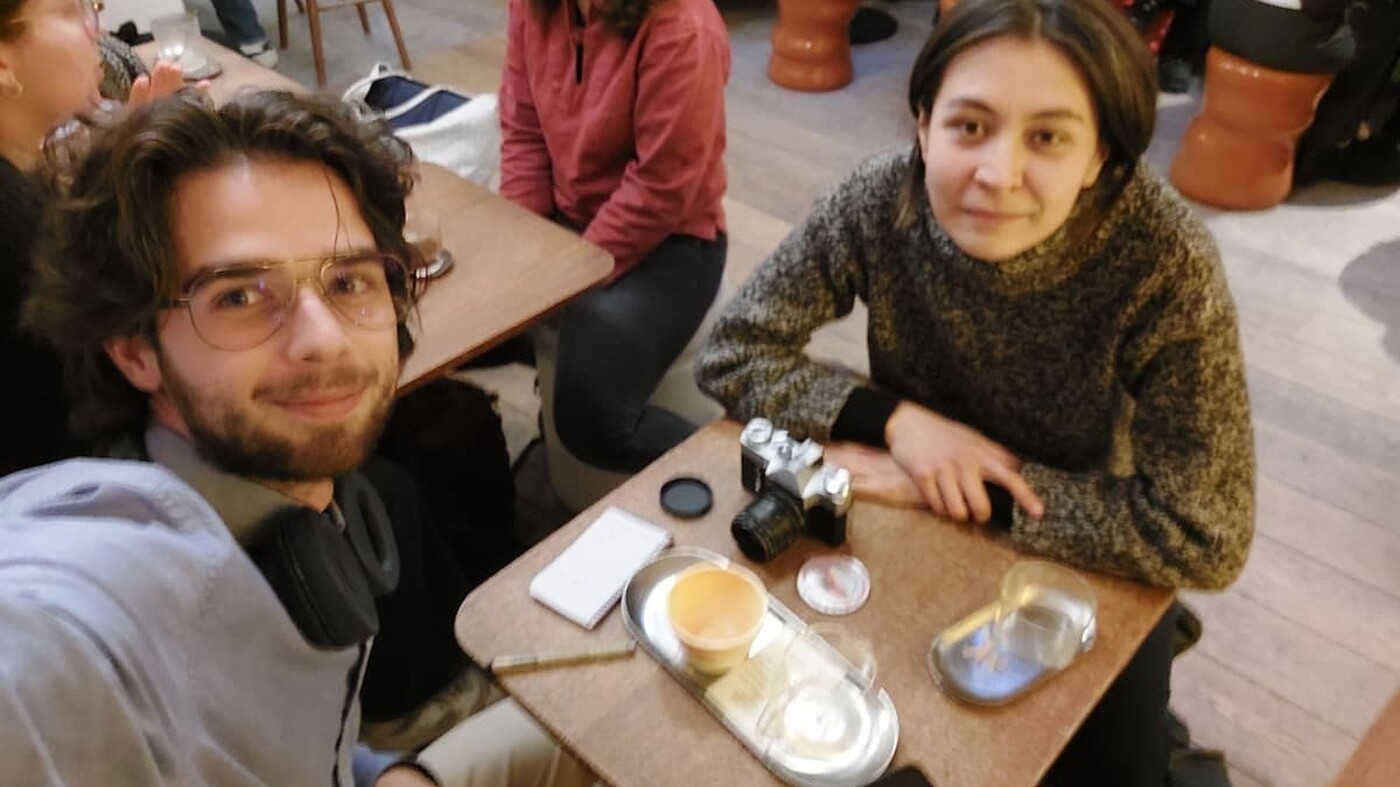
Sharing conversation and coffee in a busy Brussels café, the pair pause for a quick photo amid notebooks, cameras, and the lively hum of people around them.
(Credit: Matvii Zelenyi)