

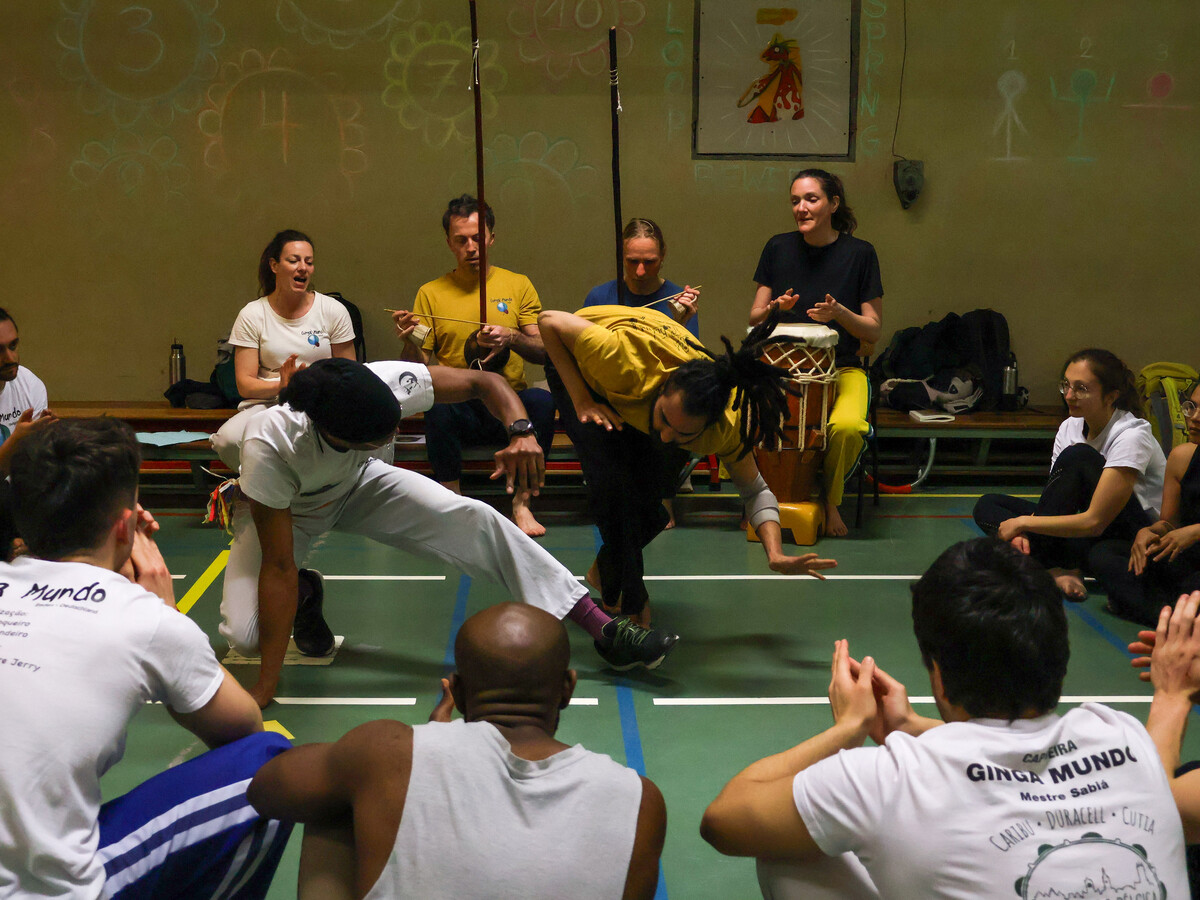
Everyone gathers around forming a circle (roda), and Duracell, Cutia - the coaches - and the other musicians start playing the traditional instruments: single-string berimbaus with a shaker, caxixi, a drum – atabaque, and a hand drum, similar to a tambourine - pandeiro. Some people are squatting; others are sitting on the edge like excited kids ready to stand up at any moment. When Duracell indicates, two of them come into the middle, swiftly touch each other's hands – greeting each other – and start the fight.
That’s the beginning of roda, the ending ritual at every capoeira class at the club Ginga Mundo in Ghent, Belgium, founded by Mestre Sabiá in Brazil. Capoeira is an Afro-Brazilian martial art. The clubs are founded in Brazil and then spread across the globe. Ginga Mundo has branches in Colombia, the United States, the Czech Republic, Germany, and other European countries.
The basis of every move in the roda is ginga, rhythmic triangular steps that allow easier changes between moves. The motion is close to the ground, in an ongoing flow where the capoeiristas respond to each other. One of them spins to the side, kicking the sole of the foot towards the other’s face, who answers by squatting down and dodging. After a while of this body dialogue, another capoeirista stands up from the circle, switching places with one of the fighters, following this rhythm nonstop.
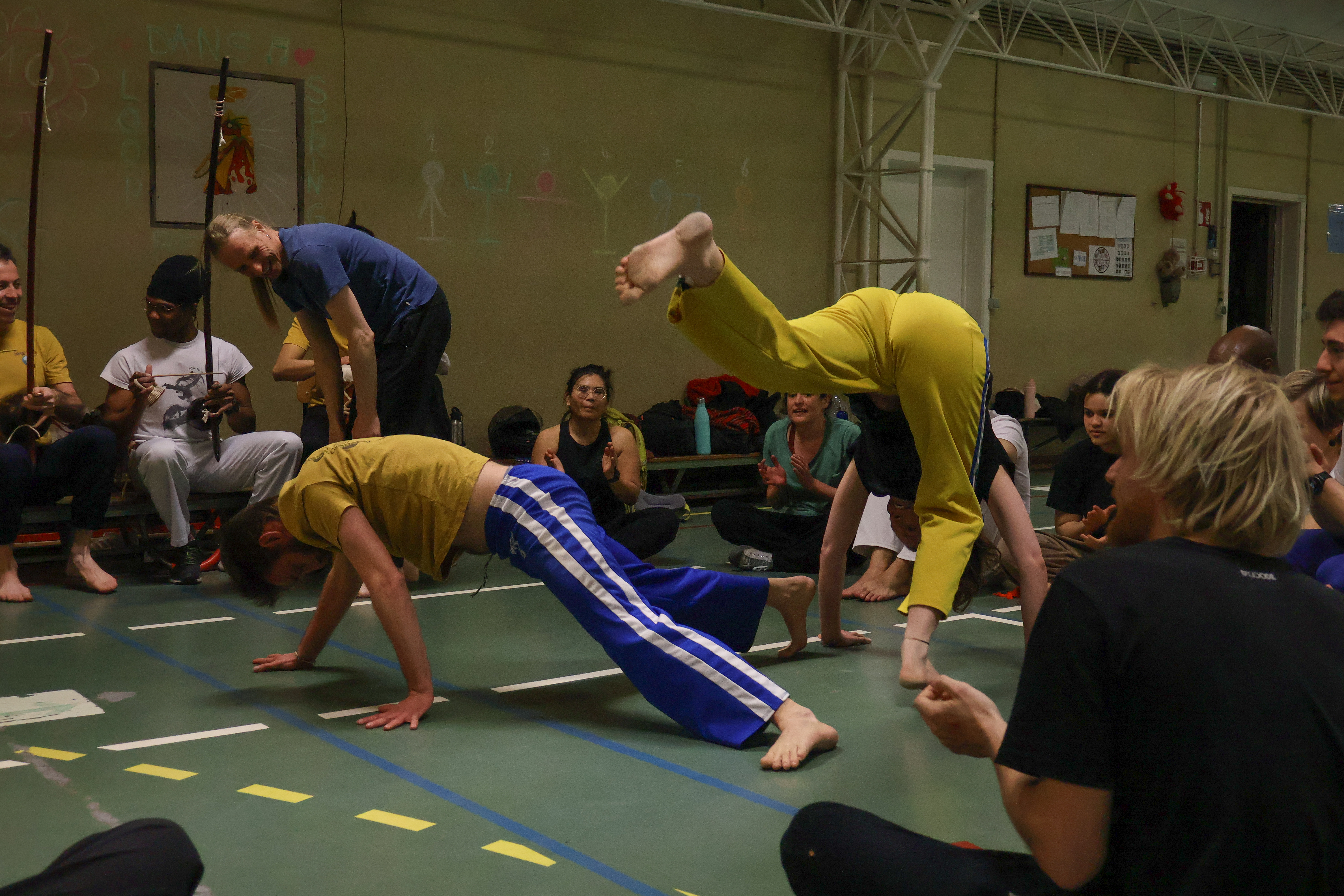
Like in other martial arts, there’s a hierarchy defined by the color of the ropes the capoeiristas wear. The more experienced ones can do more advanced moves. They do various handstands and jumping kicks, speeding up the pace of the roda.
With each fight, the circle gets more thrilled, building up an intensity until they all stand up. This is the peak, when the clapping and singing are filled with the most energy. The musician’s tempo is accelerated, guiding the capoeiristas into doing the same. In capoeira, there’s no winner and, unlike other martial arts, there are no points. The purpose is to challenge yourself and others.
The roda is in the far back corner of the hall, but its vibrancy fills the whole space, until Duracell abruptly shouts “Hey!”, making all the sound and movement vanish.
A centuries-long memory of resistance
Capoeira is a martial art that originated in Brazil among enslaved Africans. Since they wanted to escape the oppression, they secretly practiced fighting moves. Music was used to disguise their real intentions, tricking their masters into thinking they were dancing.
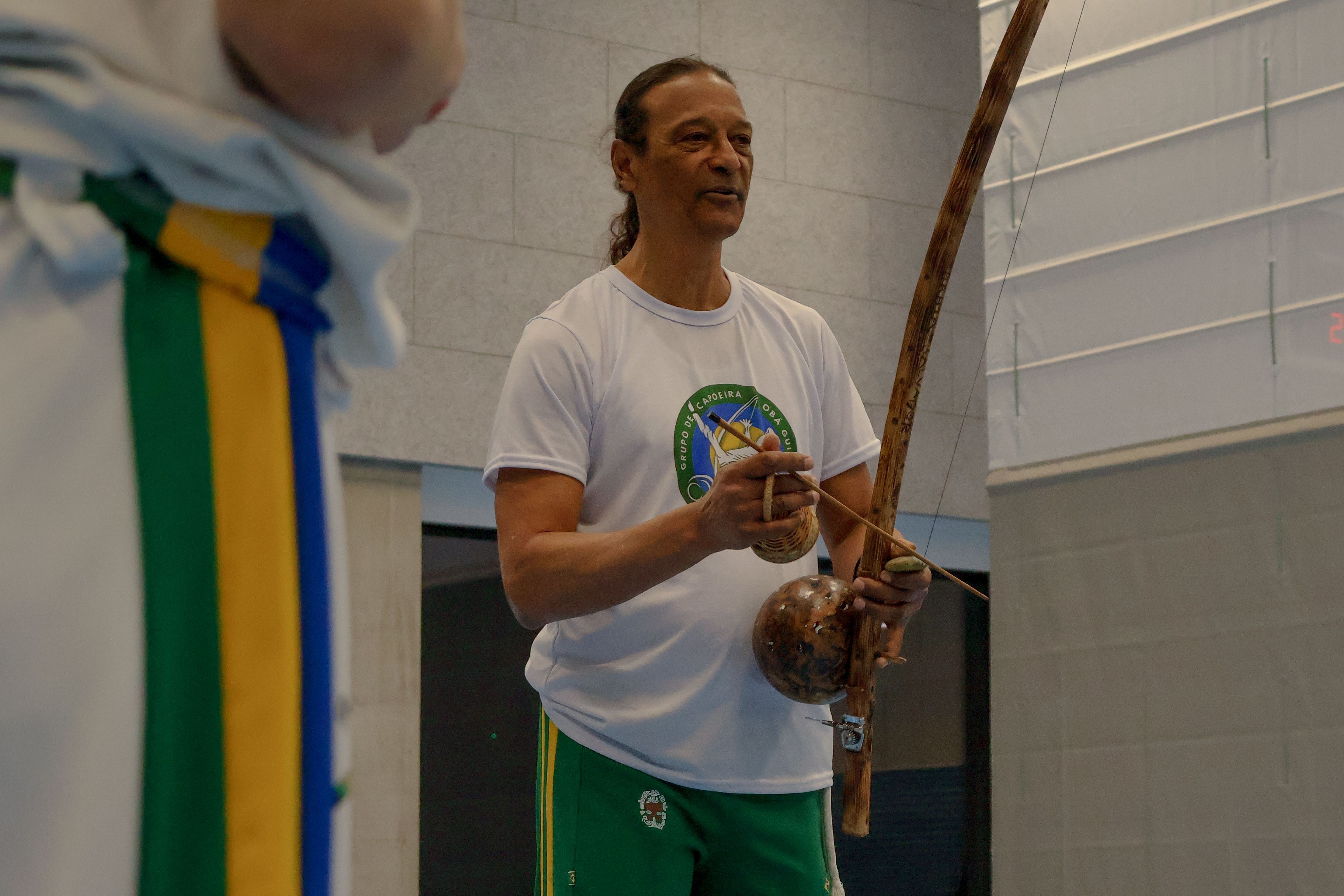
It is important to respect the origins of resistance of capoeira, according to Mestre Caladinho from Oba Guiné capoeira club, in Ghent. For him, singing and teaching Portuguese words in the classes is a way of doing that. He’s been a capoeirista since 1969 and travelled to China and Cape Verde, for instance, spreading the martial art. “I’m not only teaching capoeira, I’m teaching Brazilian culture.” Caladinho founded the branch in Ghent 20 years ago.
“I’m not only teaching capoeira, I’m teaching Brazilian culture.” - Mestre Caladinho
You cannot have capoeira without music
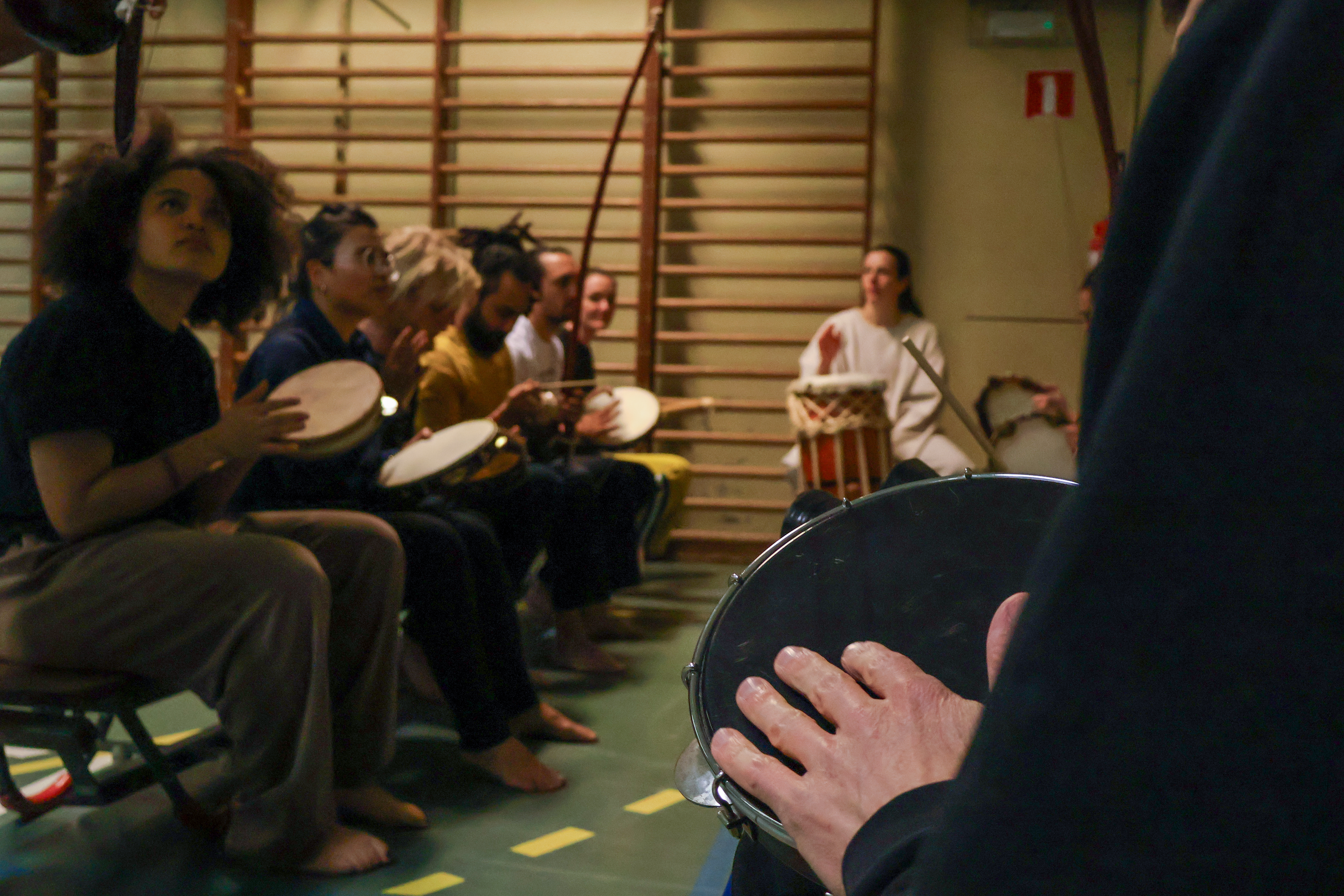
At the beginning of each training, everyone plays together, even those who are not professional capoeira musicians. “For a lot of Belgian people, if they haven’t grown up around music <...> it can be intimidating to take an instrument and just start playing”, says coach Cutia. She and Duracell have these special names because every capoeirista receives a name from their mestres, the master practitioners, based on their personality. “We try to give [people] the confidence to play and practice”, she adds. For Cutia, music is essential to capoeira.
“I think music is the basis of capoeira. You cannot have capoeira without the music” - Cutia
To each person arriving, Duracell gives an instrument. In the beginning, it sounds like a serious rehearsal, but the more people arrive, the more they loosen up, becoming a fun, relaxed moment.
The mix of traditional Afro-Brazilian percussion instruments creates a unique melody. The drumming of an atabaque makes a woody, resonant sound. It complements the berimbau’s hypnotic 3-note melody. It’s intense and captivating, immediately drawing you in. In contrast, the pandeiro jingles bright and crisp. The agogô bells’ metallic, high-pitched tune is the final touch. They sing in unison in Portuguese, and the music flows.
Where cultures meet
Brazilian culture is what brings all capoeiristas together. According to Nathalie van Gastel, a capoeirista in charge of the administration of Oba Guiné, capoeira is the only sport where you don’t connect with others only because of the sport, but because of the culture behind it.
In Ginga Mundo, a playlist of Brazilian songs takes over the speakers, accompanying the training. It’s energetic, expressive, and upbeat.
“You can feel the Brazilian energy even when there are no Brazilians around.” - Nathalie Van Gastel
Loosen up!
During the warm-up, the capoeiristas can loosen their bodies and have fun. People are scattered around the floor in a crab walk, tripping their legs and arms to make others fall. It's not important who succeeds; the purpose is to have fun, and the process is enough to make them laugh.
Duracell states that you have to be able to laugh at yourself. If someone is at a lower level than you and almost kicks you in the face, for instance, you can’t be aggressive. You have to be loose and just accept it.
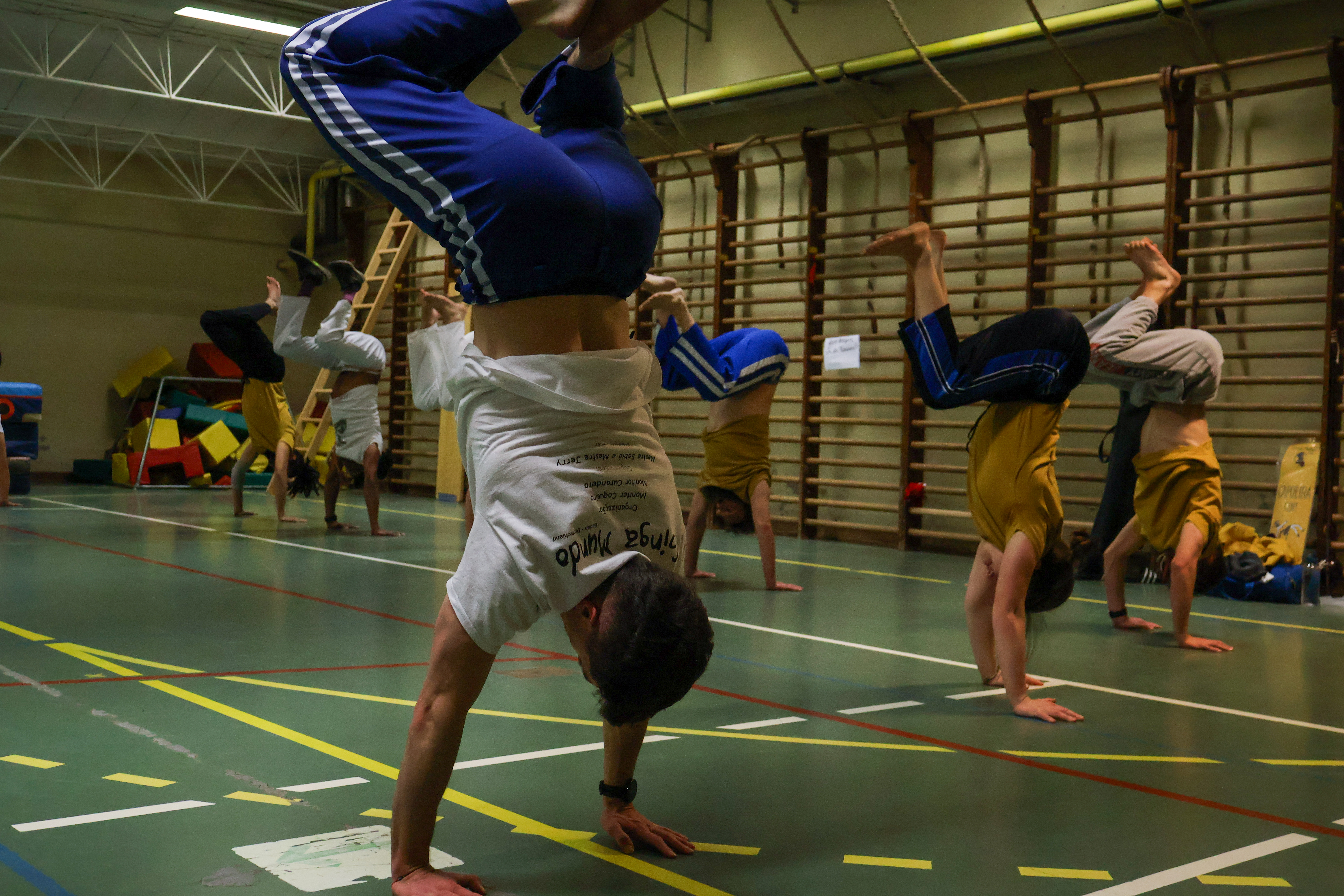
“If you want to practice capoeira, you have to be loose in your body, but also loose in your mind and your personality.” - Duracell
With this mindset, capoeiristas practice the traditional moves for the roda, the moment when the live music and movements meet, and the art of capoeira comes to life.
“You play best when you put your feelings into the game, but you have to learn how to play freely, connect with yourself, with the music, and with the other person”, says Duracell. “It’s actually a little bit like life. You make mistakes, and you change, then you learn something new, you try it another way that works better”. For him and Cutia, one should act in life like in the roda: connected with yourself, people, and the world around you.